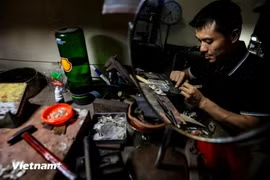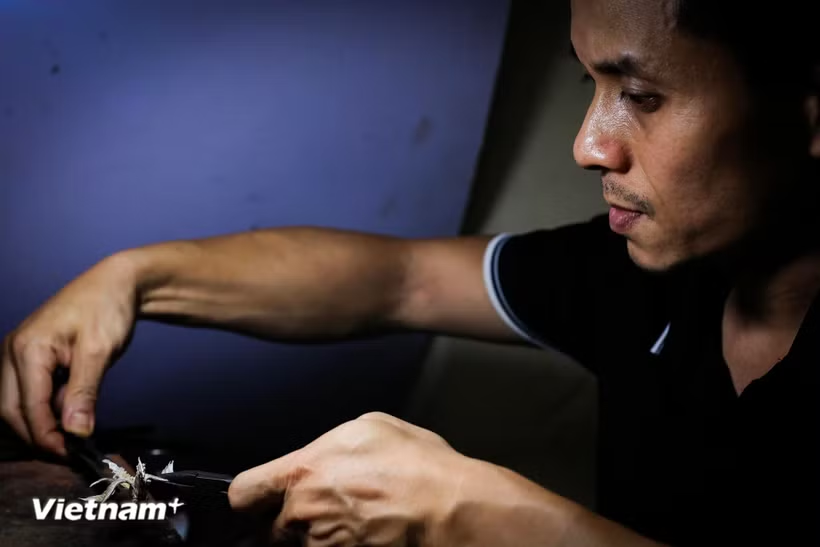
Hanoi (VNA) - Artisan Quach Phan Tuan Anh is one of the last guardians of the silver filigree craft in his hometown Dinh Cong in Hanoi’s Hoang Mai district, which has long been known for its refined beauty and intricacy.
Born in 1981, Tuan Anh learned the millennium-old tradition from his father, artisan Quach Van Truong.
According to him, his father was the last master craftsman in the village to practise this precious art, which has endured for over a thousand years. Truong was also the last in his family to carry on the craft. “Despite continued appreciation for our products, the number of skilled artisans able to create them dwindled,” Tuan Anh said.
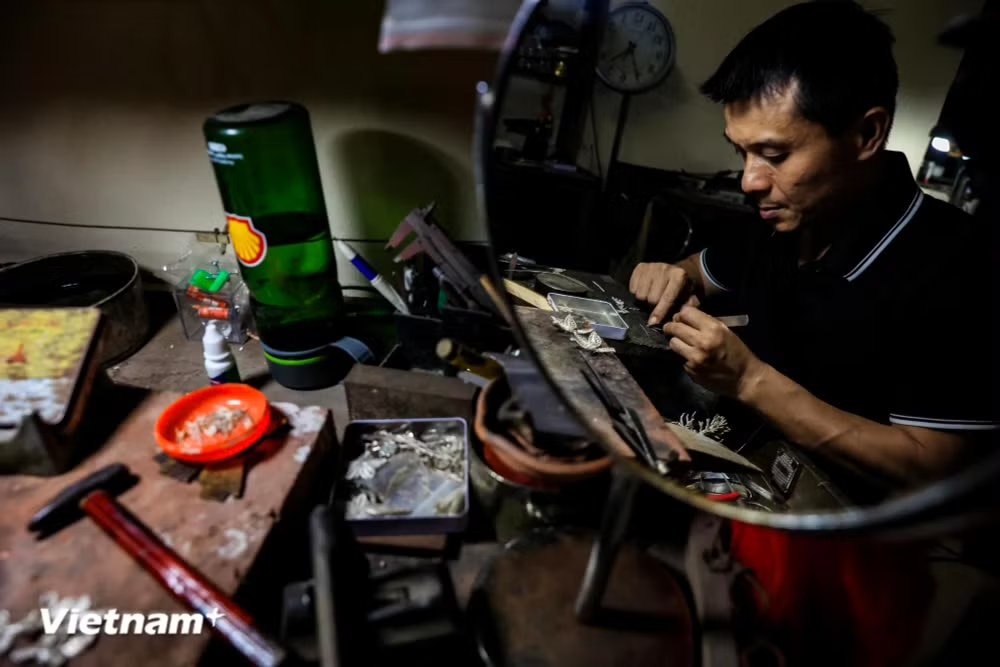
Though he had not initially planned to inherit the family craft, Tuan Anh gradually found himself drawn to it. What began as a hobby of making simple pieces for friends became a serious pursuit under his father’s guidance on the skilled techniques. This curiosity eventually deepened into a passion, leading the son to establish a workshop in 2003 dedicated to preserving his family’s heritage.
At first, he relied on consignment sales to reach customers. Limited market knowledge made it difficult for his work to gain visibility and recognition. At that time, the workshop focused primarily on jewelry. It then expanded into creating pieces for decoration and gifts, marking a successful two-decade journey in sustaining this intricate craft. Despite significant initial challenges, Tuan Anh and his colleagues have successfully "kept the flame alive" for the local silver filigree craft over the past two decades.
According to the artisan, Dinh Cong's silversmithing involves four main stages: shaping the base product, assembling intricate components, engraving or painting patterns, and finally the delicate “filigree” stage, where silver is drawn into fine threads, some as thin as a human hair. These threads are then artfully arranged to decorate elements like petals or butterfly wings. The filigree work requires a steady hand and flawless welding, leaving no trace of the joint and culminating in a true work of art.
Creating fine silver threads is a painstaking task in itself. Each thread undergoes multiple rounds of drawing and thinning until they are as thin as 0.26mm, likened by their creators to strands of hair. The entire process, which takes between 40 and 60 minutes, is done by hand with cold-work techniques, using a manually operated drawbench.
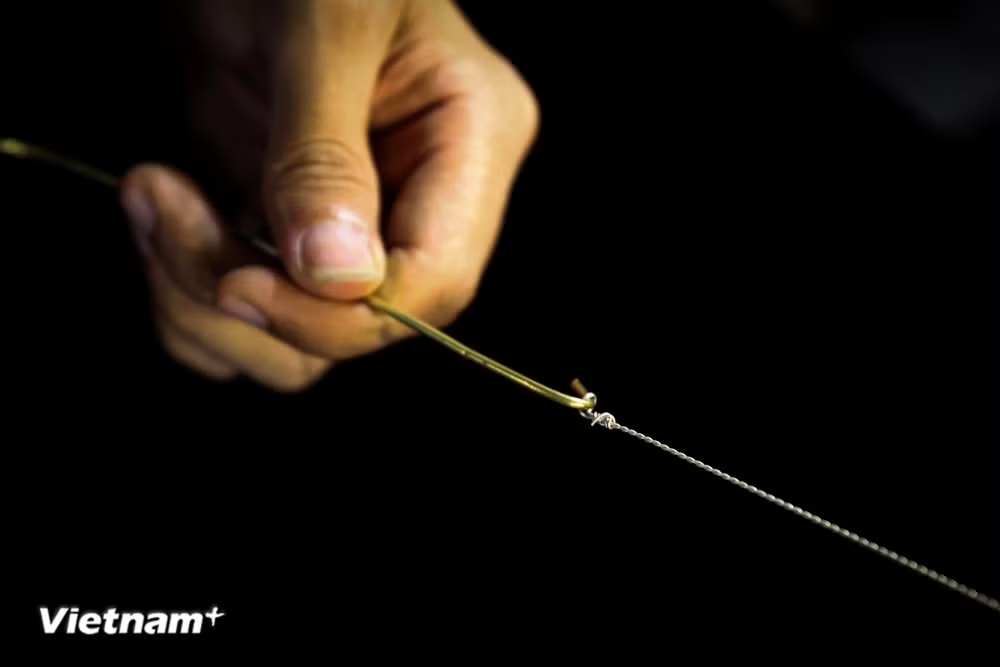
After drawing the silver wires to the desired thinness, artisans twist two smooth strands together to create textured patterns, giving the strands strength and firmness. This twisting process is repeated twice to achieve the fine, intricate texture required. The twisted strand is then passed through a flattening machine – an essential step unique to each artisan, allowing them to craft distinctive decorative details that set their pieces apart.
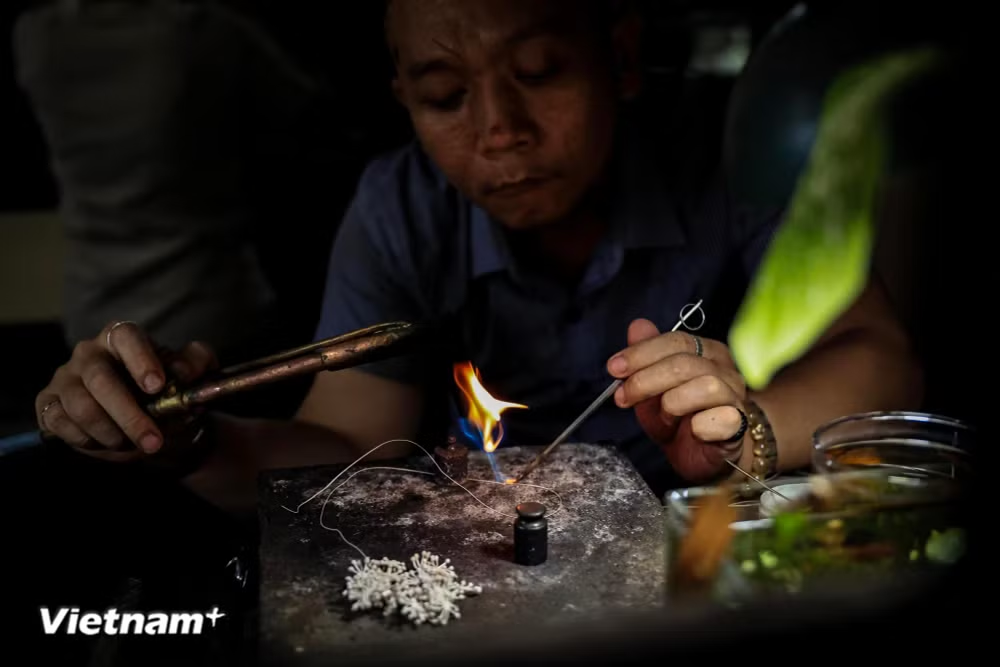
Tuan Anh said mastering the silver filigree process is a long journey. Related learning is not measured in days or months, it’s a continuous process that requires practice, especially with the challenging final stage, where components are welded together. For larger items, even slight changes in temperature can cause the metal to expand, impacting the intricate assembly of hundreds of components. An errant flame can cause misalignment, potentially disassembling the entire piece.
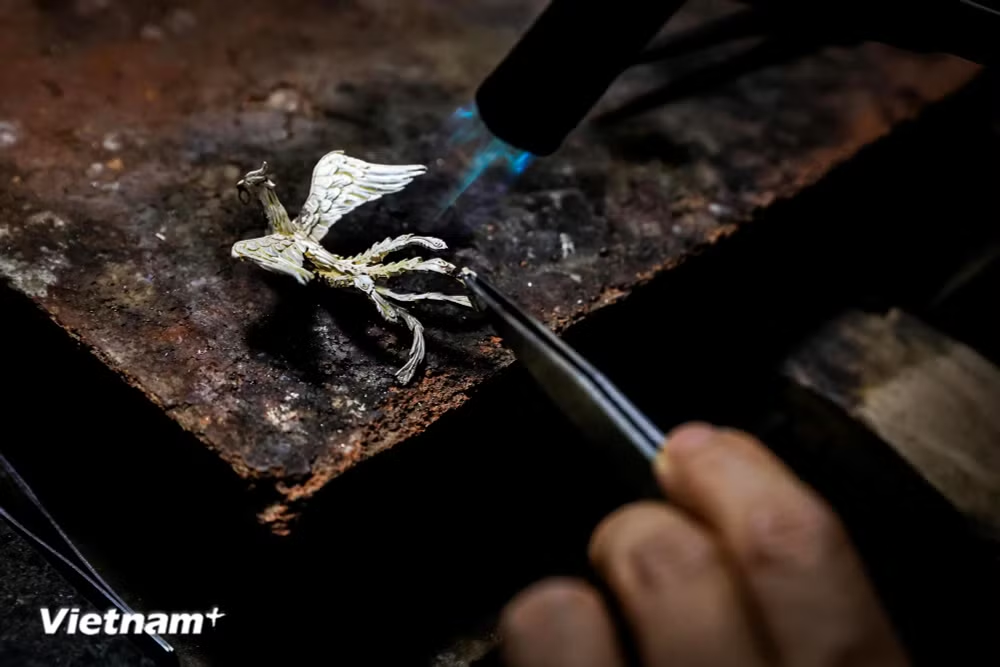
“The angle of the flame itself can determine whether a piece succeeds or fails,” he explained. “Every step leading up to this point is meticulously detailed, and a single misstep in welding can ruin everything, forcing a complete restart.”
With over 20 years of experience in the craft, Tuan Anh understands how each piece presents a unique challenge, requiring deep, accumulated expertise.
In previous eras, such silver filigree works adorned the palaces of emperors and nobles, with exquisite creations from Dinh Cong once gracing the crowns of kings and the jewelry of queens during the Nguyen Dynasty.
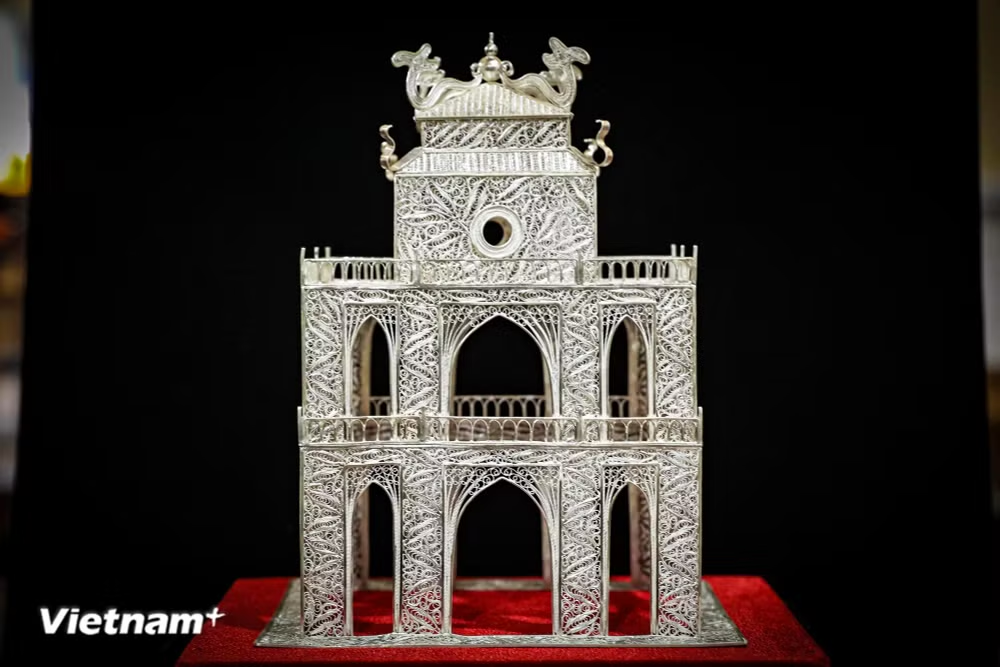
Though the craft has seen fluctuations in popularity, its legacy endures, kept alive by artisans like Tuan Anh, who remain dedicated to preserving and advancing this heritage of Hanoi./.