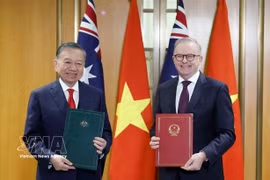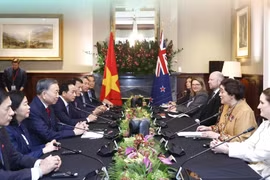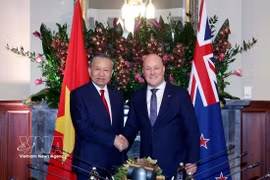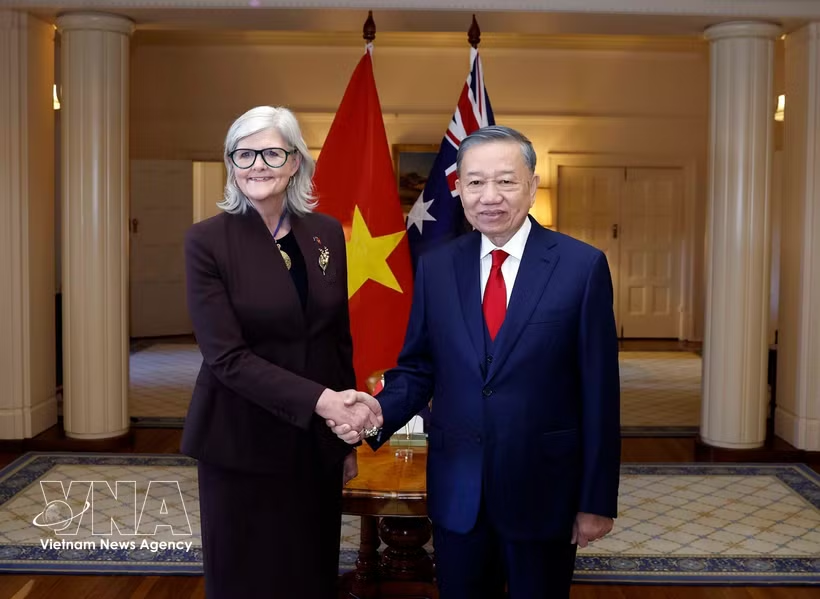
Hanoi (VNA) – The state visits by General Secretary of the Communist Party of Vietnam Central Committee and President To Lam to Australia and New Zealand from August 9-14 have created fresh momentum for elevating Vietnam’s relations with the two countries, while opening up new avenues for cooperation in science and technology, innovation, education, trade, investment and sustainable development, Minister of Foreign Affairs Le Hoai Trung said.
The trip was made at the invitation of Australian Governor-General Sam Mostyn and New Zealand Governor-General Cindy Kiro and marked General Secretary and President Lam’s first state visits to the two countries in his new position.
According to Trung, the visits demonstrated the Vietnamese Party and State’s high regard for the two important partners, while creating fresh momentum to translate the new partnership frameworks into deeper, more substantive and effective cooperation based on closer coordination, joint efforts and co-creation.
The visits were highly successful, with their objectives achieved to a high degree. Talks and meetings with high-ranking leaders, political figures, businesses, scholars and people in both countries took place in an atmosphere of trust, openness and substance.
Australian and New Zealand leaders reaffirmed the importance they attach to relations with Vietnam and spoke highly of the country’s development achievements, its leadership vision and its growing role and standing in the region and the international arena. They stressed that amid the complex and unpredictable developments in the world and the region, as well as growing development requirements in each country, closer cooperation between Vietnam and Australia and New Zealand has become increasingly important in minimising adverse impacts and supporting each other in national development. A number of important cooperation documents and agreements were signed, providing an additional foundation for implementing the major orientations reached during the visits.
A key outcome was the strengthening of political trust and the creation of new impetus for bilateral ties. Alongside political and diplomatic cooperation, Vietnam and the two countries agreed to step up security and defence cooperation and contribute to peace, stability and development in the region.
New growth drivers identified by General Secretary and President Lam during this trip included science and technology, innovation, education and training, high-quality human resources, trade, investment, green transformation, critical minerals, high-tech agriculture and the marine economy. These areas are expected to expand Vietnam’s strategic space, help mobilise external resources for national development, and further the country’s relations with Australia and New Zealand in a deeper, and more practical and effective manner.
With Australia, cooperation was advanced in artificial intelligence (AI), semiconductors, digital transformation, critical minerals, energy transition and high-quality human resources. The TechConnect Forum created additional links among governments, businesses, universities and research institutions, providing a foundation for joint research, innovation and value creation.
With New Zealand, the focus was placed on areas where the two economies are highly complementary, particularly education and training, human resources development, high-tech agriculture and sustainable development. The Vietnam-New Zealand education forum and newly signed agreements helped strengthen links among management agencies, businesses and educational institutions, while promoting agricultural market access, smart agriculture and climate change adaptation.
Economic cooperation was also viewed from a broader perspective throughout the week-long trip, moving beyond trade and investment expansion toward stronger supply-chain connectivity, improved conditions for businesses and better utilisation of the complementary strengths of the economies.
General Secretary and President Lam and leaders of Australia and New Zealand agreed to encourage businesses to increase cooperation and investment in each other, particularly in emerging sectors suited to their respective strengths.
The Vietnamese leader also paid special attention to the Vietnamese communities in Australia and New Zealand, particularly intellectuals, experts and entrepreneurs. He met and listened to community representatives, reaffirming that overseas Vietnamese are an inseparable part of the Vietnamese nation and an important resource for national development.
Trung assessed that the visits generated both greater political depth and broader cooperation opportunities, constituting an important diplomatic milestone in implementing the foreign policy of multilateralisation and diversification of external relations, set out by the 14th National Party Congress.
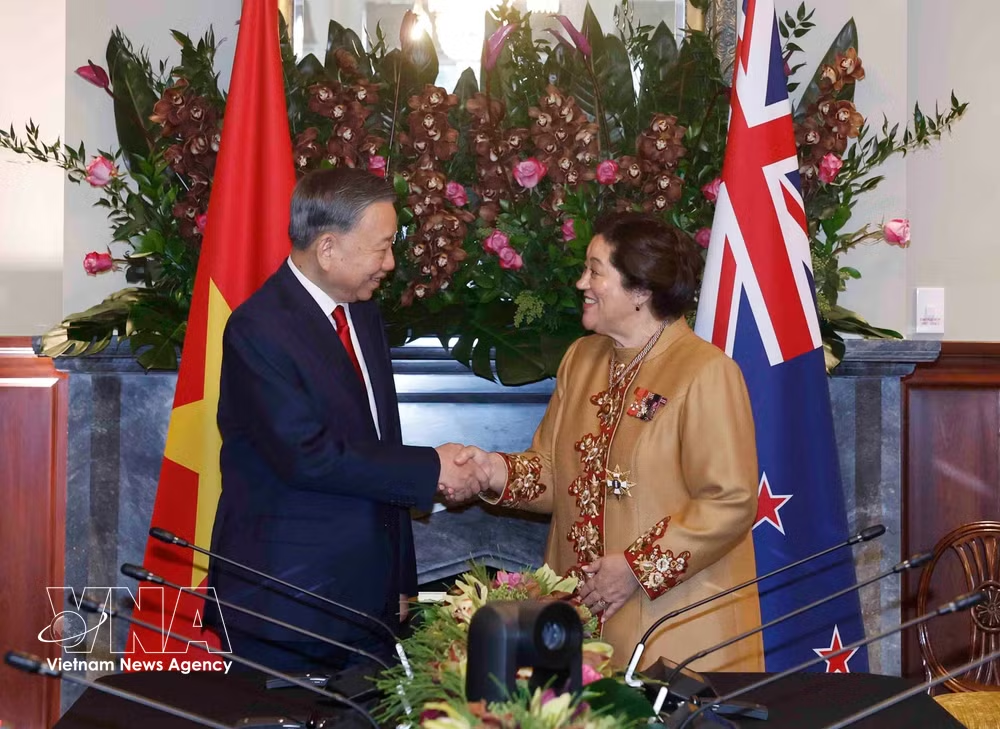
Looking ahead, Vietnam will work with Australia and New Zealand to translate the outcomes of the visits into concrete programmes and projects. In political and diplomatic relations, the countries will intensify high-level and multi-level exchanges through Party and parliamentary channels, thereby opening a new stage in bilateral ties.
A total of 62 cooperation documents and agreements were signed during the visits. Among them were three important joint statements between Vietnam and Australia on deepening the comprehensive strategic partnership, strengthening economic resilience and adaptability, and enhancing connectivity in science, technology and innovation. The foreign minister highlighted the significance of the joint statement on science, technology and innovation connectivity, which represents a new model of cooperation that goes beyond technology transfer toward joint research, co-development and co-creation of value.
Vietnam and Australia are expected to quickly translate new cooperation orientations in AI, semiconductors, digital transformation, critical minerals, energy and green transition into specific programmes and projects, while strengthening links among governments, businesses, universities and research institutes.
With New Zealand, Vietnam will further capitalise on economic complementarities, focusing on education and training, high-quality human resources, high-tech agriculture, agricultural market access, science and technology, innovation, green transition and sustainable development.
The Vietnamese Government, ministries, sectors and localities will closely coordinate in developing action programmes based on high-level agreements, with clear tasks, focal points, timelines and responsibilities. Practical benefits for people and businesses will serve as the ultimate goal, while effectiveness and concrete results will be the key measures of success, Trung stated.
At the multilateral level, Vietnam will step up strategic consultations and policy coordination with Australia and New Zealand within the framework of ASEAN, the United Nations, the Asia-Pacific Economic Cooperation (APEC) and at other regional and international forums. It will work with the two countries to promote dialogue, build trust, uphold international law, and contribute to peace, stability, cooperation and development in the region and the world at large.
With strong political determination and close coordination among agencies, localities, businesses and partners, the outcomes of the top leader’s state visits are expected to be rapidly transformed into concrete programmes, projects and achievements, giving fresh impetus to Vietnam-Australia and Vietnam-New Zealand relations and contributing to Vietnam’s development in the new era, the foreign minister added./.