Hanoi (VNA) - On July 28, 1995, the red flag with its golden star rose into the skies over Brunei. It marked Vietnam’s first step into a new circle, the Association of Southeast Asian Nations (ASEAN).
For the region, it was a gesture of widening embrace; for Vietnam, it was the beginning of a deep, unbroken commitment to the shared destiny of Southeast Asia.
Three decades later, Vietnam has affirmed a foreign policy of openness, independence, self-reliance, multilateralism and diversification, steadily enhancing its regional and global standing and credibility.
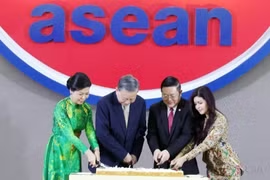
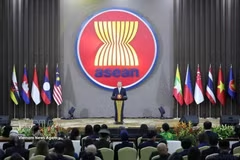
General Secretary of the Communist Party of Vietnam (CPV) Central Committee To Lam attended and delivered a keynote policy speech at a ceremony to celebrate the 30th anniversary of Vietnam's accession to ASEAN in Jakarta, Indonesia, on March 10 on the occasion of his official visit to the ASEAN Secretariat.
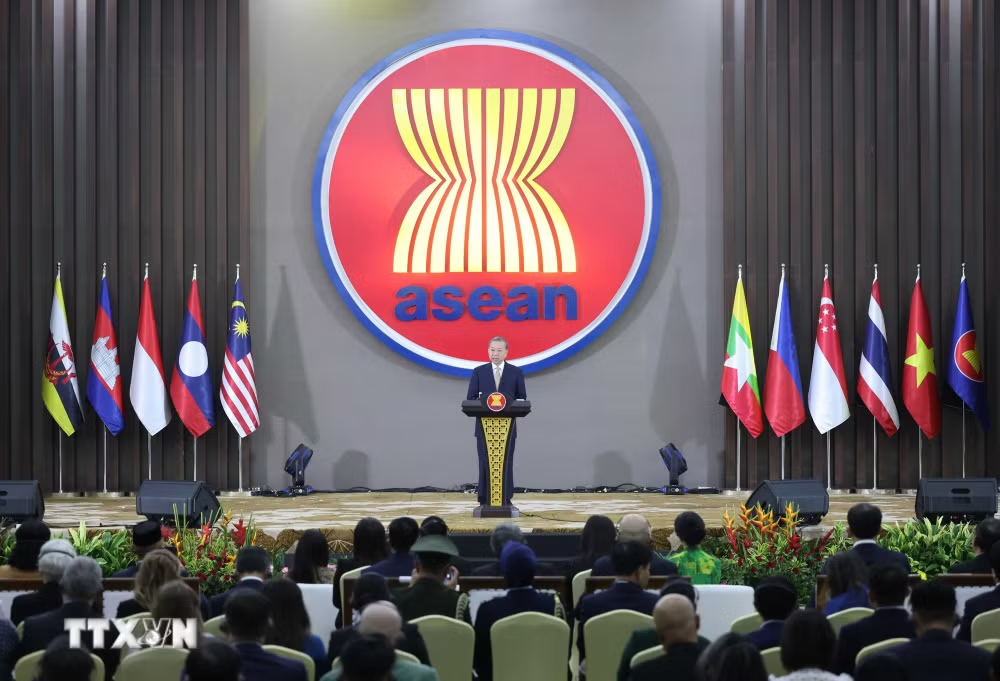
The leader said ASEAN is a key pillar in Vietnam's foreign policy and an integral part of its development and integration strategy. He added that with ASEAN as the starting point, Vietnam has deepened its international integration and set up diplomatic relations with 194 countries worldwide, including comprehensive, strategic, or comprehensive strategic partnerships with 35 nations, including all ASEAN members and the bloc’s key partners.
Vietnam is now a member of more than 70 regional and international forums and organisations, and the country signed free trade agreements (FTAs) with over 60 countries and economies across the world, positioning it among the world's 40 largest economies and the top 20 in terms of foreign investment attraction and trade scale.
Regarding Vietnam's foreign policy and guidelines in the new era, the Party chief affirmed that Vietnam is ready to make more positive and proactive contributions to the world politics, the global economy and the human civilisation.
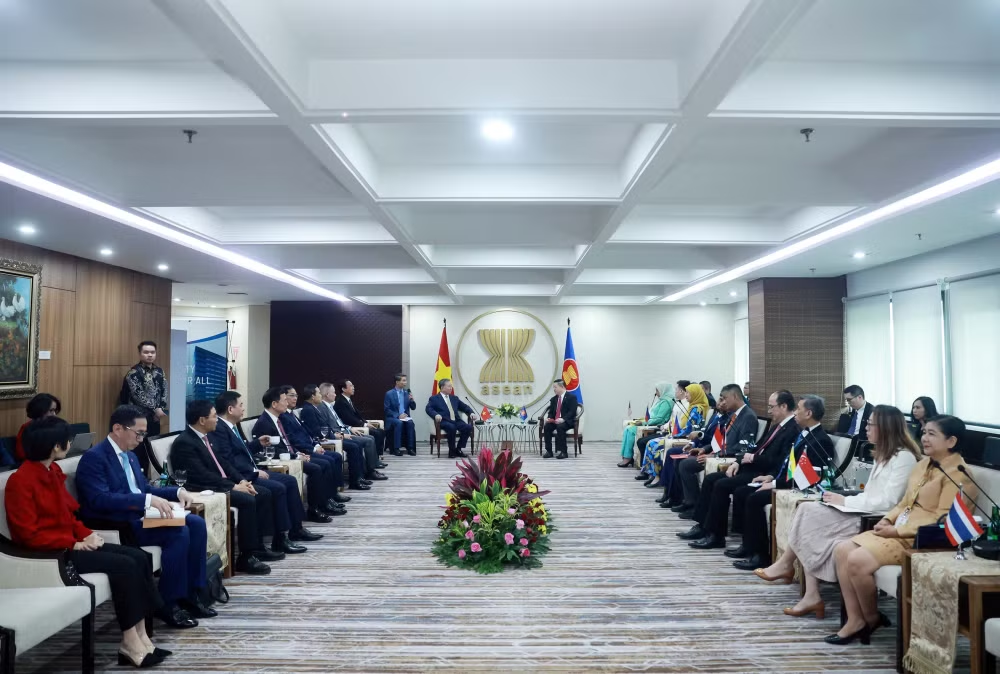
In particular, defining ASEAN as a multilateral cooperation mechanism with direct and leading importance, Vietnam will promote its sense of responsibility, actively contribute to the common affairs of the association with creative mindset, innovative approaches, flexible effective implementation, and drastic actions, he said.
Speaking at the ceremony, ASEAN Secretary-General Dr Kao Kim Hourn said Vietnam has been a steadfast champion of ASEAN's efforts to bridge the development gap. This commitment is exemplified by the 2001 Hanoi Declaration on Narrowing the Development Gap for Closer ASEAN Integration, which emphasises collective responsibility to integrate Cambodia, Laos, Myanmar, and Vietnam into the ASEAN economic mainstream.
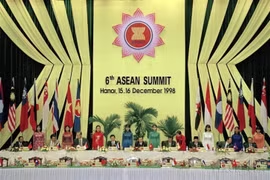
“Vietnam’s leadership in ASEAN is further highlighted through its Chairmanship of ASEAN in 1998, 2010, and 2020. Each of these chairmanships was distinguished by notable achievements that have fundamentally shaped ASEAN's trajectory. In 1998, Vietnam skilfully navigated ASEAN during the challenging period following the Asian Financial Crisis. In 2010, it played a crucial role in strengthening ASEAN connectivity and expanding the East Asia Summit. In 2020, despite the unprecedented global disruptions caused by the COVID-19 pandemic, Vietnam successfully led ASEAN in advancing regional resilience through coordinating our effective collective response.”
Vietnam has also played a proactive and constructive role in enhancing and enriching ASEAN’s external relations, aligning its multi-directional foreign policy with ASEAN’s outward-looking and inclusive strategic outlook. This synergy is evident in Vietnam’s global network of partnerships, including comprehensive strategic partnerships with all major powers and key Southeast Asian neighbours, effectively mirroring ASEAN’s robust relationships with its Dialogue Partners.
Furthermore, Vietnam has been a staunch advocate for ASEAN’s extensive network of free trade agreements, which in turn has solidified the region as a key hub of global supply chains. Since joining ASEAN in 1995 as a low-income nation, Vietnam has truly transformed into one of the bloc’s most dynamic and influential members.
“These remarkable achievements have not only elevated the wellbeing of the Vietnamese people but have also significantly strengthened ASEAN. The organisation’s strength is sustained only when each member state thrives and remains committed to the regional community-building. As ASEAN progresses towards adopting the ASEAN Community Vision 2045 this year, Vietnam's leadership and active role continues to be instrumental in shaping our collective future,” he said.
Strengthening the role as a ‘beacon of peace’
In the new era of development, Vietnam continues to steadfastly pursue the foreign policy of independence, self-reliance, peace, friendship, cooperation, development, diversification and multilateralisation of relations, being a friend, a reliable partner, an active and responsible member of the international community, and proactively engaging in global integration. Vietnam is ready to make an even more active and constructive contribution to global politics, the world economy, and human civilisation.
According to General Secretary Lam, in the next phase of development with new expectations for ASEAN, Vietnam is increasingly aware of its responsibility to actively participate and contribute more to collective efforts, guided by a philosophy of creative thinking, innovative approaches, flexible implementation, efficient practices, and decisive action.
Vietnam will work closely with other ASEAN members to realise regional potential and address challenges, including efforts to build an inclusive, sustainable structure connecting politics, security, economy, trade, culture, society, and people-to-people exchanges, the leader said.
Vietnamese Ambassador to ASEAN Ton Thi Ngoc Huong also affirmed the country’s determination to step up efforts with other member states to realise ASEAN’s goals in the new phase, implement the 2045 Community Vision, and help the bloc navigate challenges amid a rapidly changing and unpredictable regional and global environment./.