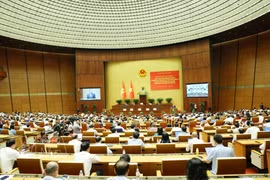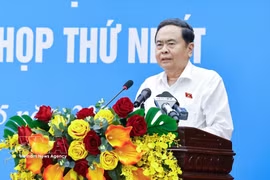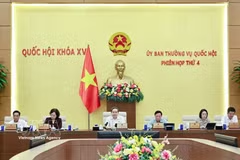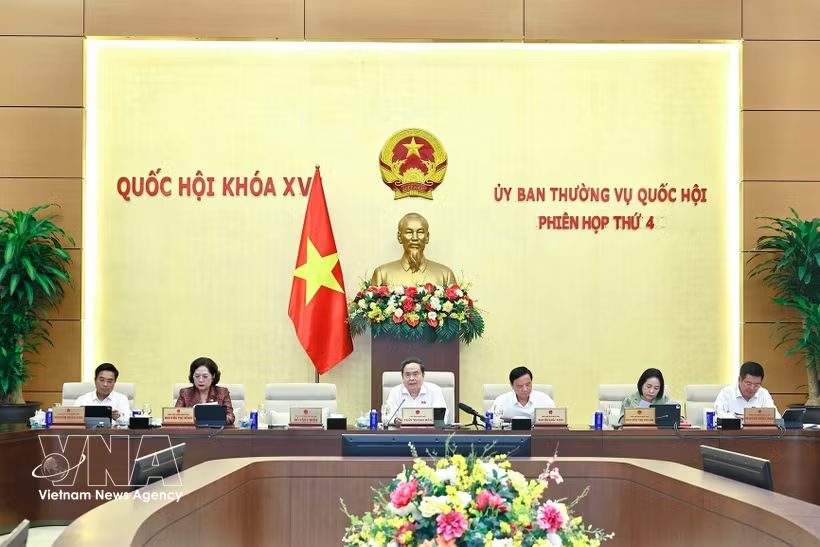
Hanoi (VNA) – The National Assembly (NA) Standing Committee on July 28 discussed proposed amendments to the 2024 Land Law during its fourth meeting, with the Government putting forward seven major policy groups aimed at improving land management, promoting sustainable development and better protecting the rights of land users.
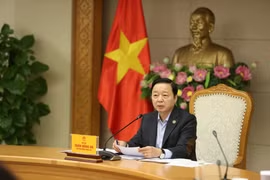
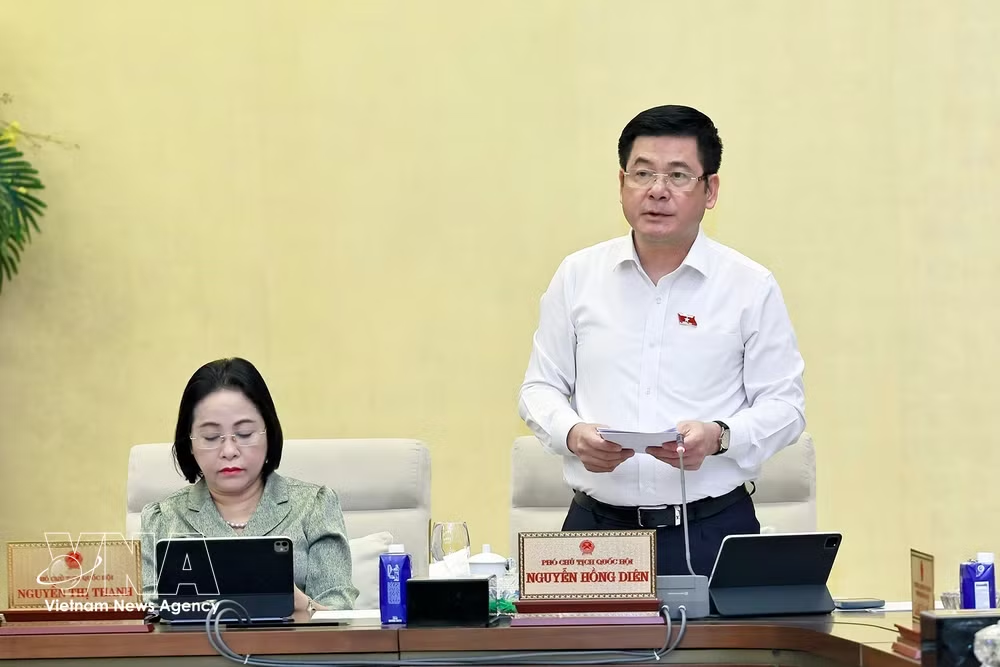
Presenting the proposals, Minister of Agriculture and Environment Trinh Viet Hung said the Government had approved seven policy orientations for revising the law, focusing on planning, land allocation, compensation, land pricing, land use rights, administrative reform and stronger oversight.
Under the proposals, land-use planning would be reformed through greater integration, digitalisation and a simplified planning system in line with the two-tier local administration model. The Government also plans to tighten control over planning adjustments while giving priority to land for infrastructure, social housing, education, healthcare and new growth drivers.
The second policy group seeks to improve the mechanisms for land allocation, land leasing and enhancing transparency. It would clarify cases requiring land-use rights auctions or bidding for land-related projects, while improving the management of surplus public land and offices. Priority would also be given to land for education, healthcare, rental housing, social housing and other priority development sectors.
Thirdly, regarding land recovery, compensation, support and resettlement, the Government proposes a more balanced approach that safeguards the interests of the State, citizens and investors while shortening site clearance procedures.
A key principle is to shift from compensating for lost property to rebuilding the lives of people whose land is recovered. The proposal aims to ensure affected residents have housing and living conditions that are equal to or better than those before relocation. It also introduces more flexible mechanisms for urgent national projects and cases where there is broad public consensus.
The fourth policy group proposes reforms to land finance and land pricing, moving from an administrative management approach to a development-oriented governance model. Under the proposal, land prices would be determined by the State based on comprehensive, transparent and publicly available data. The mechanism is intended to regulate increases in land value, curb speculation and price manipulation, and make more effective use of land resources for socio-economic development.
Fifthly, the Government suggests perfecting regulations on the rights and obligations of land users and land use regimes in a way that unlocks resource potential through expanding multi-purpose land use mechanisms, exploiting multi-dimensional space, elevated space, and land reclamation; promoting land consolidation and concentration; developing the land use rights market and supplementing mechanisms for certain land types and new development models to meet socio-economic development requirements.
Sixthly, the Government emphasises the need to accelerate administrative reform, digital transformation, and decentralisation in land management; perfect the national land database; address historical issues in issuing land certificates; simplify administrative procedures in accordance with the two-tier local administration structure, while enhancing local responsibility and strengthening the government's inspection and supervision.
The final policy group focuses on strengthening inspections, supervision, dispute settlement and enforcement, while tackling problems such as abandoned land, environmental degradation and historical shortcomings in land management.
Presenting the verification report, Chairman of the NA Committee for Economic and Financial Affairs Phan Van Mai expressed support for revising the 2024 Land Law, describing the amendments as necessary and urgent.
However, the committee recommended clarification of the proposed cases in which land could be recovered for socio-economic development projects serving national or public interests, particularly newly added commercial investment projects. It called for clearer criteria to determine when land recovery is genuinely necessary and urged careful review of proposals allowing land to be recovered before compensation, support and resettlement plans are fully completed.
The committee also recommended that preliminary compensation and resettlement plans and temporary accommodation arrangements should be put in place before land is recovered to protect the legitimate rights and interests of affected people.
The NA Standing Committee agreed to submit the proposed policy directions for amendments to the 2024 Land Law to the legislature for discussions at its first extraordinary session in early August 2026./.