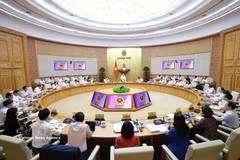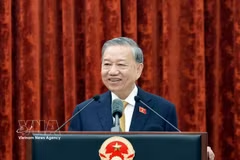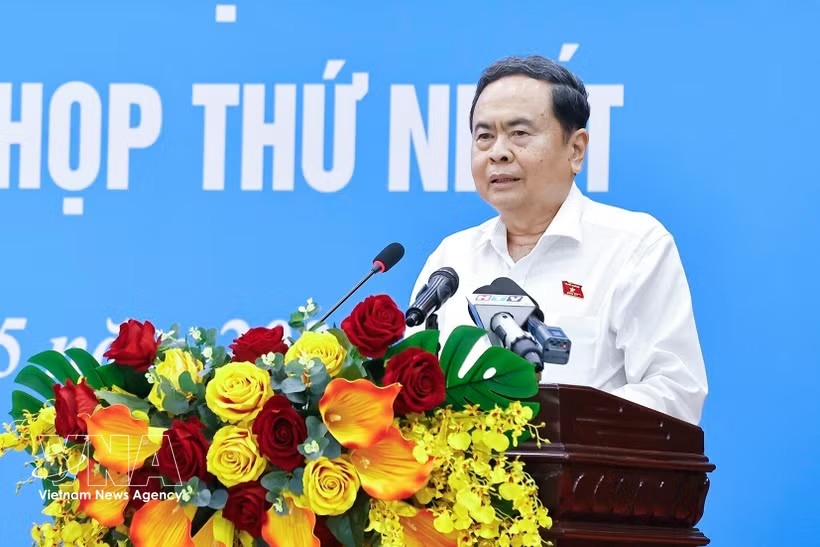
Ho Chi Minh City (VNA) – National Assembly Chairman Tran Thanh Man on May 4 underscored the need for a comprehensive revision of the Land Law in the coming period, coupled with enhanced oversight of delayed projects and stagnant planning schemes, as part of broader efforts to remove bottlenecks and sustain socio-economic development.
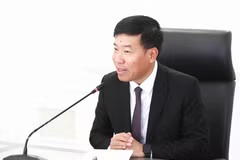
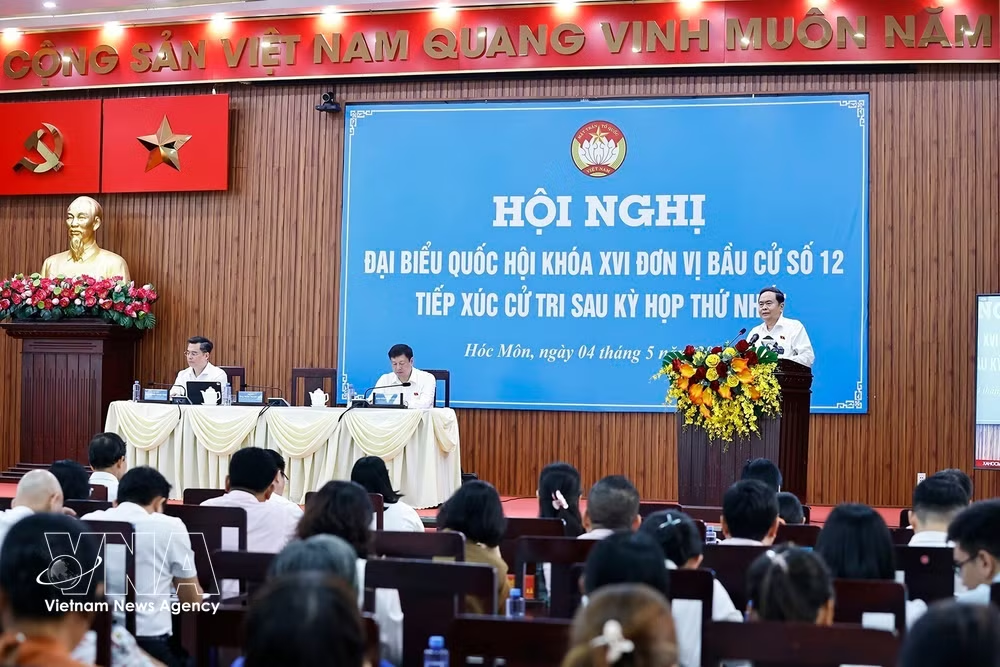
Speaking at a meeting with voters in Ho Chi Minh City’s Hoc Mon commune, the top legislator highlighted that the NA and its Standing Committee will intensify supervision of land-related issues, particularly long-stalled projects and unresolved planning that have affected citizens’ rights and local development.
He noted that the Ministry of Agriculture and Environment and relevant ministries, sectors and localities are currently reviewing the implementation of the Land Law and proposing amendments, alongside adjustments to the national land-use planning for 2021–2030 with a vision to 2050. These efforts, he said, will serve as a foundation for a sweeping revision of the law in the coming time.
The legislature will also continue to strengthen oversight of price management, control inflation, and require the Government to review and adjust the social security system in a more flexible manner, especially for informal workers, low-income groups and elderly people without pensions, he emphasised, responding to voter concerns about rising living costs and income pressures.
The NA Chairman pointed to recent legislative actions aimed at easing financial burdens and stimulating economic activity. At its first session, the 16th NA adopted coordinated amendments to the Law on Special Consumption Tax, the Law on Value Added Tax, the Law on Personal Income Tax, and the Law on Corporate Income Tax; and passed a resolution to adjust taxes on fuel and other essential goods, thereby creating more room for consumption and investment.
Addressing healthcare concerns, he reaffirmed the legislature’s commitment to strengthening grassroots medical services. Recent revisions to the Law on Medical Examination and Treatment, along with related resolutions, aim to reduce overcrowding at higher-level hospitals by improving the capacity of local health stations. Measures such as digital transformation, telemedicine, and increased allocation of medical personnel and equipment to lower levels will be prioritised.
On employment and vocational training, the top legislator highlighted the revised Employment Law, effective from January 1, 2026, which expands unemployment insurance coverage and enhances support for both workers and businesses. He called on the Government to further promote short-term, market-oriented vocational training and to create favourable conditions for small- and medium-sized enterprises to generate stable local jobs.
Regarding Ho Chi Minh City’s development, NA Chairman Man praised its strong economic performance and reform efforts, including the effective use of special policy mechanisms granted by the National Assembly. He revealed that the Politburo has approved the policy of developing a dedicated Law on Special Urban Governance for the city. Once enacted, this law is expected to unlock new growth opportunities and address longstanding institutional constraints.
The National Assembly will continue to refine the legal and policy framework and strengthen oversight, requiring competent authorities to intensify efforts to combat all forms of crime, tighten market management, and strictly control the quality of food and pharmaceuticals, the top legislator affirmed.
Reiterating the importance of institutional reform, he also noted ongoing efforts to streamline administrative structures and enhance the efficiency of local governance. Greater decentralisation and delegation of authority to localities will continue under the principle of “localities decide, localities act, and localities take responsibility.”/.