Hanoi (VNA) - The Ministry of Construction (MoC) has set an ambitious goal to develop a modern, synchronised, and smart transport network as part of efforts to establish the backbone of the national infrastructure system in the 2025–2030 period.
Forming national infrastructure framework
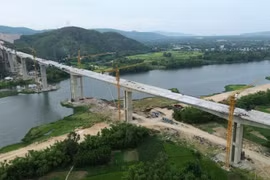
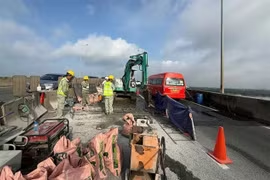
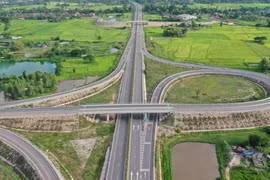
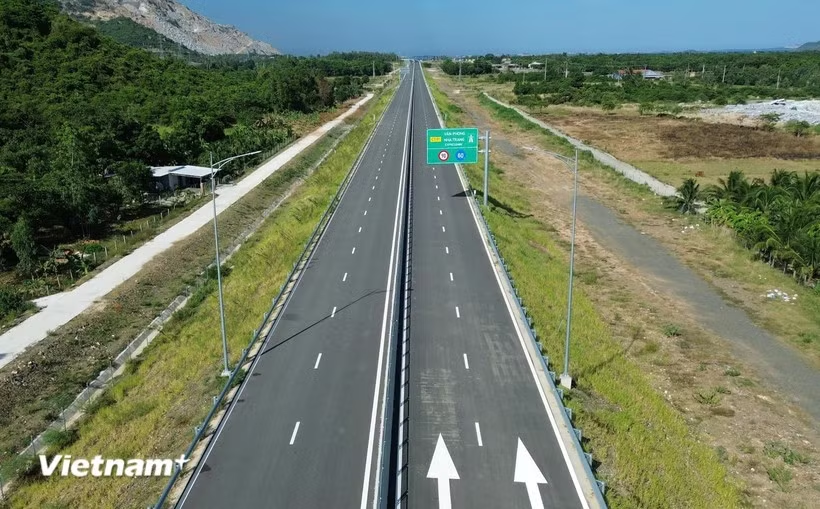
In its newly launched emulation campaign for 2025–2030, the MoC has outlined ambitious goals to develop a modern, smart, and synchronized transport system, serving as the backbone for national development. The plan emphasises concentrating central resources on strategic and key infrastructure projects to gradually shape the national framework. Priority will be given to the construction of the eastern North–South expressway, several sections of the western North–South expressway, and major east–west routes that connect key economic zones across the country.
The ministry also aims to develop gateway seaports with international transshipment capacity, major airports, and the North–South high-speed railway. It will promote the construction of inter-regional expressways linking international seaports, airports, and border gates with high import–export demand, ensuring seamless regional connectivity and boosting logistics efficiency.
From 2026–2030, about 2,000 km of expressways will be built, raising the national total to 5,000 km by 2030. The coastal route will be completed, key highways upgraded, the Ho Chi Minh Road connected, and gateways to Hanoi and HCM City expanded to meet growing transport demand.
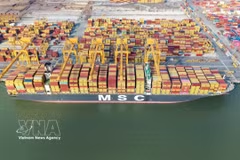
The maritime sector will prioritise upgrading key shipping routes such as Nghi Son, Cam Pha, Lach Huyen, Cai Mep–Thi Vai, and Song Hau. Major ports, including Lach Huyen, Cai Mep, Lien Chieu, and Nam Do Son will be developed into international transshipment hubs, while efforts will focus on expanding the national fleet, boosting search and rescue capacity, and modernising maritime management systems.
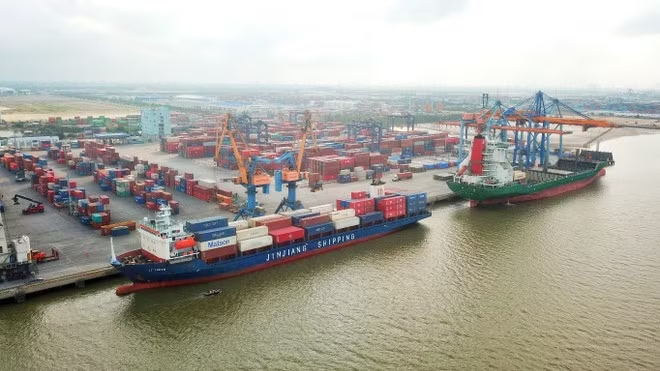
Inland waterways will prioritise improving bridge clearance to allow larger vessels, easing pressure on roads, and developing southern logistics corridors and new inland ports. River–sea and coastal transport along the North–South route will also be expanded.
The railway sector aims to complete the Lao Cai–Hanoi–Hai Phong line before 2030, advance the North–South high-speed railway, and accelerate projects linking international ports with China, and major airports. Key routes such as Bien Hoa–Vung Tau, Ho Chi Minh City–Can Tho, Hanoi–Ha Long, Lang Son–Hanoi, and Mong Cai–Hai Phong will also be developed.
In aviation, the second phase of Long Thanh International Airport will be implemented, while major airports, including Vinh, Lien Khuong, Noi Bai, and Chu Lai will be upgraded, and investment in new airports will be encouraged under national planning.
Urban development guided by public transport
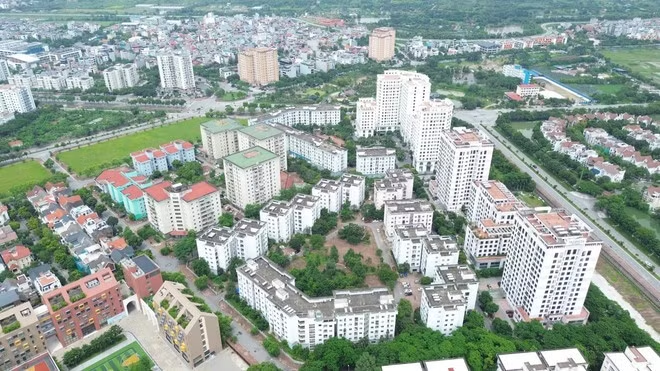
The MoC is developing urban and transport infrastructure in a modern, synchronised, and climate-resilient manner, particularly in major cities, aligned with green and smart urban development goals. Priority will be given to investing in key transport works such as ring roads, water supply and drainage systems, wastewater treatment, and flood prevention projects. Urban public transport will be strengthened, with a focus on accelerating the construction of metro lines.
The ministry aims to promote compact urban growth integrated with public spaces and green, ecological areas to optimise land and resource use. Cities with strategic advantages will be developed into major economic, financial, commercial, and service hubs with high regional and international competitiveness.
Urban infrastructure, especially core technical and essential social infrastructure, will be built ahead of demand, including the effective use of underground spaces, notably metro systems in major cities.
In transport management and safety, the ministry is implementing the transport service development strategy to 2035, with a vision to 2050, targeting double-digit growth in transport volume.
It will propose solutions to establish logistics hubs at key transport nodes, including seaports, inland ports, railway stations, and airports, offering comprehensive, highly automated services under a “transshipment centre” model that connects multiple modes of transport.
The MoC is promoting waterway and coastal shipping, developing a freight transport exchange platform, and accelerating mass transit projects in Hanoi and HCM City, particularly urban railway lines./.