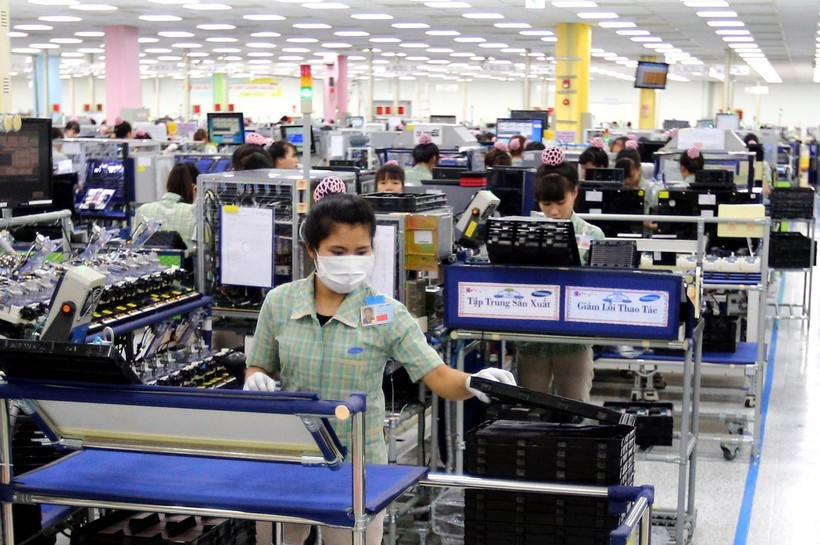
Hanoi (VNA) - Vietnamese enterprises are standing at a major turning point, seeking to move beyond the shadow of “processing and assembly” to assert an autonomous position in global value chains, economic experts said.
An overview of Vietnam’s supporting industries reveals a striking paradox. Dr. Trinh Quoc Vinh, a member of the Scientific Council at the Institute for Strategy and Policy on Industry and Trade, cited two key figures: 10% and 90%. According to him, despite the formation of a nationwide network of roughly 6,000 supporting-industry enterprises, the real contribution of wholly Vietnamese firms remains modest.
At present, these companies meet only about 10% of domestic demand for components and spare parts. This means the remaining 90% of the market, worth tens of billions of US dollars, continues to be dominated by foreign direct investment (FDI) enterprises or relies entirely on imports.
The gap is clearly reflected in localisation rates across key industries. Dr. Vinh noted that while the textile and garment sector stands out with a localisation rate of around 48%, high-tech industries such as electronics record figures of only 15–18%.
Vinh estimated that only about 5–10% of enterprises are truly capable of integrating deeply and sustainably into global supply chains, while the remainder continue to operate at the low end of the value spectrum.
Pham Hoang Long, Head of the Supply Division at Honda Vietnam, offered a practical perspective based on three decades of the company’s presence in the market. Honda currently works with 150 suppliers, yet goods sourced from 30 purely Vietnamese enterprises account for less than 20% of its total procurement value. Most of the value added, he said, still accrues to FDI firms thanks to their higher knowledge content embedded in each component.
Vietnamese enterprises today mainly supply individual components, such as plastic parts or stamped products, based on existing drawings. While domestic firms have become capable of mould-making and manufacturing, they still lack the capacity to design complex, highly customised components that meet the diverse requirements of international clients.
Long emphasised that insufficient R&D capacity not only keeps product value low but also weakens the ability of Vietnamese suppliers to compete directly with foreign counterparts, even in the domestic market. To transform themselves, enterprises must shift their mindset from “manufacturing to sample” towards “independent design and mastery of core technologies, he said.
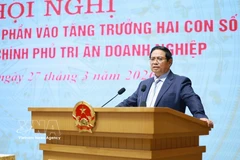
Nguyen Duc Hien, Deputy Head of the Party Central Committee's Commission for Policies and Strategies, underscored that developing a supply ecosystem is no longer an issue for individual firms alone, but a matter of national capability. He noted that relevant agencies are finalising a resolution on strategic solutions to promote double-digit growth linked to a new growth model, in which suppliers are elevated as a foundation for economic autonomy and security.
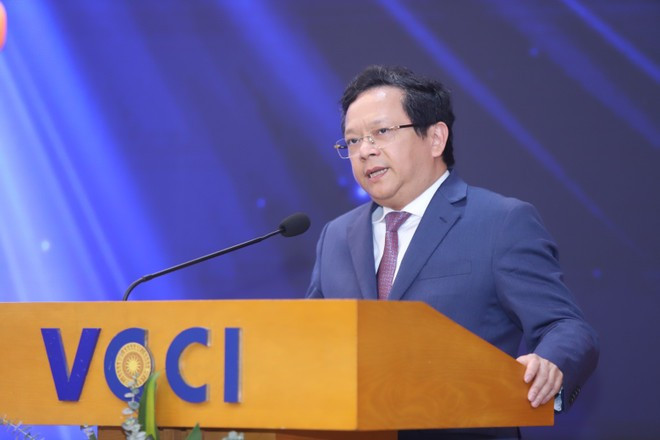
Nguyen Duc Hien, Deputy Head of the Party Central Committee's Commission for Policies and Strategies, stresses that developing a supply ecosystem is not merely a business issue but a national capacity challenge. (Photo: VietnamPlus)
He added that the Government is taking concrete steps to improve the legal framework, including a decree to replace Decree No. 111/2015/ND-CP on supporting industries, expanding eligibility for incentives and providing R&D support of up to 50% of testing costs. Notably, the “Go Global” programme led by the Ministry of Industry and Trade is expected to create a lever for Vietnamese enterprises to venture further into global markets.
In the new context, Hien affirmed, the State will play a policy-enabling role, allowing enterprises, associations, and research institutes to become the main actors in implementing support programmes, thereby generating synergistic strength for the entire economy./.