AI to add 120–130 billion USD to Vietnam's economy by 2040: report

By 2040, AI will become a core factor of Vietnam's economic growth, according to a report released by the National Innovation Centre.

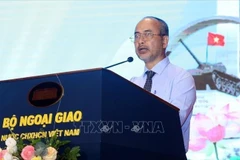
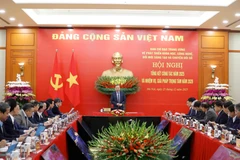
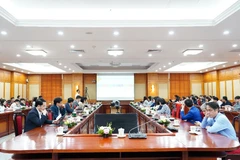
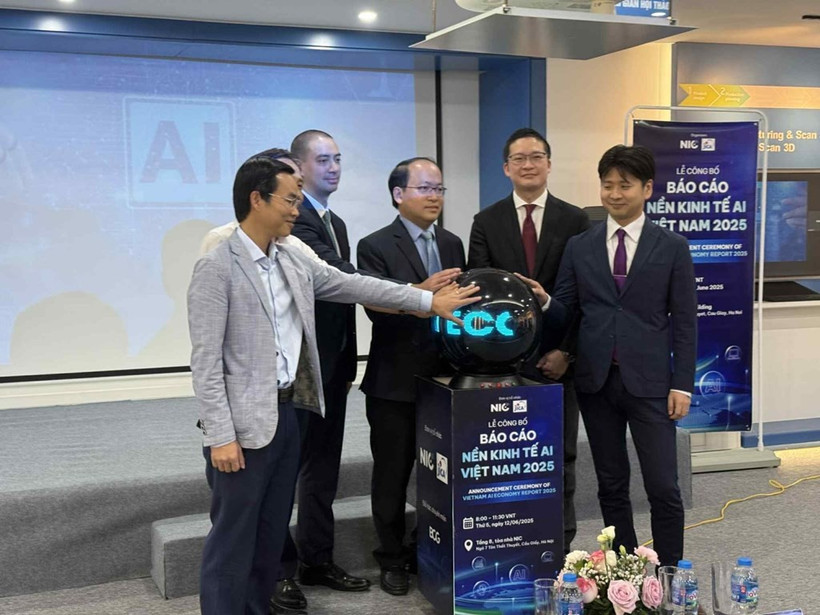
Delegates at the launch of the Vietnam AI Economy Report. (Photo: NIC)

Hanoi (VNA) – Artificial intelligence (AI) could add 120–130 billion USD to Vietnam’s economy by 2040, according to a report released by the National Innovation Centre (NIC) on June 12.

The report was compiled by the NIC under the Ministry of Finance in coordination with the Japan International Cooperation Agency (JICA) and the Boston Consulting Group (BCG).

It says that by 2040, AI will become a core factor of Vietnam's economic growth. The two main growth drivers that will help AI make a major contribution to the economy by 2040 are consumption revenue (45–55 billion USD) through the consumption of AI-powered products and services and the 60–70 billion USD in costs saved due to increased productivity thanks to technology application.

The report analyses in depth the current state of Vietnam's AI economy, and generalises into models and details for each field. It also points out the AI strategy and roadmap, areas of AI application, the startup ecosystem, human resources, and resources for the field. In particular, it provides important and practical strategic recommendations as well as a vision for Vietnam's AI ecosystem.

Vietnam is entering a particularly important transition period amid the Fourth Industrial Revolution taking place strongly with new breakthroughs in strategic technologies such as AI, semiconductor, biotechnology, renewable energy, and big data that are reshaping global value chains and changing the structures of economies.

AI is emerging as a central driving force of this revolution, with a forecast contribution of up to 5 trillion USD to the global economy by 2030 as estimated by the International Data Corporation (IDC). Facing this historic opportunity, Vietnam is determined not only to participate, but also to gain a firm foothold in this key field, by proactively promoting cooperation with other countries, economies, and the world's tech giants.

Addressing the report launch in Hanoi, NIC Director Vu Quoc Huy said that the Party and State of Vietnam have issued many important policies and decisions such as the Politburo's Resolution No. 57-NQ/TW on making breakthroughs in science – technology development, innovation and national digital transformation, and Resolution 68-NQ/TW on private economic sector development, along with the National Assembly's Resolution No. 193/2025/QH15 on piloting a number of special mechanisms and policies to create breakthroughs in science – technology development, innovation, and national digital transformation.

He noted the report came as a result of cooperation between NIC, JICA, and BCG. It is the first document to provide a comprehensive panorama of the AI economy in Vietnam, providing some international experiences and lessons for AI development, analysing opportunities in key economic sectors, and proposing development pillars for the AI economy.

Kubo Yoshimoto, Deputy Chief Representative of JICA in Vietnam, said that the report outlines the way AI will contribute to Vietnam’s economy in the coming years. It also highlights key areas where AI could have the greatest impact on and identifies strategic opportunities needed to develop an AI ecosystem in the country./.

VNA

See more

Participants at the 5th ASEAN Digital Ministers Meeting (ADGMIN) in Thailand. (Photo: VNA)

Hanoi to host 6th ASEAN Digital Ministers’ Meeting in January

Held annually on a rotating basis among ASEAN member states, the meeting plays a key role in shaping strategic orientations, formulating policies and promoting digital cooperation within ASEAN, while strengthening collaboration with partners and international organisations amid rapid digital and digital-economy transformation globally.

(Illustrative photo: Viettel)

Viettel records breakthrough in first 5G Advanced trial

The achievement, marked as Vietnam’s first 5G Advanced trial, was made possible by carrier aggregation (CA) technology, enabling mobile devices to operate across multiple frequency bands simultaneously instead of a single band.

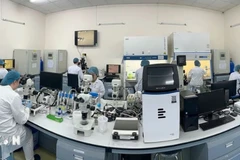
A biotechnology laboratory of the International University at Vietnam National University-Ho Chi Minh City. (Photo: VNA)

Resolution 57: Role of intellectuals in advancing science and technology research

Prof. Dr. Tran Dai Lam, Director of the Institute of Materials Science at the Vietnam Academy of Science and Technology (VAST), emphasised that intellectuals should nurture national responsibility and ambition, be ready to take on challenges, evaluate research outcomes by international standards, and engage in collaboration across different sectors.

Professor Vu Minh Khuong, of the Lee Kuan Yew School of Public Policy (right), talks to a Vietnam News Agency correspondent in Singapore. (Photo: VNA)

Resolution 57 - catalyst for scientific and technological breakthroughs

The resolution also seeks to create stronger mechanisms to mobilise social and private resources and support an innovation ecosystem; link digital transformation in the public sector with the modernisation of national governance; and prioritise the development of elite human resources and internationally-standard research infrastructure.

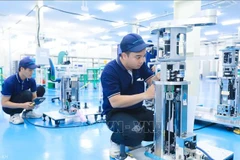
Workers produce electronic components (Photo: VNA)

Science, technology drive Vietnam’s rising global profile: expert

Assoc. Prof. Le Duc Anh from Tokyo University held that for fast and sustainable development, Vietnam should prioritise science – technology and innovation as the main driver of productivity, focusing on sectors with high spillover effects such as semiconductors, AI, data, new energy and materials, biomedical technology, automation – robotics, and cybersecurity.

An overview of the workshop. (Photo: nafosted.gov.vn)

National portal expected to transform innovation into reality

The portal, which can be accessed at sangkien.gov.vn, was built to address the urgent need to mobilise collective intelligence and unlock the creativity of the entire population, in accordance with the directives of the steering committee for the implementation of the Politburo’s Resolution No. 57-NQ/TW on creating breakthroughs in science, technology, innovation and national digital transformation.

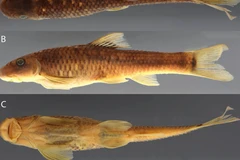
Sucker-mouthed minnow (Supradiscus varidiscus). (Photo: researchgate.net)

Vietnamese fish, bee named among 70 species newly identified in 2025

One of the most notable “hidden” finds is a small sucker-mouthed minnow endemic to Vietnam’s highlands, discovered in the Lo River. Scientifically named Supradiscus varidiscus, the specimen was collected and shelved some 25 years ago but has only now been studied and formally described.

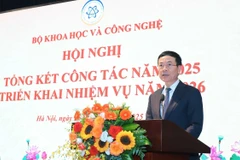
The Ministry of Science and Technology launches a centralised one-stop-shop unit on December 19. (Photo: VNA)

Vietnam pushes sci-tech, innovation as growth drivers under Resolution 57

The Ministry of Science and Technology (MoST) bears the responsibility of “paving the way”, guided by a consistent spirit of transitioning from a management-oriented mindset to a facilitative one, from “input-based management” to “output-based evaluation”, and from fragmented investment to a focused approach centred on strategic technologies.