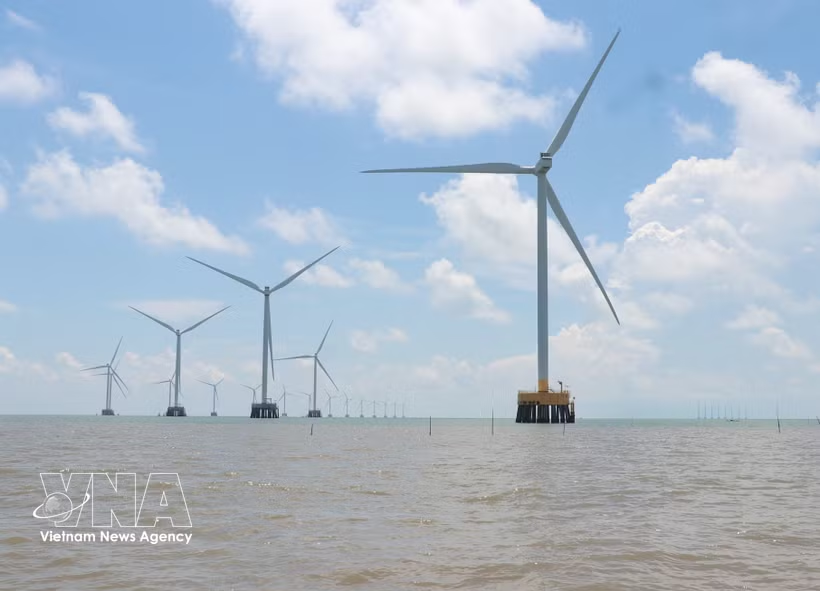
Hanoi (VNA) - With the revised Power Development Plan VIII (PDP8) and a new legal framework paving the way, battery energy storage systems (BESS) are expected to become a key enabler of Vietnam's energy transition, strengthening energy security and supporting the country's goal of achieving net-zero emissions by 2050.
Removing key barrier to emissions reduction
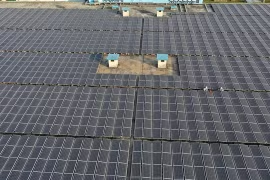
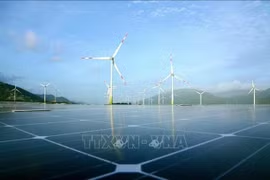
The revised PDP8 identifies renewable energy as a cornerstone of Vietnam's energy transition. By 2030, renewables (excluding hydropower) are projected to account for 28–36% of the country's total installed power capacity, with solar power reaching 46,459–73,416 MW. At the same time, energy storage systems, including BESS and pumped-storage hydropower, are planned to reach a combined capacity of 10,000–16,300 MW, enhancing the flexibility of the national power grid.
According to experts, expanding wind and solar power will not only diversify electricity supply but also reduce dependence on power created from coal and other fossil fuels. However, as renewable generation is weather-dependent, a higher share of renewables also increases the need for efficient energy storage solutions.
Unlike conventional power systems, which generate electricity for immediate consumption, energy storage technology enables surplus renewable electricity to be stored and discharged when demand rises. This maximises the use of clean energy while reducing reliance on high-emission power sources during peak demand periods.
Tran Quoc Tam, General Director of Vietnam Lien Thanh Electromechanical Joint Stock Company (LITHACO), described BESS as the "memory" of the power system. It stores excess solar electricity generated during the day for use in the evening or during periods of peak demand, while also helping stabilise grid frequency and voltage, easing pressure on transmission networks and improving energy management efficiency.
Experts forecast that Vietnam's electricity demand will continue to surge in the coming years, driven by the expansion of data centres, artificial intelligence (AI), electric vehicles and high-tech industries. They said coordinated investment in power generation, transmission infrastructure and energy storage will be essential to ensuring energy security while meeting emissions reduction and green growth targets.
Towards a circular energy ecosystem
Beyond improving the efficiency of clean electricity use, energy storage is increasingly viewed as a vital component of a low-carbon economy. By storing and making better use of renewable electricity, the need to dispatch thermal power plants is reduced, helping cut greenhouse gas emissions and minimise environmental impacts.
Speaking at a recent seminar on batteries as the oil of the 21st century in Ho Chi Minh City, experts said energy storage is becoming an indispensable part of modern energy systems. While wind and solar generate clean electricity, storage ensures it can be used when needed, improving investment efficiency and reducing energy waste.
According to Assoc. Prof. Dr. Nguyen Trung Kien of the Ho Chi Minh City University of Technology under the Vietnam National University, Ho Chi Minh City, lithium iron phosphate (LFP) batteries are currently the dominant technology for energy storage thanks to their 15–20-year lifespan, high safety standards and suitability for large-scale application. Looking ahead, the focus will shift towards developing new battery technologies, reducing dependence on critical raw materials and improving recyclability.
Experts stressed that BESS development should take a full life-cycle approach. Establishing systems to collect and recycle end-of-life batteries would enable the recovery of valuable materials such as lithium, iron, aluminium and copper, reducing demand for virgin resources, minimising waste and supporting a circular economy based on production, use and recycling.
Alongside technological advances, Vietnam is also strengthening the legal framework for energy storage. Government Decree No. 243/2026/ND-CP, issued on June 26, 2026, provides a legal basis for battery energy storage systems while allowing BESS to be integrated with self-produced and self-consumed rooftop solar power. The move is expected to accelerate the development of the energy storage market, improve the utilisation of clean electricity and ease pressure on the national power system.
According to experts, energy transition is not simply about replacing fossil fuels with wind and solar power. It also requires building a sustainable energy ecosystem in which clean power generation, energy storage, smart grids and material recycling chains develop in parallel. Such an integrated approach will improve energy efficiency, further reduce greenhouse gas emissions and help Vietnam achieve green growth and net-zero emissions targets by 2050./.