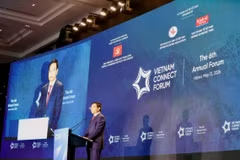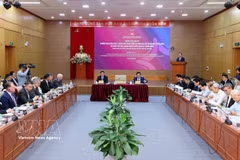
Ho Chi Minh City (VNA) – The Tall Building Forum 2026 was held in Ho Chi Minh City on May 14, offering forward-looking insights into sustainable urban high-rise development.
Speaking at the event, Jean Jacques Bouflet, Vice Chairman in charge of advocacy at the European Chamber of Commerce (EuroCham), said that building on the success of the 2024 edition, this year’s forum focused on key topics such as transit-oriented development (TOD), sustainable high-rise design, affordable housing and integrated urban development strategies.
The forum, co-organised by the Construction Sector Committee (CSC) of EuroCham Vietnam, in cooperation with Council on Vertical Urbanism (CVU), brought together architects, urban planners, developers and sustainability experts from Vietnam and abroad.
According to Bouflet, organisers expected the event to serve as a direct platform for policy dialogue, knowledge sharing and professional networking, contributing to building Vietnam’s urban development future.
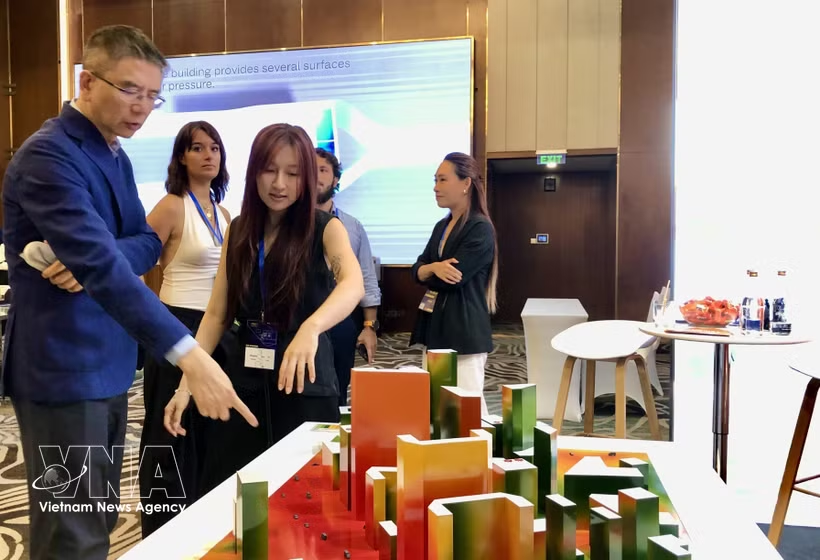
In addition to panel discussions and technical seminars, businesses introduced representative projects showcasing innovation in design, engineering excellence and sustainable urban integration.
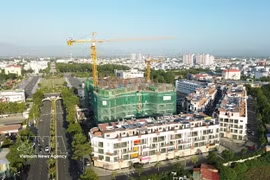
Alongside rapid urbanisation, high-rise buildings in Vietnam have mushroomed in scale and functionality, helping land-use efficiency, modernising urban spaces, and enhancing the quality of life. However, experts noted that development in major cities has also exposed challenges.
They said Vietnam’s technical standards have improved, but large-scale projects require updates to building engineering systems to meet practical demands and ensure safety in construction investment.
The Ministry of Construction has also been promoting green, energy-saving and environmentally friendly buildings as part of Vietnam’s sustainable development commitments, while calling for improved technical criteria in waste management.
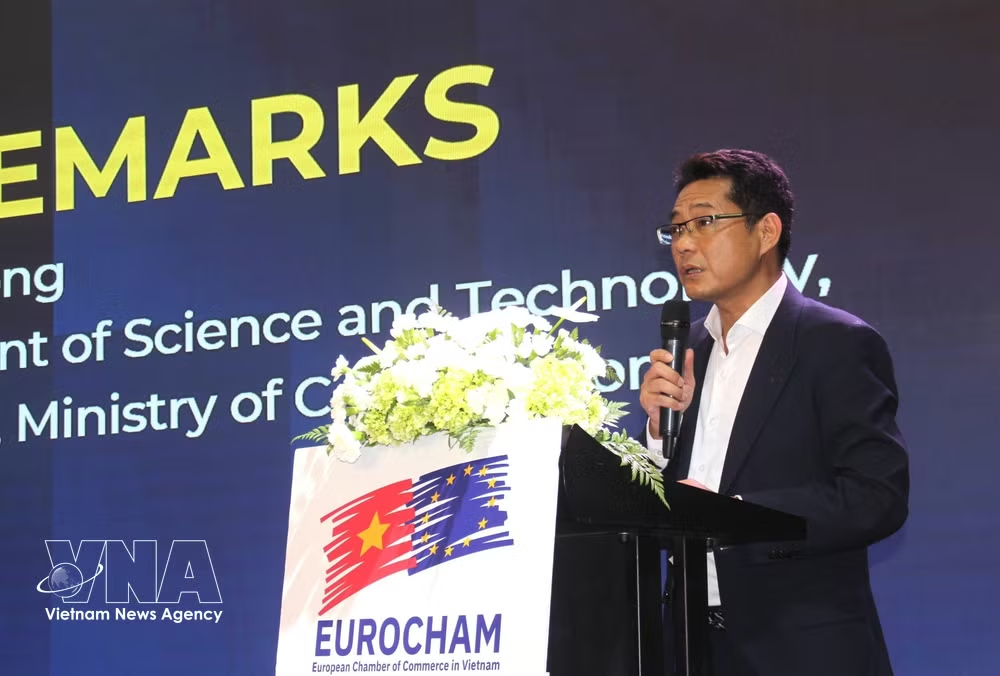
Le Minh Long, Deputy Director of the Ministry’s Department of Science, Technology and Environment, stressed that urban planning and management must stay ahead of development to ensure synchronisation between high-rise projects and technical and social infrastructure systems.
According to Long, advanced urban models such as compact cities and eco-cities should be studied and applied in line with Vietnam’s conditions to improve land-use efficiency and urban living environments.
Vietnam also needs to narrow the gap between research, institutional improvements and practical implementation, while enhancing coordination among state agencies, research institutions, consultants to ensure effective enforcement, he added.
Many experts said Vietnam is creating opportunities for businesses and investors through the implementation of recent policies, including the amended Law on Construction and institutional reforms, demonstrating the country’s commitment to building a more modern and sustainable urban environment.
Florence Chan, Principal at Kohn Pedersen Fox, said cities like Ho Chi Minh City need to improve resource efficiency and pursue sustainable high-rise development strategies amid increasingly limited resources.
Meanwhile, Marc Salemink, Associate Director of UNStudio, said mega-cities often face challenges related to public transit systems. Alongside high-rise development, authorities should design public transport routes aligned with travel demand to create seamless mobility and reduce dependence on private vehicles.
He added that Ho Chi Minh City’s TOD policies should be supported by accurate databases and effective data exploitation methods to attract investment into sustainable and high-potential projects./.