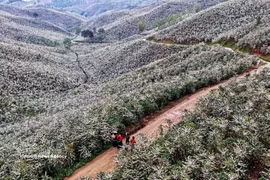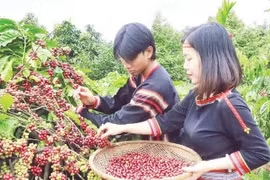
Hanoi (VNS/VNA) - Vietnam is expected to maintain its position as the world’s second-largest coffee producer and the leading supplier of robusta coffee in the 2025/26 crop year, latest data by the United States Department of Agriculture (USDA) showed.
Coffee production is forecast to recover to 30.8 million 60kg bags in 2025/26 thanks to favourable weather conditions and improved investment in farms.
Nearly 95% of the country’s output is expected to remain robusta, reinforcing Vietnam’s dominant role in the global instant coffee and commercial blend market. Bean exports are projected to rise by 2.3 million bags to 24.6 million bags on higher supplies.
The USDA data showed Brazil remains the world’s largest coffee producer with output forecast at 63 million bags in 2025/26. Colombia, Indonesia and Ethiopia complete the global top five producers.
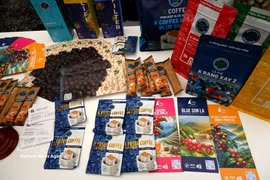
Coffee remains one of Vietnam’s key agricultural export earners. According to the Ministry of Agriculture and Environment, coffee export revenue reached 3.6 billion USD in the first four months of 2026, making it the country’s largest agricultural export product by value during the period.
In April alone, coffee exports were estimated at 198,800 tonnes worth 845.8 million USD.
Export volume rose 15% year-on-year, but export value declined 7.8% due to lower global prices.
Average export prices in the four-month period fell 19.8% year-on-year to an estimated 4,555 USD per tonne.
Germany, Italy and Spain remained Vietnam’s three largest coffee export markets, accounting for 15.3%, 8.2% and 7.4% of total market share, respectively. However, export turnover to these markets declined compared to the same period last year.
According to the International Coffee Organisation (ICO), global coffee prices have remained elevated over the past two years as tightening supplies and adverse weather conditions hit major producing countries, particularly Brazil, Vietnam and Colombia.
However, prices have recently eased from last year’s peaks amid expectations of stronger global supplies, particularly from Brazil.
Industry analysts said Vietnam has benefited from shifting global consumption patterns as coffee roasters increasingly substitute more expensive Arabica beans with Robusta amid prolonged supply shortages and volatile weather in major producing countries.
The USDA said global coffee production is forecast to reach a record 178.8 million bags in 2025/26, up 3.5 million bags from the previous year, largely driven by recovery in Vietnam and record output in Indonesia and Ethiopia. Meanwhile, global consumption is projected to rise to a record 173.9 million bags.
The report noted that high coffee prices have enabled Vietnamese farmers to increase spending on fertilisers and farming inputs, helping improve yields despite climate pressures.
Domestic coffee prices in April fell to around 85,000-87,000 VND per kilogramme, dropping below the 90,000 VND threshold recorded a month earlier, amid expectations of a bumper crop in Brazil.
The Ministry of Agriculture and Environment said forecasts of a record Brazilian harvest and the possibility of global oversupply in 2026 have weighed on market sentiment. Some international consultancy firms projected global oversupply could reach around 10 million bags next year.
At the same time, domestic trading activity has remained subdued as many Vietnamese farmers continue holding back sales in anticipation of higher prices. As a result, some exporters seeking to fulfil contracts have started sourcing coffee beans from Brazil and Indonesia.
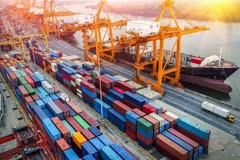
Analysts said coffee prices could continue moving sideways or experience short-term corrections in the near future, although concerns over shipping disruptions in the Strait of Hormuz and broader Middle East tensions could still support global prices by driving up freight, insurance and logistics costs.
USDA report forecast Vietnam will export a total of 27.9 million bags of coffee in 2025/26, including roasted and soluble products, second only to Brazil globally.
With Europe and North America remaining the world’s largest coffee-consuming markets and demand continuing to expand in Asia, analysts expect Vietnam to remain a critical supplier in the global coffee value chain in the coming years./.
VNA