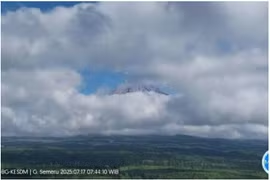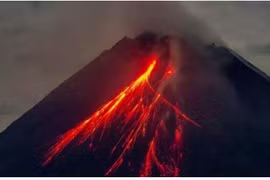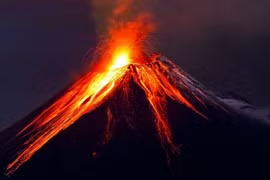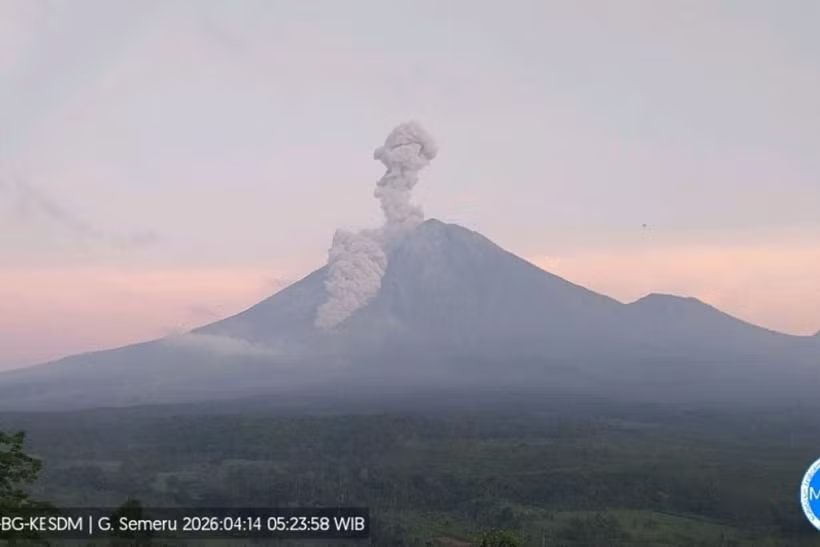
Jakarta (VNA) – Mount Semeru, the highest volcano on Indonesia’s Java Island, erupted several times on April 14, releasing hot clouds and ash that spread across surrounding areas, prompting authorities to maintain a high alert level to ensure public safety.
According to the Semeru Volcano Observation Agency, the first eruption occurred at 5:22 am, registering a maximum seismic amplitude of 20 mm and lasting 3 minutes and 23 seconds. The eruption produced an ash column rising about 1,500 m above the crater, reaching approximately 5,176 m above sea level.
Notably, the eruption also sent hot clouds moving as far as 3 km southeast toward the Besuk Kobokan area. However, it did not affect residential zones as the area lies within a designated exclusion zone previously established by authorities.
Just over 30 minutes later, a second eruption occurred with a seismic amplitude of 22 mm and a duration of 135 seconds. The eruption produced a grey-white ash plume reaching around 1,000 m above the crater, with ash drifting southwest.
Mount Semeru remains at alert Level III (Siaga). Indonesian authorities have banned all activities within a 13 km radius to the southeast along the Besuk Kobokan area and advised residents to stay at least 500 m away from riverbanks originating from the volcano’s summit due to the risk of volcanic mudflows, or lahars, which could travel up to 17 km.
In addition, all activities within a 5 km radius of the crater are strictly prohibited to prevent exposure to hazardous volcanic materials. Authorities also warned of the potential for further dangerous phenomena such as hot clouds, lava flows and lahars along major rivers, including Besuk Kobokan, Besuk Bang, Besuk Kembar and Besuk Sat.
Mount Semeru is located on the border of Lumajang and Malang regencies and is among Indonesia’s most active volcanoes. The repeated eruptions highlight the persistent disaster risks faced by the country, which lies along the Pacific Ring of Fire, one of the world’s most geologically active regions./.