Jakarta (VNA) – Indonesia is accelerating the implementation of the Indonesian Sustainable Palm Oil (ISPO) certification across its palm oil processing industry, in a move aimed at enhancing sustainability governance and boosting the sector’s global competitiveness.
According to the Indonesian Ministry of Industry, the certification will be extended to the downstream sector to ensure that the entire palm oil value chain complies with sustainability standards. The process is being carried out through the certification mechanism of Indonesia’s National Accreditation Committee (KAN).
Indonesian Minister of Industry Agus Gumiwang Kartasasmita said the initiative is designed not only to improve domestic production standards but also to help Indonesia maintain and expand its market share amid increasingly stringent global sustainability requirements.
Under current regulations, ISPO certification will become mandatory for downstream palm oil businesses by 2027, following Presidential Regulation No. 16/2025 and related implementing rules.
Authorities are working to complete the necessary certification schemes and accreditation systems to ensure smooth enforcement.
The minister highlighted that agriculture, particularly palm oil, remains a key driver of Indonesia’s economic growth. Data from the March 2026 Industrial Confidence Index (IKI) shows the sector continues to expand, with a reading of 51.86 points.
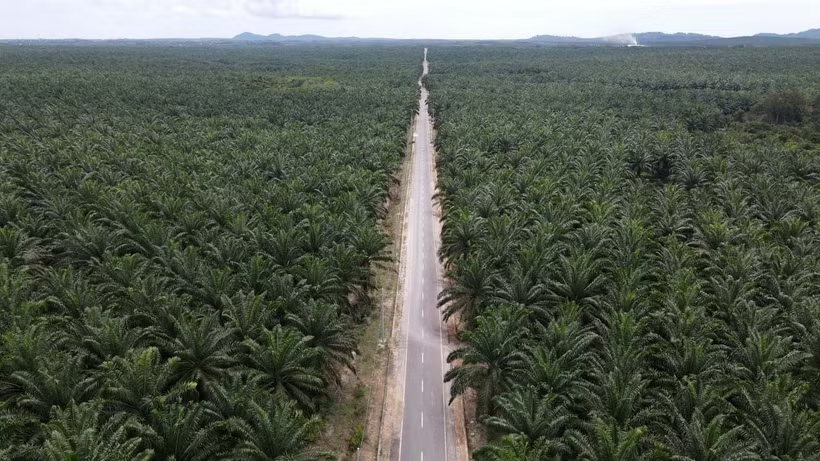
Indonesia’s palm oil industry is a major pillar of the national economy, with more than 16 million hectares under cultivation and crude palm oil (CPO) output reaching 51.66 million tonnes in 2025. This scale has helped the country maintain its position as one of the world’s largest producers and exporters of palm oil.
Acting Director General of Agro Industry at the Ministry of Industry Putu Juli Ardika noted that export earnings from palm oil and its derivatives reached 44.65 billion USD in 2025, while imports stood at just 1.417 billion USD, generating a trade surplus of 43.23 billion USD.
He said the figures reflect the effectiveness of Indonesia’s downstream development strategy, which has increased added value, expanded export markets, and created a multiplier effect across the economy. The sector currently provides employment for around 16.5 million people.
It is believed that expanding the ISPO certification will enhance the international credibility of Indonesia’s palm oil industry, while ensuring long-term environmental, social, and economic sustainability./.