Jakarta (VNA) - The Forest Area Enforcement Task Force of Indonesia (PKH Task Force) has successfully recovered state assets totaling 371.1 trillion Rp (approximately 21.7 billion USD) since its formation more than 1 year ago.
The results have been achieved since February 2025, when Indonesian President Prabowo Subianto established the task force to reclaim control over illegally occupied forest areas, including unauthorised mining and plantation activities.
The total value of recovered assets is equivalent to nearly 10% of Indonesia’s 2026 state budget, estimated at about 240 billion USD, highlighting the large scale of past violations in the forestry sector.
In the first four months of this year alone, authorities collected an additional 11.42 trillion IDR (around 714 million USD) through administrative sanctions, non-tax state revenue, environmental violation penalties and related tax recoveries. The campaign has also delivered tangible results in land management. Over the past year, the task force reclaimed nearly 6 million hectares of forest land from illegal plantations and more than 10,200 hectares from unlawful mining operations.
Addressing members of the task force and the Attorney General on April 10, President Prabowo said the recovered resources would be reinvested in essential sectors such as school renovation and digitalisation, as well as infrastructure development, including roads and bridges to improve connectivity in remote areas.
The Indonesian President called on relevant forces to remain steadfast, act decisively and show zero tolerance towards violations in order to protect forest resources and prevent losses to the state budget. The campaign is seen as one of Indonesia’s most significant efforts to strengthen forest resource management while sending a strong message about its determination to build a transparent, sustainable and law-abiding economy./.
Indonesia targets ending fuel imports within three years
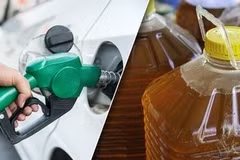
In addition to electrifying power plants, the Indonesian government is promoting electric vehicles and the utilisation of other renewable energy sources. Solutions include processing palm oil and used cooking oil into aviation fuel to further reduce reliance on fossil fuels.