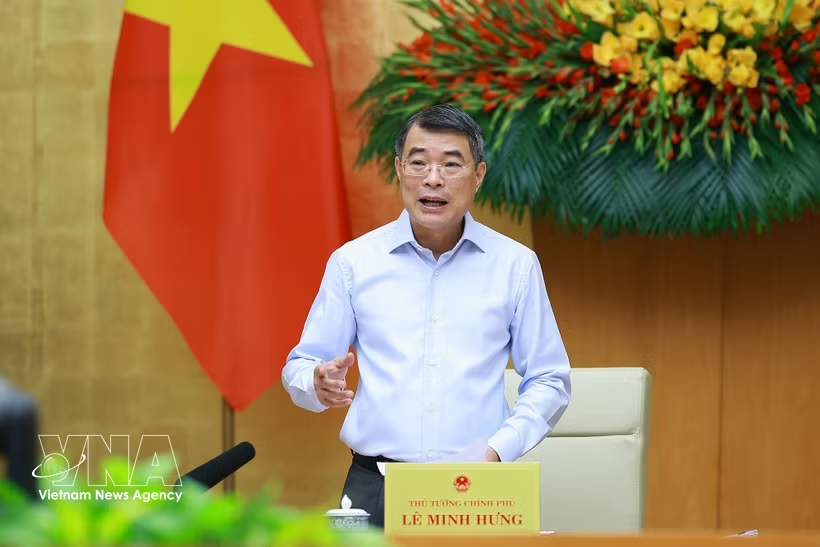
Hanoi (VNA) – Prime Minister Le Minh Hung has reiterated Party General Secretary and State President To Lam’s view that Vietnam must create a new breakthrough in institutional framework and legislation, turning them into a growth driver.
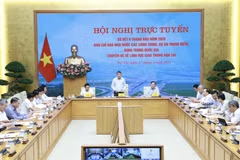
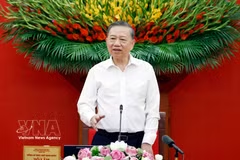
Chairing the Government’s meeting on lawbuilding in Hanoi on June 27, PM Hung said the draft laws and resolutions under consideration hold significance so they should be revised and issued to ensure the resolute enforcement as directed by the Politburo, Secretariat, and General Secretary and President Lam.
He called for tacking urgent issues, streamlining administrative procedures and business regulations, promptly clear institutional bottlenecks and barriers, cut compliance costs for citizens and businesses, improve the investment climate, toward the goal of achieving double-digit economic growth and meeting requirements for operating the new three-tier administration model.
The PM instructed ministers and heads of ministerial-level agencies to take direct responsibility for overseeing the drafting of the proposed laws and resolutions, and expedite their completion in full compliance with the Law on Promulgation of Legal Documents.
The legislative package is to be submitted to the National Assembly at its upcoming extraordinary session, with quality, timeliness and effectiveness ensured. Deputy PMs in charge and ministers were assigned to personally direct the completion of the draft laws and resolutions.
The Government Office was tasked with leading, in coordination with ministries and relevant agencies, the incorporation of all comments and the prompt finalisation of the meeting’s resolution.
The Government leader offered feedback on a number of specific provisions in the draft laws and resolutions, making it easier for ministers and agency heads to make the final versions.
In particular, he called for a thorough review of steps to streamline administrative procedures and business conditions, accelerate decentralisation and the delegation of authority, conduct comprehensive impact assessments, and give careful consideration to feedback from citizens, businesses and other stakeholders affected by the proposed legislation.
Clearing legal bottlenecks
The Prime Minister called for turning the directives issued by the Party Central Committee, its Politburo and Secretariat, and General Secretary and President To Lam into action, stressing that refining the legal and institutional frameworks, together with overseeing their enforcement, must remain a core, continuous responsibility of ministries and agencies.
Ministers and heads of ministerial-level agencies must be held accountable before the Government and the PM for the quality and progress of legislation within their respective mandate, he said.
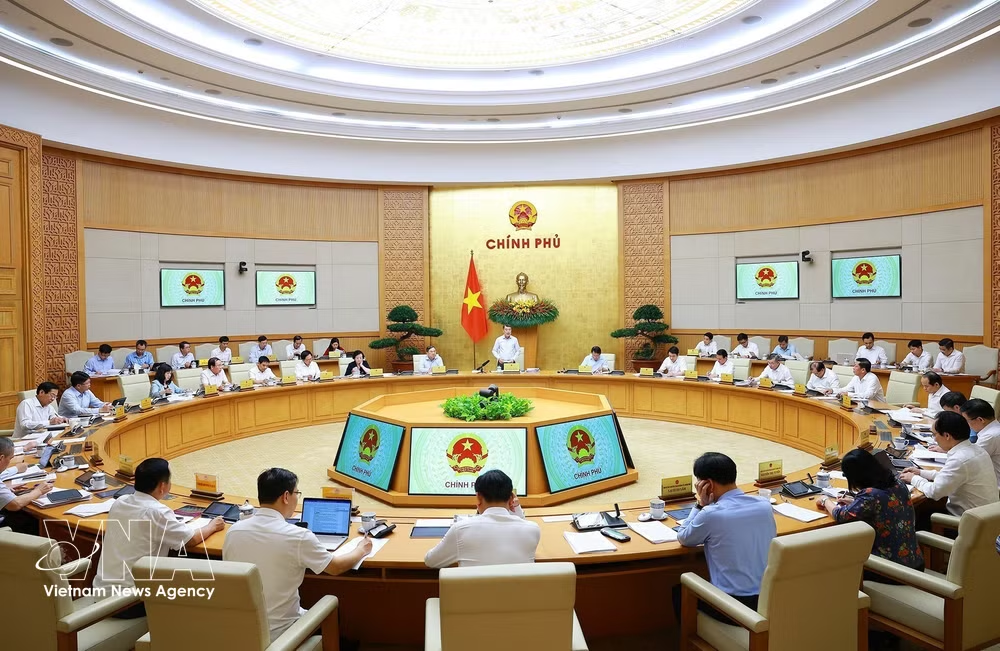
They were instructed to expedite the preparation of draft laws for submission to the 16th NA at its upcoming extraordinary session and second session, while avoiding prolonged inter-agency coordination or delays caused by the pursuit of consensus.
Legislative drafting must closely follow the Party's guidelines and the State's policies, strictly comply with the Law on Promulgation of Legal Documents, and ensure that legal provisions are transparent, clear and enforceable so that new policies can be brought to life without delay, he added.
Ministries must avoid incorporating tax incentives or overly detailed quantitative issues into laws, he said, warning that such could complicate future enforcement.
He also called for widespread use of digital technologies, artificial intelligence and big data in both lawmaking and enforcement, and announced that a pilot key performance indicator (KPI) system for legislative work will be introduced from the third quarter, linked to performance evaluations of agency heads and drafting units.
Regarding the issuance of documents guiding legal enforcement, he asked ministers and agency heads to ensure that laws only delegate matters within the Government's authority, and avoid an excessive proliferation of subordinate rules, with each competent authority issuing only a single document covering the matters assigned to it.
Noting that the Government recently issued a directive to address delays in issuing guiding documents, he requested the Minister of Justice and other ministers to expedite the submission of 15 guiding documents for laws and resolutions already in force, alongside 45 decrees detailing laws and resolutions scheduled to take effect on July 1. He set a deadline of the end of June for all of the documents to be finalised.
At the meeting, the Cabinet members discussed a broad package of draft laws and resolutions, including the Law on amendments and supplements to several articles of the Law on Architecture, the revised Petroleum Law, the Anti-Money Laundering Law and the Law on Credit Institutions, as well as NA’s resolutions on special mechanisms to accelerate projects related to the APEC Economic Leaders' Meeting 2027, and special policies to handle legal violations in sci-tech, innovation, digital transformation, and cases involving the private and state sectors, among others./.