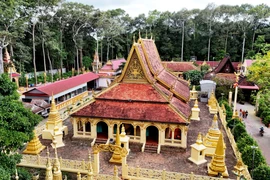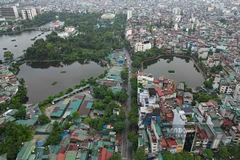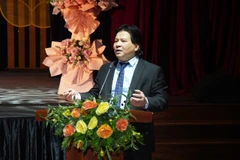
Hanoi (VNA) - Nestled in the heart of Nam Dinh city, Pho Minh Pagoda is far more than a place of worship. With deep ties to Tran Nhan Tong – Vietnam’s Buddhist King and founder of the Truc Lam Zen sect, it once served as a major religious centre of Dai Viet (an old name of Vietnam), and today stands as a rare and enduring monument to the splendour of the Tran Dynasty (1225–1400).
Designated a special national relic by the Prime Minister in 2012, this over-760-year-old temple remains remarkably intact.
A place steeped in royal legacy
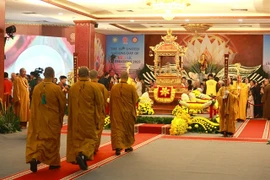
According to ancient records, imperial decrees and local lore, Pho Minh Pagoda was originally built during the Ly Dynasty (1009–1225) and expanded in 1262 under the reign of King Tran Thanh Tong. It became a key spiritual site for the royal court – hosting religious rituals, prayers for national peace and prosperity, and major Buddhist ceremonies.
The revered Emperor Tran Nhan Tong, who abdicated the throne to become a monk and establish the Vietnamese Truc Lam Zen sect at Yen Tu Mountain, was known to have frequented the pagoda on his spiritual journeys.
Despite the passage of time and turbulent historical shifts, Pho Minh still retains its solemn grandeur and the hallmark aesthetics of the Tran-era Buddhist architecture, serving as a living witness to a golden chapter of Vietnamese history.
Architectural harmony
The pagoda’s layout is expansive and elegant. Its main structure comprises a nine-bay front hall, a three-bay incense hall, and the upper sanctuary – all arranged in the traditional shape of “gong” (工), a Chinese characteristic. The triple-arched entrance gate is built from wood and brick, with a traditional tiled roof, and flanked by two stele houses.
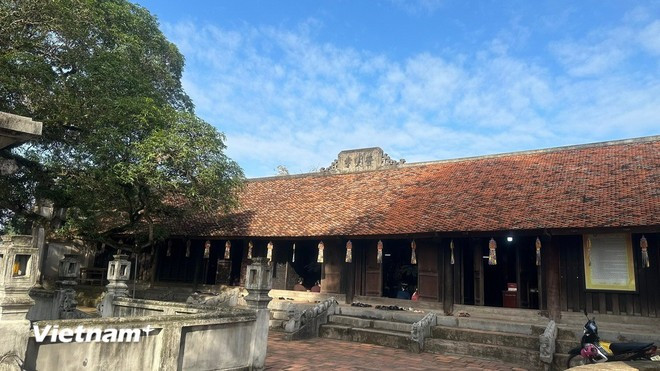
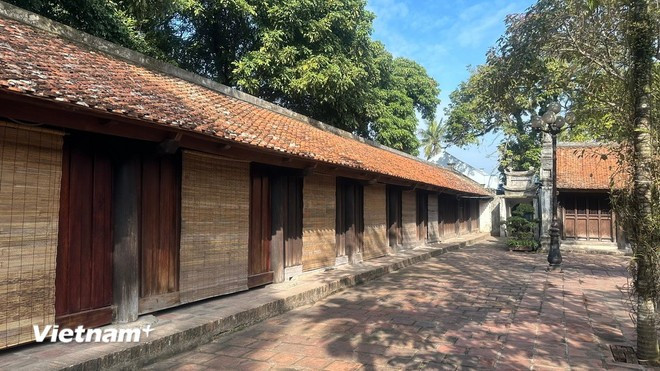
Behind the main shrine lies an 11-bay complex housing the ancestral hall, monastic quarters, and altars. Many of the original architectural elements and delicate carvings still showcase the refined craftsmanship of the Tran period.
Pho Minh Tower: A Tran Dynasty symbol
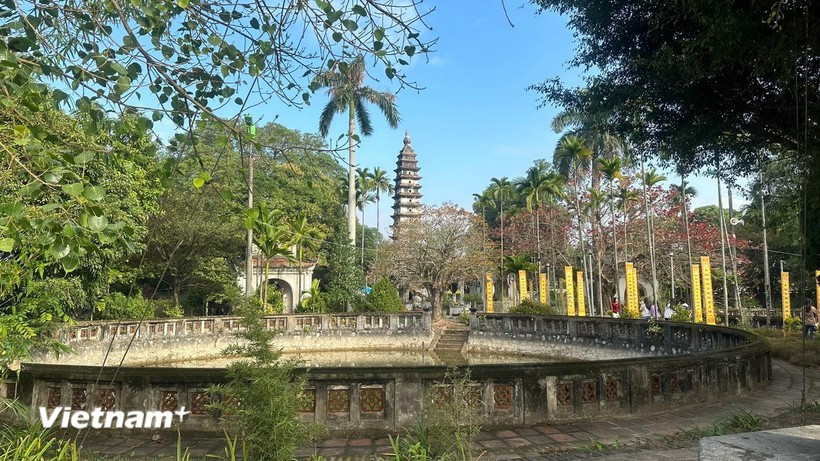
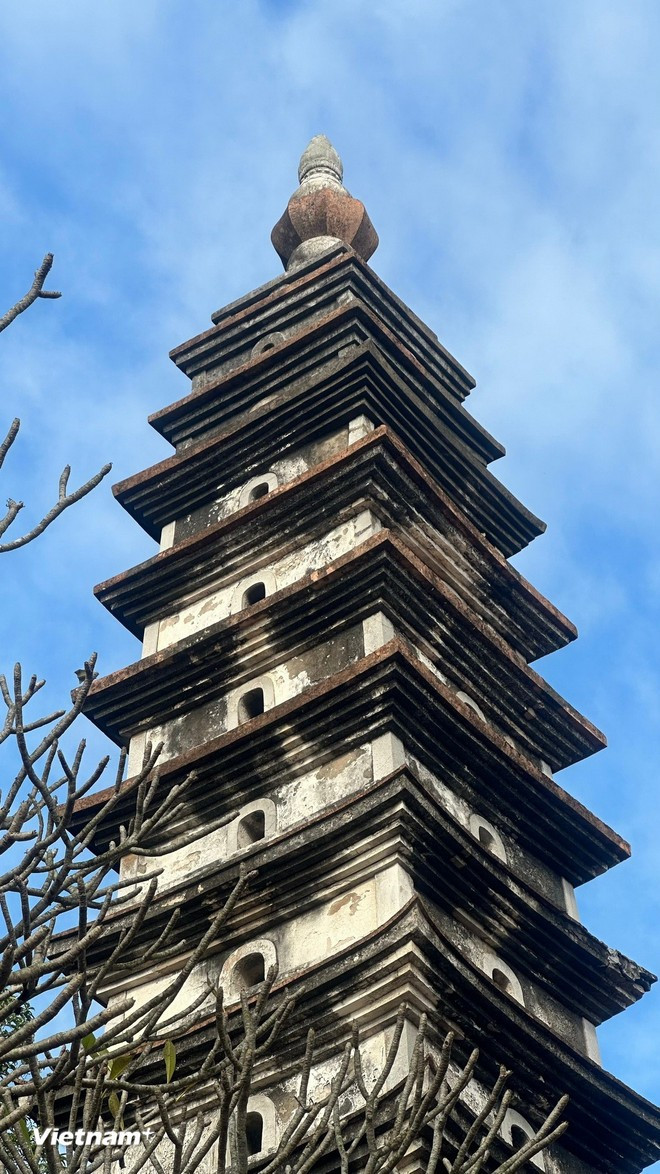
The most iconic feature of the pagoda is Pho Minh Tower, a 14-tiered Buddhist monument erected in 1305 under the reign of King Tran Anh Tong to honour his father – King Tran Nhan Tong.
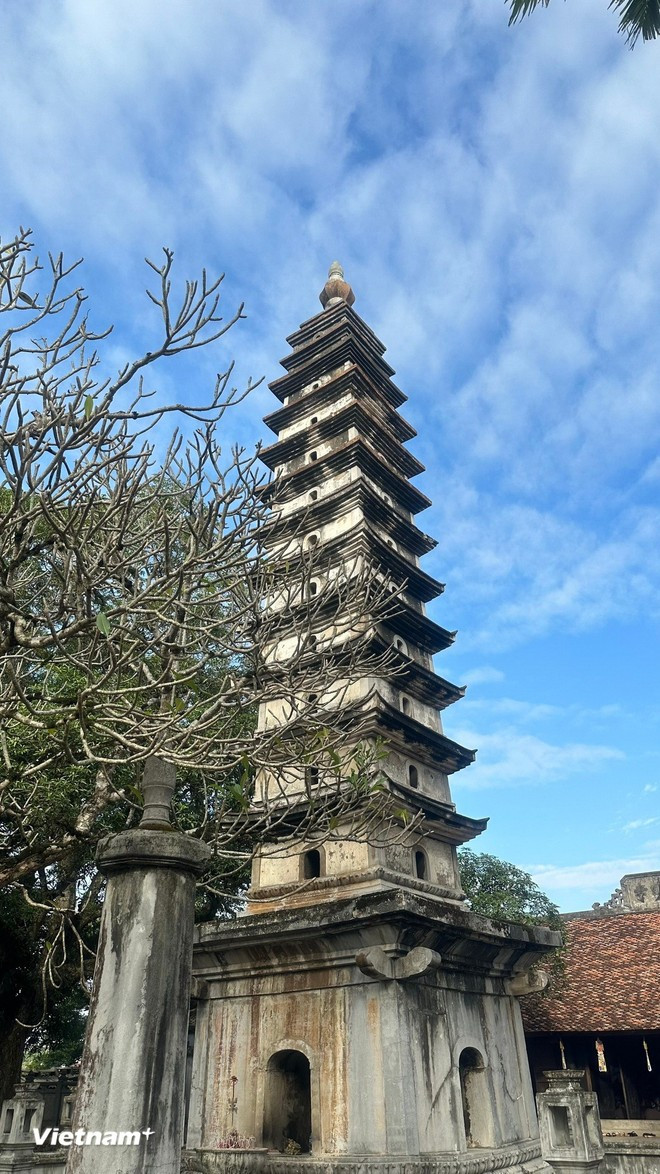
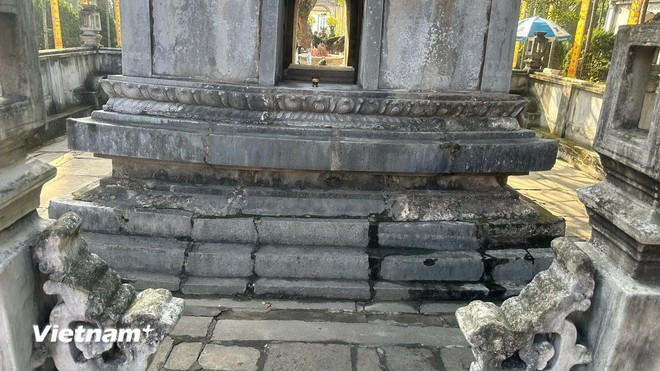
Standing 19.51 metres high, the tower combines stone and brick construction. Its base and lower levels are crafted from smooth green stone, while the 13 upper tiers are made from baked red bricks. Despite centuries of war and weather, the tower remains impressively intact, preserving its original form.
Its image is so emblematic that it was once featured on Vietnam’s 100 VND banknote.
National treasures within sacred walls
Among the temple’s most valuable artefacts is a set of statues known as the Truc Lam Tam To (Three founders of the Truc Lam sect), which includes a reclining image of Tran Nhan Tong in nirvana, flanked by Phap Loa (the second patriarch) and Huyen Quang (the third patriarch).
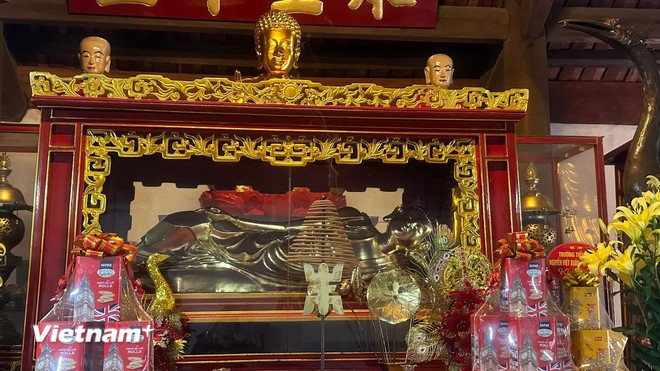
Dating to the 17th century, the statues are made of lacquered and gilded wood and remain in pristine condition. The set was recognised as a national treasure by the Prime Minister in Decision No. 41/QD-TTg on January 30, 2023.
Another national treasure is a set of four ancient wooden doors that once adorned the temple’s front hall. The originals are now housed in museums, while a full-scale replica stands at the site.
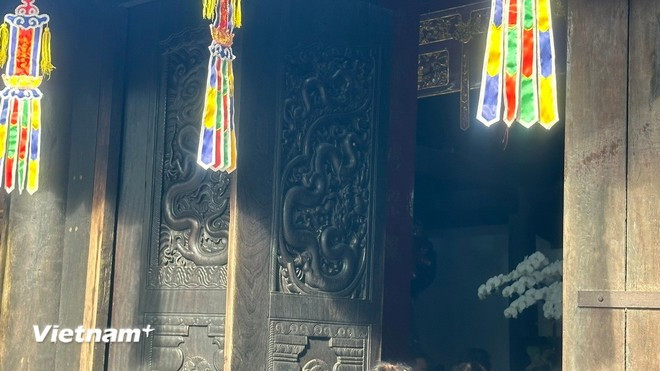
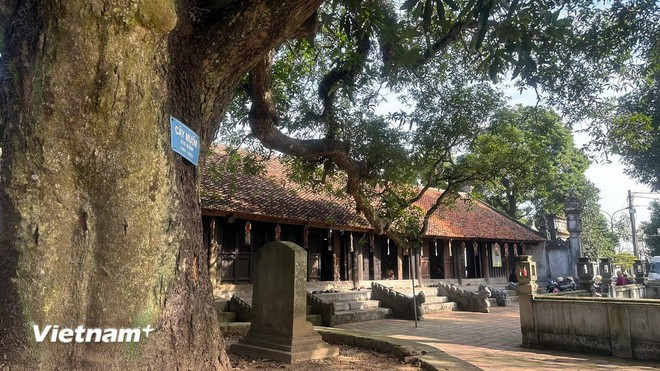
Pho Minh also boasts an impressive collection of historical relics, including bronze bells, ancient Buddha statues, Tran-era bas-reliefs, and an age-old stone well once used in royal purification rites. Two 300-year-old heritage muom trees (Mangifera foetida Lour) still flourish in the temple courtyard.
A spiritual landmark and national treasure
Together with the nearby Tran Temple complex, Pho Minh Pagoda forms one of the most important religious and cultural heritage sites in the Red River Delta. Every year, the site hosts festivals and rituals that honour the Tran Dynasty and its revered figures.
Two of the most significant events are the early spring seal-opening ceremony and the August festival commemorating the death anniversary of national hero Tran Hung Dao. These celebrations attract pilgrims and visitors from across the country who come to pay tribute to former generations.
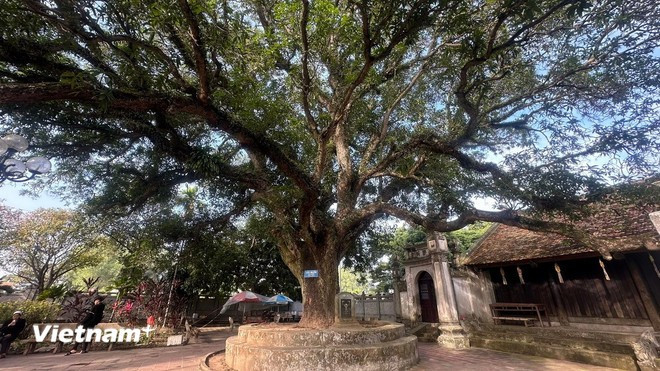
On quieter days, the pagoda remains a tranquil destination for spiritual reflection, drawing worshippers and travellers alike who come to marvel at its history, architecture, and sacred serenity./