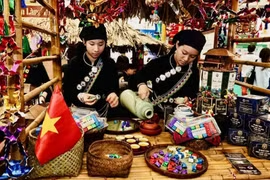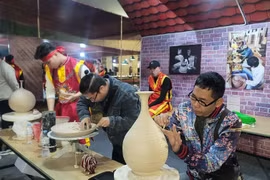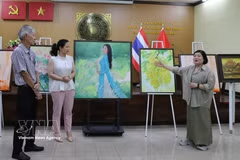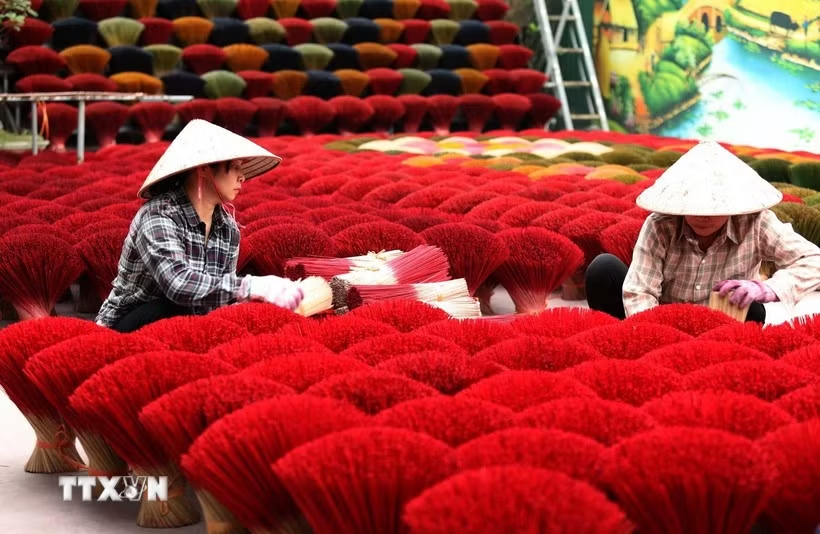
Hanoi (VNA) - Each year during Tet (Lunar New Year), many Vietnamese recall the distinctive smells of incense, folk paintings adorning homes, conical hats, or the fresh mats laid out to welcome guests. These simple items are made in traditional craft villages, where Tet once marked the busiest season of the year.
As 2026 approaches, many craft villages that serve Tet are facing the risk of fading away. There is no lack of Tet celebrations, but rather modern conveniences are gradually edging out traditional craftsmanship, save for renewed efforts to preserve these practices.
Quang Phu Cau – A village of incense amid growing challenges
Quang Phu Cau, a village in Hanoi known for incense making, brings to mind a vivid image of bundles of red incense sticks drying in the village courtyard - a "visual specialty" whenever Tet approaches. Incense is an indispensable part of Vietnamese spiritual life, especially during the first days of the New Year, where each stick represents a prayer for peace and prosperity.
Behind the vibrant red incense lies a traditional craft mired in labourious manual steps, from selecting bamboo, mixing ingredients and shaping the incense sticks, to drying them under the sun. Each stage requires meticulous attention and years of experience. However, fewer young people are willing to continue this low-income, labour-intensive work, with its fiscal dependence on seasonal demand. Many local families have had to shift to semi-industrial production or preserve the craft merely as a memory, no longer as their main livelihood.
Dong Ho paintings – Quietly leaving Vietnamese homes at Tet
For many years, Dong Ho paintings were an iconic part of Tet celebrations in Vietnam. Paintings such as "Ga Dan" (Chickens), "Lon am duong" (Yin-Yang pigs), and "Vinh Hoa - Phu Quy" (Prosperity and Wealth) not only decorated homes but also symbolised deeper aspirations for abundance, wealth, and happiness.
Despite being a cultural treasure, the popularity of Dong Ho paintings has significantly declined. With modern life changing tastes, people now prefer printed industrial paintings, canvas prints, or quick and convenient decorations over the time-consuming traditional paintings on “do” (poonah) paper, made using natural colours and intricate woodblock prints. As a result, fewer artisans continue the craft, and the unique hand-printing technique that once represented the pride of Vietnamese folk art is at risk of fading.
Without younger generations inheriting the craft, the unique value of Dong Ho paintings may soon only be remembered as a relic of past Tet seasons.
Tay Ho conical hats – A beautiful yet fragile symbol
In the ancient capital of Hue, Tay Ho conical hats are more than just protective headgear; they have become a cultural symbol, representing the traditions of the region. During Tet, new hats are often bought for temple visits, spring outings, or as meaningful gifts, symbolising respect and affection.
However, the art of making these hats, which requires patience, skillful hands, and heartfelt dedication, is facing major challenges. The rise of cheap industrial products has led to a decline in demand for traditional conical hats. Many young people in the hat-making villages have left to find other job opportunities, leaving the craft as an endangered tradition, preserved mainly through tourism.
The vulnerability of the Tay Ho hat industry serves as a reminder of the importance of preserving and promoting traditional cultural values so that these symbols are not just relics of the past, but continue to thrive alongside modern life.
Thu Xa mats – Resilience amid fierce competition
While many traditional crafts are diminishing, Thu Xa mats in the central province of Quang Ngai have managed to maintain their unique charm. The mats, once a vital part of Tet celebrations, represent new beginnings and good fortune, especially when spread to welcome guests.
However, the introduction of cheap plastic mats has flooded the market, making it harder for handmade mats to compete. Despite this, the Thu Xa village continues to survive, not purely for economic gain, but because of the artisans' great pride and a desire to preserve their traditional craft. Their resilience is fueled by a strong will to keep the spirit of their cultural heritage alive through each carefully woven mat.
A path forward for Tet craft villages
While Tet-related craft villages have weakened due to a lack of younger artisans and growing competition from mass-produced goods, signs of revival are beginning to emerge.
Many villages are reimagining their future by blending traditional craftsmanship with contemporary design. They are creating modernised folk paintings, herbal incense, unique decorative conical hats, and traditional mats used in homestays and resorts.
At the same time, craft village tourism is gaining traction, turning workshops into cultural destinations where visitors can experience the artistry firsthand.
These shifts not only open new markets but also help restore appreciation for the cultural stories behind each handmade piece.
However, sustaining and spreading the spirit of traditional Tet culture through craft villages needs coordinated efforts at every level, from practical policy support and training the next generation of artisans to raising public awareness of the cultural and artistic value of handmade products./.