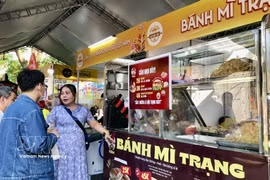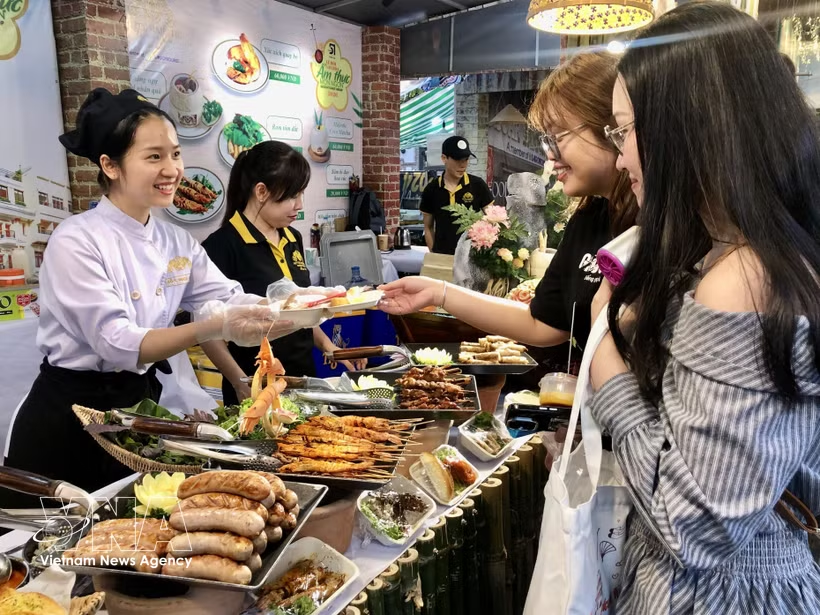
Ho Chi Minh City (VNA) – More than leaving a strong impression on international visitors and earning recognition in prestigious global rankings, Ho Chi Minh City’s vibrant street food is emerging as a distinctive tourism product, directly contributing to tourism revenue and boosting the urban night-time economy.
The network of affordable eateries, bustling alleys and food streets has become a vivid hallmark of the city in the eyes of international visitors. At Ho Thi Ky food street, foreign tourists flock to experience local cuisine and culture.
Steve, a British visitor, told Lao dong (Labour) Newspaper that he was impressed by the wide variety of dishes, affordable prices and the willingness of vendors to adjust the level of spiciness to suit customers’ tastes. The friendliness and attentiveness of local people, he added, made his trip a truly memorable experience.
This cultural connection also generates direct income for local businesses. Huynh Hai Dang, a representative of a barbecue eatery at this street, said the restaurant attracts large numbers of international visitors. European customers tend to sample a few skewers, while Asian visitors often order more. The eatery earns around 4-5 million VND (150-190 USD) on normal days, and up to 8-10 million VND during peak holidays and festivals.
Recently, UK-based Time Out magazine ranked Ho Chi Minh City first in its list of the world’s best cities for street food in 2026, with 63% of respondents voting for the city. The ranking was based on a survey of more than 24,000 urban residents worldwide.
According to Time Out, the city is now home to six Michelin-starred restaurants, several of which elevate street snacks into fine art.. Yet the most authentic culinary experiences can still be found at stools in scooter-filled alleys.
To maximise its existing advantages, the city’s tourism sector has identified street food, combined with the development of the night-time economy, as a key priority.
Le Truong Hien Hoa, Deputy Director of the municipal Department of Tourism, stressed that cuisine is a distinctive tourism product that must be nurtured and preserved from its local roots.
The network of 168 wards, communes and special zones provides favourable conditions for the tourism sector to work with local authorities to develop new destinations, standardise service quality and preserve unique local identities.
According to the department, in the first seven months of 2026, Ho Chi Minh City welcomed more than 7.13 million international visitors, up 42.7% year-on-year, and nearly 31.68 million domestic tourists. Tourism revenue was estimated at 237.46 trillion VND, up 53.3% and equivalent to 72% of the annual target./.
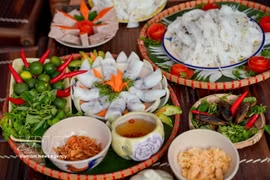
Hanoi ranks among world's top 10 street food cities
With its rich culinary diversity, distinctive flavours and affordable prices, Hanoi's street food has long been one of the capital's signature tourism products, helping promote its image and attract an increasing number of international visitors.