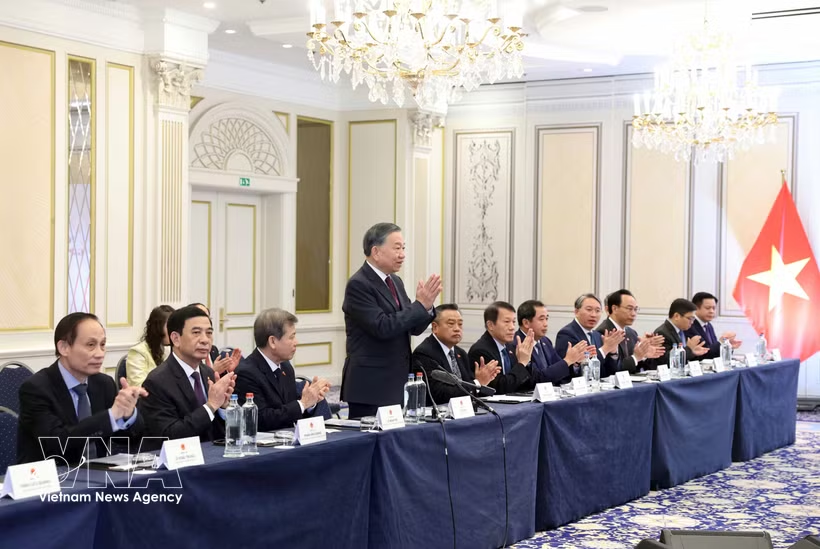
Top leader meets Vietnamese intellectuals in Belgium, Luxembourg

General Secretary of the Communist Party of Vietnam Central Committee and President To Lam urged experts and intellectuals to proactively sign up for tasks tied to the country’s major challenges and strategic technologies.

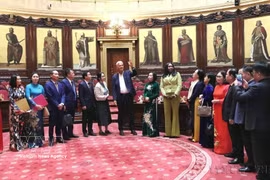
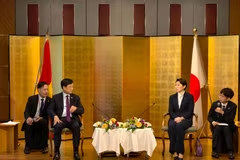
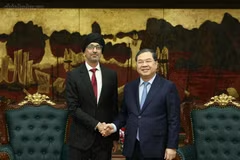
General Secretary of the Communist Party of Vietnam Central Committee and President To Lam meets with Vietnamese experts and intellectuals in Belgium and Luxembourg (Photo: VNA)

Brussels (VNA) – General Secretary of the Communist Party of Vietnam Central Committee and President To Lam on October 24 (local time) met with representatives of Vietnamese experts and intellectuals in Belgium and Luxembourg during his official visit to Belgium.

Vietnamese Ambassador to Belgium and Head of the Vietnamese Mission to the European Union (EU) Nguyen Huong Tra briefed attendees on the activities of Vietnamese intellectuals, experts and scientists who live, study, conduct research and work in Belgium and Luxembourg, as well as in neighboring countries like France, the Netherlands and Austria.

The experts put forward specific proposals, including making Vietnam a leading artificial intelligence (AI) services hub in Asia; expanding Vietnam-Belgium and Vietnam-EU cooperation in nuclear energy, semiconductors and green materials; building a comprehensive resilience framework for critical infrastructure; creating a modern, self-reliant and sustainable agricultural biotechnology ecosystem; developing a circular industrial model from rice straw to green steel, advancing quantum technology from experimentation to workforce development, and building laser satellite communications and space connectivity infrastructure.

General Secretary and President Lam noted that the 14th National Party Congress set the goal of turning Vietnam into a high-income developed country by 2045. That journey can no longer rely on cheap capital and labour and raw resources. Science, technology, innovation and digital transformation are no longer optional but imperative. Yet results haven’t matched the country’s determination, with execution the biggest bottleneck.

He called for a shift from “seeking resources” to “connecting resources with needs”. Ministries, agencies, localities and companies must spell out what they need: the problems to be solved, the technologies they lack, who will receive and apply the results, and what the final products should be. He urged experts and intellectuals to proactively sign up for tasks tied to the country’s major challenges and strategic technologies.

They should also pick key tasks that are feasible, have domestic partners and can be applied more widely. Each task needs clear goals, a timeline and a designated person responsible, and should count as complete only when it yields an operational product, verifiable data, actual users and measurable results. Successful initiatives should then be replicated and spread, he said.

According to him, flexible mechanisms are needed, including task-based expert contracts, remote working, joint research and funding tied to final products. Financial mechanisms should be flexible enough for experts and intellectuals to join specific projects directly, and intellectual property rights must be clearly defined. The risks and delays inherent in research should be accepted. Intellectuals should be judged on results and their expertise respected, with the most capable ones picked to take on tasks and deliver rather than being hampered by red tape.
vnanet-l.jpg
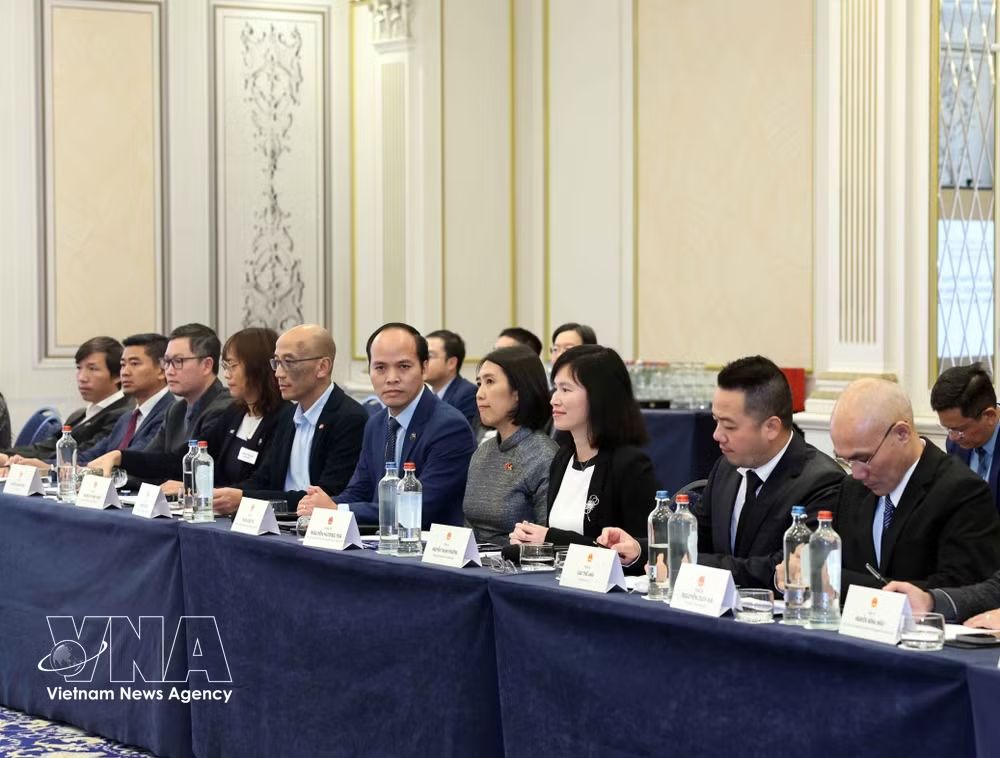
Vietnamese experts and intellectuals at the meeting (Photo; VNA)

Every joint project must leave capacity behind in Vietnam, he said. The ultimate measure isn’t the number of agreements or memoranda signed, but how many domestic engineers and scientists are trained, how many labs and strong research teams are set up and how many technology companies are created. Technology transfer alone isn’t enough; the parties must develop technologies together, paving the way to self-reliance.

The Ministry of Science and Technology was asked to take the lead, in coordination with the ministries of foreign affairs and education and training and other relevant ministries and sectors, in collecting all recommendations from experts and intellectuals. Matters within their authority must be addressed promptly, while those beyond it should be proactively escalated for settlement. Written responses must be provided, with a specific focal point assigned to each task.

The top Vietnamese leader said he hopes the Association of Vietnamese Intellectuals in Belgium and Luxembourg will keep expanding its network with universities, research institutes and technology companies in Belgium, Luxembourg and elsewhere in Europe, and help Europeans better understand a Vietnam undergoing innovation and integration. He also urged the group to devote more attention to mentoring the younger generation of Vietnamese intellectuals in Europe, so the flow of knowledge and expertise to the homeland stays uninterrupted./.
VNA

See more

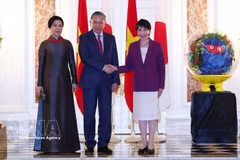
Japanese Prime Minister Takaichi Sanae hosts a welcome ceremony for General Secretary of the Communist Party of Vietnam Central Committee and President To Lam and his spouse in Tokyo on November 9. (Photo: VNA)

Vietnam, Japan issue Joint Vision Statement

The leaders of Vietnam and Japan affirmed that bilateral cooperation in areas including defence, security, the economy, economic security, energy resources, trade, investment, science, technology, agriculture, the environment, ocean management, education and training, labour, culture, sports, tourism, law and justice, locality cooperation and people-to-people exchanges has developed substantially and has continued to strengthen and broaden.

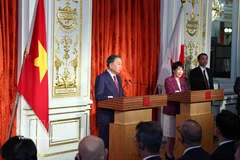
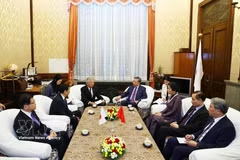
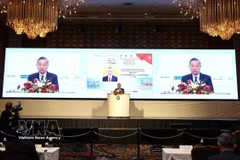
General Secretary of the Communist Party of Vietnam Central Committee and President To Lam and Japanese Prime Minister Takaichi Sanae meet the press in Tokyo on November 9 evening (local time) (Photo: VNA)

Top Vietnamese leader, Japanese PM meet the press after talks

The two sides agreed to issue the Vietnam–Japan Joint Vision Statement, lifting the Comprehensive Strategic Partnership to a new height as equal partners that accompany and co-create together on mutual benefit, for quality growth, strategic autonomy and self-reliance.

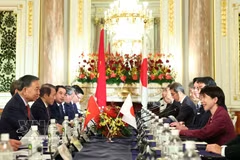
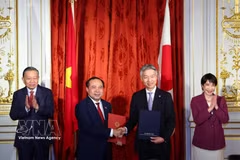
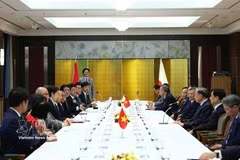
General Secretary of the Communist Party of Vietnam Central Committee and President To Lam and Japanese Prime Minister Takaichi Sanae witness the exchange of cooperation documents (Photo: VNA)

Vietnamese, Japanese leaders witness exchange of cooperation deals

General Secretary of the Communist Party of Vietnam Central Committee and President To Lam and Japanese Prime Minister Takaichi Sanae witnessed the exchange of nine cooperation documents out of 11 signed in total in Tokyo on November 9 evening (local time), as part of the top Vietnamese leader’s official Japan visit.

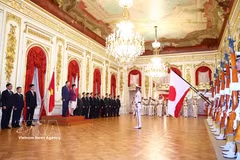
At the welcome ceremony for General Secretary of the Communist Party of Vietnam Central Committee and President To Lam (Photo: VNA)

Top Vietnamese leader welcomed in Japan on official visit

The visit is expected to turn agreements and commitments reached by high-ranking leaders into practical cooperation schemes and projects across various fields, and make positive contributions to each country’s development goals as well as global and regional peace, cooperation and development.

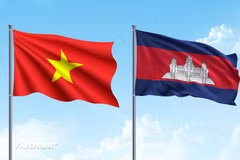
Vietnamese leaders extend congratulations on Cambodia’s 73rd Independence Day

Vietnamese leaders extend congratulations on Cambodia’s 73rd Independence Day

In its congratulatory message, the CPV Central Committee warmly congratulated Cambodia on its major achievements over the past 73 years. It expressed its confidence that under the wise reign of King Norodom Sihamoni and the leadership of the Senate, National Assembly, and Government, with the CPP led by President Hun Sen, playing a central role, Cambodia will continue to achieve new and more comprehensive successes.

Security forces and police are deployed outside the home of a shooting suspect in the town of Ostrowiec Świętokrzyski, Poland, on November 8. (Photo: PAP)

Vietnamese leaders send condolences over shooting in Poland

General Secretary of the Communist Party of Vietnam Central Committee and President To Lam and Prime Minister Le Minh Hung on November 9 sent messages of condolences to Polish President Karol Nawrocki and Prime Minister Donald Tusk over a recent mass shooting in the city of Krakow.

☕ Afternoon briefing on November 9

☕ Afternoon briefing on November 9

The Vietnam-Japan Public-Private Forum on Economic, Science and Technology Cooperation, the 2027 state budget plan approved, and the 9th Vietnam–Australia defence policy dialogue are among news highlights on November 9.

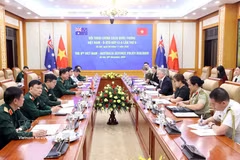
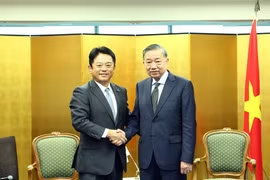
The 9th Vietnam–Australia defence policy dialogue in Hanoi on November 9, 2026 (Photo: VNA)

Vietnam, Australia hold 9th defence policy dialogue

The two sides agreed to effectively implement the common perceptions reached by the two countries' senior leaders and defence ministries, as reflected in the joint statement on deepening the Vietnam–Australia Comprehensive Strategic Partnership and the updated joint vision statement on further defence cooperation between the Australian Department of Defence and the Vietnamese Ministry of National Defence.

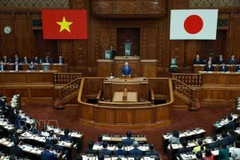
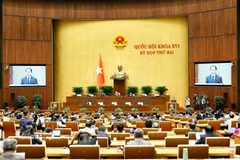
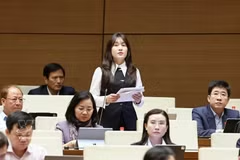
The plenary sitting during the 16th National Assembly's second session. (Photo: VNA)

NA debates amendments to Social Insurance Law, focusing on fund safety, risk control

Several deputies supported expanding compulsory social insurance coverage to include digital platform workers and those without formal employment contracts, particularly informal workers, delivery workers and technology-based drivers. However, they stressed the need for an appropriate roadmap and clear regulations on contribution obligations, calculation methods and the responsibilities of digital platforms.

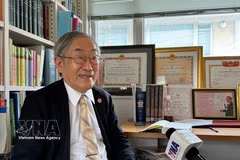
Prof. Furuta Motoo, former Rector of the Vietnam–Japan University (Photo: VNA)

President Ho Chi Minh’s 1946 diplomacy combines steadfastness, flexibility: Japanese expert

In 1946, as President of the Democratic Republic of Vietnam, Ho Chi Minh pursued efforts to ease tensions through both official and informal channels. In addition to official diplomatic negotiations with French government leaders, he met leaders of political parties and forces across the political spectrum, held press conferences, gave interviews, and engaged with the French public.