Traditional grocery stores adapt to rise of modern retail

Traditional retailers do not necessarily need to expand or imitate modern chains. Instead, they should build on their existing strengths and meet the needs of specific customer groups.

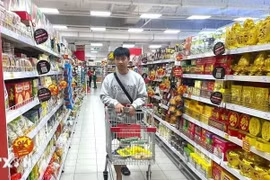
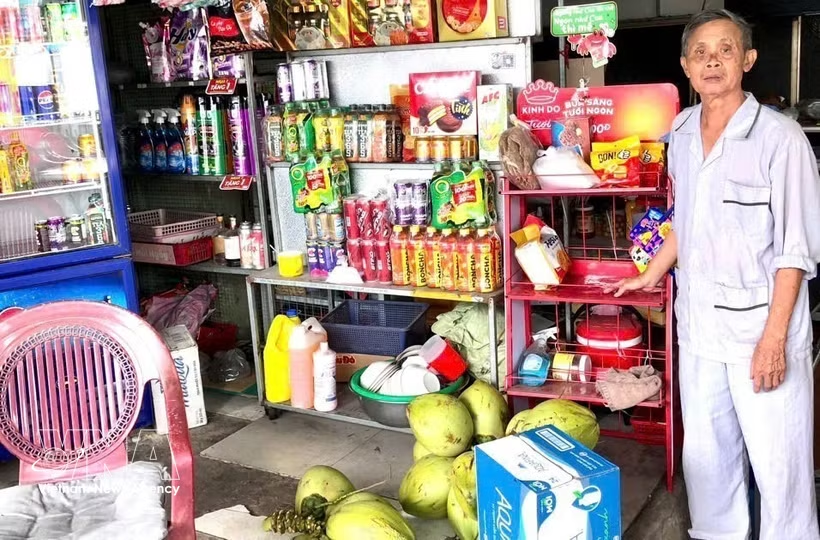
A small grocery store in Ca Mau province (Photo: VNA)

Hanoi (VNA) – Vietnam’s retail market continues to expand, but the rapid growth of mini-supermarket chains, convenience stores and e-commerce is putting increasing pressure on traditional grocery stores. To survive, small businesses must improve sales, inventory management and customer service while choosing changes suited to their resources.

Competition intensifies in residential areas

According to the National Statistics Office, Vietnam’s total retail sales of goods and consumer service revenue reached an estimated 5.93 quadrillion VND (229 billion USD) in the first nine months of 2026, up 13.4% year-on-year. However, growth adjusted for price changes stood at only 7.8%, showing that actual purchasing power remains affected by price fluctuations and input costs. Retail sales of goods rose 12.8% to 4.46 quadrillion VND. Traditional grocery stores have long benefited from convenient locations and close relationships with local customers. However, modern retailers offer promotions, diverse products and more organised shopping experiences, making it increasingly difficult for small stores to compete on price.

Vuong Thi Mai, a grocery store owner in Huong Son commune, Hanoi, said customer numbers have fallen since a mini-supermarket opened nearby. Some products are sold at prices close to, or even below, her purchasing costs, leaving little room for small retailers to lower prices.

Slow-moving inventory also ties up limited capital, while reducing orders risks leaving customers with fewer choices. Many stores still rely on experience rather than digital tools to track sales, inventory and cash flow.

Adaptation for survival

Some store owners are responding by accepting orders by phone, delivering goods in surrounding areas and offering flexible payment arrangements to regular consumers.

Tan, who runs a grocery store in Hanoi's Ha Dong ward, said convenience remains a key advantage. Customers might visit supermarkets for promotions but still turn to neighbourhood stores for urgently needed daily essentials.

Associate Professor Dr. Dinh Trong Thinh said traditional retailers do not necessarily need to expand or imitate modern chains. Instead, they should build on their existing strengths and meet the needs of specific customer groups.

Practical measures include prioritising fast-selling essentials, reducing slow-moving stock, comparing suppliers and ensuring clear product origins. Simple sales-management software, QR-code payments and messaging applications can also improve efficiency without requiring substantial investment.

Stores should identify their competitive advantages, whether quick service, local delivery or products tailored to neighbourhood demand. However, delivery services and credit sales must be carefully managed to avoid higher costs and cash-flow risks.

For businesses with limited capital, the immediate priorities may be to reduce excess inventory, control outstanding debts and retain regular customers rather than invest heavily in technology.

The expansion of modern retail does not mean all traditional grocery stores must disappear. Their long-term survival will depend on adapting to changing consumer expectations, managing costs effectively and choosing business models that match their resources./.

VNA

See more

Experts discuss “Sustainable Global Value Chains: Green Logistics” at the event. (Photo: VNA)

Autumn Economic Forum 2026 promotes green logistics and advanced manufacturing

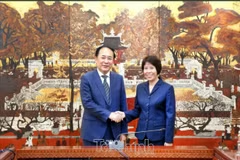
Bui Ba Nghiem, senior expert at the Ministry of Industry and Trade’s Import-Export Department, outlined five priorities, including improving institutions and coordination, promoting multimodal transport, applying digital technologies to emissions management, supporting SMEs in the green transition, and piloting measurable green logistics models.

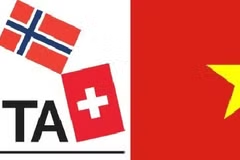
The EFTA–Vietnam Free Trade Agreement is expected to open up significant business opportunities for Vietnamese enterprises. (Photo: baochinhphu.vn)

EFTA expects trade and investment with Vietnam to grow

Regarding market access and trade benefits, the EFTA countries expect the agreement to gradually eliminate tariffs on almost all goods exported by the four countries to Vietnam, either upon its entry into force or within a maximum period of 16 years.

Speakers at the discussion (Photo: VNA)

ASEAN digital pact key to facilitating cross-border business

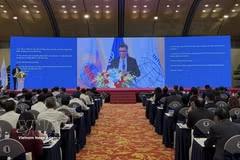
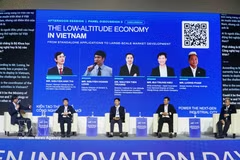
At a panel discussion on policy frameworks for the digital economy, held as part of the Autumn Economic Forum 2026 on October 27, speakers said ASEAN needed to ensure national systems could work together while protecting data and facilitating business, rather than impose uniform rules across the region.

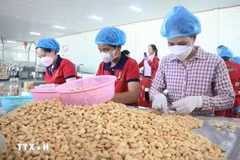
Vietnam exports nearly 800,000 tonnes of cashew nuts in 2025. (Photo: VNA)

Vietnam cashew sector looks to reshape global supply chains

According to VINACAS Chairman Pham Van Cong, Vietnam exported nearly 800,000 tonnes of cashew nuts in 2025, earning a record 5.4 billion USD. For nearly two decades, the country has led the world in cashew processing and exports, accounting for more than 80% of global exports.

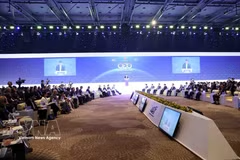
An overview of the international conference themed “Supreme Audit Institutions in a Changing World: Vision – Institutional Framework – Innovation” in Hanoi on October 27 (Photo: VNA)

Vietnam seeks to modernise state audit amid emerging challenges

As public decisions grow more complex and risks become increasingly interconnected, SAIs must move beyond detecting irregularities to identify root causes, analyse emerging trends and issue early warnings to protect public resources and improve policy implementation, said INTOSAI Chair Mohamed el-Faisal Youssef.

Vietnam is stepping up sci-tech application in agriculture. (Illustrative photo: VNA)

Vietnam steps up sci-tech application in agriculture

The northern region has advantages in research institutes, universities, scientific expertise and technology businesses. However, links between research and production, as well as technology transfer and practical application, remain limited, an official has said.

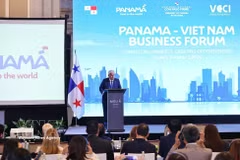
Panamanian President José Raúl Mulino speaks at the Panama - Vietnam Business Forum on October 7, 2026 (Photo: VNA)

Panama’s export processing zones offer opportunities for Vietnamese firms

After more than 15 years of operation, Panama’s system comprises 27 export processing zones, including 20 operational and seven under development. They host 201 companies conducting 282 business activities, nearly half of which involve logistics, services, and the processing of finished or semi-finished products.

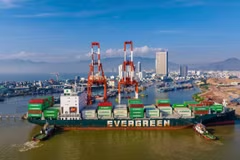
A container ship has cargo hadled at Quy Nhon Port, a key import-export gateway for goods from the Central Highlands and the starting point of Gia Lai province’s logistics system. (Photo published by VNA)

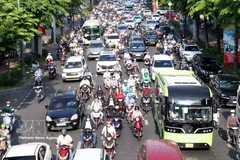
Measures sought to remove bottlenecks to reduce logistics costs

Experts emphasise that reducing logistics costs requires integrated planning, investment, operations and data sharing. Developing infrastructure projects separately, without considering regional demand and stable cargo flows, risks duplication and wasted resources.

Robots and tech products are on display at GRECO 2026 (Photo: VNA)

Ho Chi Minh City opens GRECO 2026 to push green growth

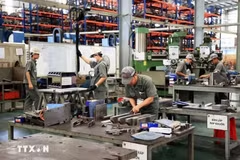
GRECO 2026 is meant to turn those goals into deals covering technology connectivity, trade and investment promotion and international cooperation. The show gives firms access to advanced technology and sustainable production models, helping build a green consumer market.

The CEO 500 programme takes place as part of the 2026 Autumn Economic Forum in Ho Chi Minh City on October 26. (Photo: VNA)

Vietnam can’t win high-tech investment on land alone: 2026 Autumn Economic Forum

Bill Giannikos, Director of the Global Services Centre and Data Centre at Aurecon Vietnam, said data centre development has to be planned alongside land, power, telecoms and supporting services. Investors need clear information on land availability, power capacity, supply timelines and connectivity before committing to large projects.

Vietnamese Ambassador to Mozambique Tran Thi Thu Thin (first, left) and Mozambique's Minister of Agriculture, Environment and Fisheries Roberto Mito Albino, along with other delegates, exchange views on measures to promote bilateral agricultural cooperation. (Photo: VNA)

Mozambique considers Vietnam a leading strategic partner in agricultural cooperation

A highlight of bilateral agricultural cooperation was the project on rice, soybean and vegetable production in central Mozambique during the 2013-2017 period. The project delivered tangible results, particularly by helping local farmers gain access to advanced farming techniques and high-quality crop varieties, thereby contributing to higher yields of key crops in the region.

Hanoi affirms role as core, growth pole of Capital region

Hanoi affirms role as core, growth pole of Capital region

Hanoi is facing a growing imperative to shift from development mindset limited by administrative boundaries toward one focused on regional spatial growth. Politburo’s Resolution No. 27-NQ/TW, issued on August 28, 2026, on regional development and the organisation of national development space for the new period, identifies the Hanoi metropolitan area as one of the country’s two major growth poles and urges stronger connections in infrastructure, economy, science and technology, and resources between the capital and localities.