Vietnam seeks to modernise state audit amid emerging challenges

As public decisions grow more complex and risks become increasingly interconnected, SAIs must move beyond detecting irregularities to identify root causes, analyse emerging trends and issue early warnings to protect public resources and improve policy implementation, said INTOSAI Chair Mohamed el-Faisal Youssef.

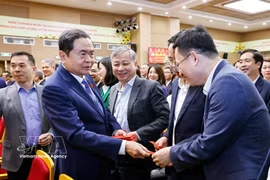
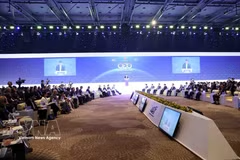
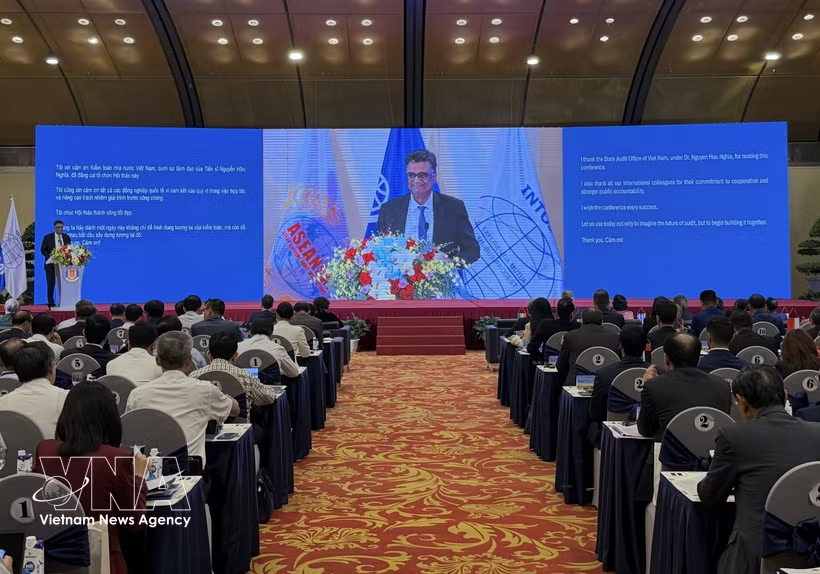
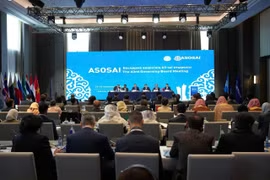
An overview of the international conference themed “Supreme Audit Institutions in a Changing World: Vision – Institutional Framework – Innovation” in Hanoi on October 27 (Photo: VNA)

Hanoi (VNA) – The State Audit Office of Vietnam (SAV) must reform its mindset, perfect the institutional framework, adopt advanced technologies and strengthen its workforce to meet emerging challenges in public auditing, National Assembly (NA) Vice President Nguyen Thi Hong said on October 27.

She was speaking at an international conference themed “Supreme Audit Institutions in a Changing World: Vision – Institutional Framework – Innovation”. The Hanoi event was attended by representatives of supreme audit institutions (SAIs), policymakers, experts and scholars.

Hong said that over more than three decades, the SAV has strengthened its role in auditing and overseeing the management and use of public finances and assets, contributing to financial discipline, anti-corruption efforts and more transparent and effective governance.

Embracing technology

Public auditing worldwide has moved beyond traditional financial compliance checks to support macroeconomic policymaking, provide early warnings of systemic risks and improve public value, she said.

Artificial intelligence (AI), big data analytics, geographic information systems, satellite imagery and real-time auditing are reshaping audit methods. Meanwhile, digital assets, national databases, green finance, green bonds and climate change response programmes are creating new demands for SAIs.

The NA Vice President said 2026 is a significant year for the SAV as it develops its strategy through 2035, with a vision to 2045, and reviews the State Audit Law for possible amendments.

This presents an important opportunity to draw on international experience and good practices to improve the institutional framework, strengthen the effectiveness of audit recommendations, accelerate digital transformation and expand auditing into new areas such as green finance, the environment, cybersecurity, public data and sustainable development, Hong said.
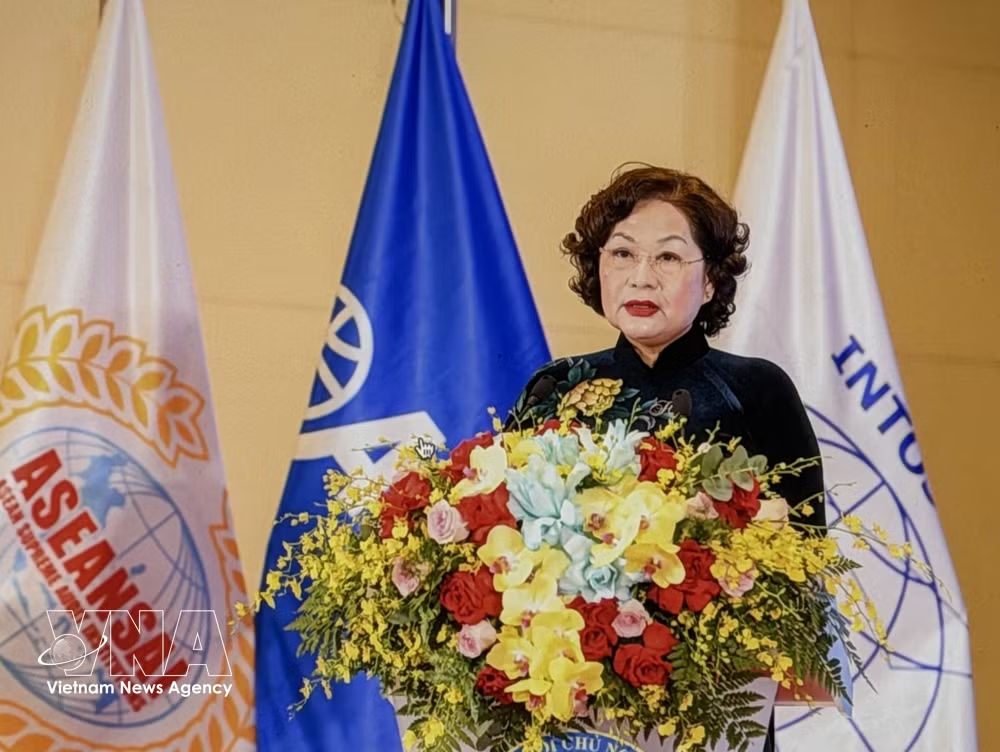
National Assembly Vice President Nguyen Thi Hong speaks at the event. (Photo: VNA)

National Assembly Vice President Nguyen Thi Hong speaks at the event. (Photo: VNA)

In a video message, Mohamed el-Faisal Youssef, President of Egypt’s Accountability State Authority and Chair of the International Organisation of Supreme Audit Institutions (INTOSAI), stressed that effective public auditing depends on institutional independence, clear legal mandates, access to information and mechanisms to monitor the implementation of audit recommendations.

As public decisions grow more complex and risks become increasingly interconnected, SAIs must move beyond detecting irregularities to identify root causes, analyse emerging trends and issue early warnings to protect public resources and improve policy implementation, he said.

Anticipating emerging risks

K. Sanjay Murthy, Comptroller and Auditor General of India and Chair of the Asian Organisation of Supreme Audit Institutions (ASOSAI), said next-generation auditing should help governments identify risks as they emerge, rather than merely explain past failures.

No SAIs could fully prepare for future challenges alone as public debt, climate change and digital transformation transcend national borders. Cooperation, mutual learning and experience-sharing are therefore essential to strengthening their institutional capacity and public accountability worldwide, he added.

SAV Auditor General Nguyen Huu Nghia described the conference as a forum for SAI leaders, authorities and experts to discuss challenges arising from digital transformation, AI and big data and work out solutions.

He said SAIs need to adapt their missions, working methods and operational structures to changing circumstances and rising public expectations, while reinforcing their legal status, independence, transparency and accountability and improving the management of public resources.

After 32 years of development, the SAV, a constitutional body established by the National Assembly, has contributed substantially to Vietnam's development. It is pursuing comprehensive reforms to its legal framework, organisational structure and operations, he noted.

Nghia reaffirmed Vietnam's commitment to contributing actively to INTOSAI, ASOSAI and the ASEAN Supreme Audit Institutions (ASEANSAI), and working with partners to build a professional, transparent and effective audit community in support of sustainable development./.
VNA

See more

Vietnam is stepping up sci-tech application in agriculture. (Illustrative photo: VNA)

Vietnam steps up sci-tech application in agriculture

The northern region has advantages in research institutes, universities, scientific expertise and technology businesses. However, links between research and production, as well as technology transfer and practical application, remain limited, an official has said.

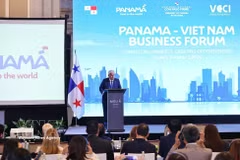
Panamanian President José Raúl Mulino speaks at the Panama - Vietnam Business Forum on October 7, 2026 (Photo: VNA)

Panama’s export processing zones offer opportunities for Vietnamese firms

After more than 15 years of operation, Panama’s system comprises 27 export processing zones, including 20 operational and seven under development. They host 201 companies conducting 282 business activities, nearly half of which involve logistics, services, and the processing of finished or semi-finished products.

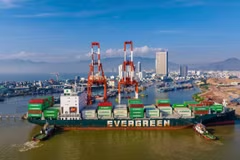
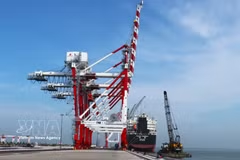
A container ship has cargo hadled at Quy Nhon Port, a key import-export gateway for goods from the Central Highlands and the starting point of Gia Lai province’s logistics system. (Photo published by VNA)

Measures sought to remove bottlenecks to reduce logistics costs

Experts emphasise that reducing logistics costs requires integrated planning, investment, operations and data sharing. Developing infrastructure projects separately, without considering regional demand and stable cargo flows, risks duplication and wasted resources.

Robots and tech products are on display at GRECO 2026 (Photo: VNA)

Ho Chi Minh City opens GRECO 2026 to push green growth

GRECO 2026 is meant to turn those goals into deals covering technology connectivity, trade and investment promotion and international cooperation. The show gives firms access to advanced technology and sustainable production models, helping build a green consumer market.

The CEO 500 programme takes place as part of the 2026 Autumn Economic Forum in Ho Chi Minh City on October 26. (Photo: VNA)

Vietnam can’t win high-tech investment on land alone: 2026 Autumn Economic Forum

Bill Giannikos, Director of the Global Services Centre and Data Centre at Aurecon Vietnam, said data centre development has to be planned alongside land, power, telecoms and supporting services. Investors need clear information on land availability, power capacity, supply timelines and connectivity before committing to large projects.

Vietnamese Ambassador to Mozambique Tran Thi Thu Thin (first, left) and Mozambique's Minister of Agriculture, Environment and Fisheries Roberto Mito Albino, along with other delegates, exchange views on measures to promote bilateral agricultural cooperation. (Photo: VNA)

Mozambique considers Vietnam a leading strategic partner in agricultural cooperation

A highlight of bilateral agricultural cooperation was the project on rice, soybean and vegetable production in central Mozambique during the 2013-2017 period. The project delivered tangible results, particularly by helping local farmers gain access to advanced farming techniques and high-quality crop varieties, thereby contributing to higher yields of key crops in the region.

Hanoi affirms role as core, growth pole of Capital region

Hanoi affirms role as core, growth pole of Capital region

Hanoi is facing a growing imperative to shift from development mindset limited by administrative boundaries toward one focused on regional spatial growth. Politburo’s Resolution No. 27-NQ/TW, issued on August 28, 2026, on regional development and the organisation of national development space for the new period, identifies the Hanoi metropolitan area as one of the country’s two major growth poles and urges stronger connections in infrastructure, economy, science and technology, and resources between the capital and localities.

At a coconut orchard in Dong Thap province (Photo: VNA)

Vietnam eyes APEC 2027 to push green farming, food security agenda

Hosting APEC 2027, Vietnam plans to work with the APEC Secretariat on a policy dialogue on rice-sector innovation, and a workshop on public-private partnerships for regenerative agriculture on the sidelines of the first APEC Senior Officials Meeting (SOM1). The events will give economies a platform to share lessons and practical experience in green, low-emission farming.

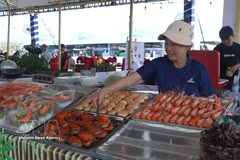
Various dishes made from Ca Mau crabs and shrimps. (Photo: VNA)

Ca Mau connects businesses to expand markets

The southernmost province of Ca Mau is stepping up trade promotion and business networking to expand markets for local products, turning its natural, economic and ecological advantages into drivers of rapid and sustainable growth in the Mekong Delta.

Aircraft of Vietnamese airlines at Noi Bai International Airport. (Photo: VNA)

Domestic airlines urged to resume, expand domestic air routes by year-end

Director of the Civil Aviation Authority of Vietnam (CAAV) suggested that airlines should identify routes to be resumed or newly launched, as well as existing routes on which flight frequencies could be increased. They should also outline implementation plans and timelines for the final months of 2026 and 2027, assess market demand, and evaluate fleet deployment options and operational sustainability.

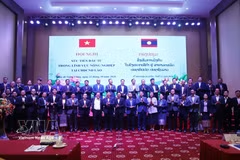
Delegates at the Vietnam-Laos agricultural investment promotion conference. (Photo: VNA)

Vietnam, Laos drive agricultural collaboration

Some 208 Vietnamese companies are investing in crops, forestry and livestock in Laos, with registered capital of about 1.4 billion USD. Authorities in both countries are also upgrading transport and energy infrastructure as they aim to lift bilateral trade to 10 billion USD by 2030, while pressing ahead with efforts to draw more investment.

(Illustrative photo: VNA)

Vietnam promotes adoption of GS1 standards

Vietnam is stepping up cooperation with GS1, the global organisation that develops and manages standards for product identification, barcodes and supply chain data, to help businesses improve efficiency and competitiveness in digital supply chains.

Long An International Port is identified as one of the sites supporting Tay Ninh’s plans to develop logistics hubs, helping leverage maritime transport advantages, facilitate trade connectivity and improve cargo circulation and distribution. (Photo: VNA)

Tay Ninh targets at least three logistics centres by 2030

The southern province of Tay Ninh aims to attract investment in at least three logistics centres, two wholesale markets and three to five shopping malls and supermarkets by 2030 as part of efforts to develop modern commercial infrastructure, improve goods circulation and capitalise on regional connectivity and international trade.