Hanoi (VNA) – Vietnam considers APEC 2027 an opportunity to push regional cooperation on green agriculture, innovation and food security. Through practical initiatives, it aims to build a sustainable, resilient food system and raise the value and competitiveness of its farm produce.
Nguyen Do Anh Tuan, Director of the Department of International Cooperation at the Ministry of Agriculture and Environment, told the Vietnam News Agency (VNA) that Vietnam has spent several years shifting from a production-first mindset toward an ecological, low-emission and climate-resilient agricultural economy. That is not just an environmental requirement but a prerequisite for lifting the added value and competitiveness of Vietnamese farm products.
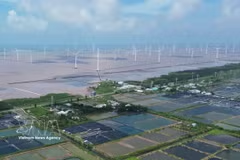
A flagship effort is a scheme to develop 1 million ha of high-quality, low-emission rice in the Mekong Delta by 2030, aimed at changing farming practices, improving resource efficiency and raising farmers’ incomes. In forestry, the sector is driving sustainable forest management and ecosystem services, while fisheries are putting more emphasis on responsible exploitation, sustainable aquaculture and marine ecosystem protection.
Hosting APEC 2027, Vietnam plans to work with the APEC Secretariat on a policy dialogue on rice-sector innovation, and a workshop on public-private partnerships for regenerative agriculture on the sidelines of the first APEC Senior Officials Meeting (SOM1). The events will give economies a platform to share lessons and practical experience in green, low-emission farming.
To help firms, cooperatives and farmers meet tougher environmental standards, Tuan said the ministry will continue fine-tuning policies and technical guidelines; promote technology, digital transformation and traceability; and build capacity in emissions measurement, reporting and verification. It will also focus on training, value-chain linkages, market information and access to technology and finance, particularly for small-scale producers.
Regarding measures the ministry will take to turn these initiatives into cooperation that benefits member economies, he said food security is no longer just about sufficient output, but also about access to safe, nutritious and affordable food and stability amid climate shocks, natural disasters, market volatility and supply chain disruptions. Drawing on its agricultural development experience, Vietnam wants to contribute practical solutions suited to the varied circumstances of APEC economies.
At APEC 2027, Vietnam is expected to push cooperation in innovation and digital transformation across agri-food systems; climate-resilient production, resource efficiency and lower emissions; cutting food loss and waste; risk management, early-warning systems and supply-chain resilience; and public-private partnerships and small-producer capacity. The priorities build on the APEC Food Security Roadmap Toward 2030 and align with the Joint Statement of the 11th APEC Food Security Ministerial Meeting, held in Hangzhou, China, in August 2026.
Vietnam is also advancing an APEC Roadmap on Innovative and Resilient Agri-Food Systems for Shared Prosperity, designed to turn initiatives into concrete activities with measurable, scalable outcomes. The proposal builds on the APEC Food Security Roadmap Towards 2030 while putting more weight on science - technology, digital transformation, resilience to climate change and supply chain disruptions, efficient resource use and sustainable development.
At the 12th APEC Food Security Ministerial Meeting in 2027, Vietnam is seeking two outcomes: a joint ministerial statement and a roadmap or initiative document on innovative and resilient agri-food systems. Both are proposals that will depend on consultations and consensus among member economies.
To turn the priorities into action, the ministry will link sectoral cooperation mechanisms; strengthen joint research, technology transfer, expert training and public-private partnerships; and support producer capacity building, sustainable production and efforts to cut food loss and waste. The APEC Food Security Week is slated for August 14-20, 2027, with the 12th ministerial meeting scheduled for August 20.
At APEC 2027, the ministry wants cooperation to centre on the practical needs of producers and enterprises.
Agricultural biotechnology is a key focus, particularly research and application of technologies for breeding higher-yielding, higher-quality, and more resilient crop and livestock varieties, along with sharing experience in biosafety management and assessment. Vietnam is also pushing precision and smart agriculture, using sensors, data, artificial intelligence and digital technologies to manage irrigation, fertilisers, pests and other inputs more efficiently.
The ministry also plans to strengthen joint research, expert training, data sharing and technology transfer, tied to replicable demonstration models. A key requirement is that technologies must be practical, affordable and accessible to cooperatives, small businesses and farmers.
Those issues are expected to be discussed in the Agricultural Technical Cooperation Working Group (ATCWG), the High-Level Policy Dialogue on Agricultural Biotechnology (HLPDAB) and thematic workshops at SOM3.
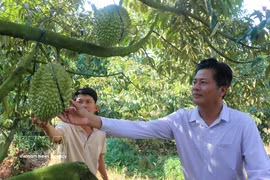
Within APEC 2027’s sectoral initiatives, the ministry plans to coordinate with agencies, localities and firms to showcase achievements, green production models, quality farm products, distinctive local goods and One Commune One Product (OCOP) items. Policy and public-private dialogues will also aim to tighten links among businesses, regulators, scientists and international partners.
A key priority is helping firms and cooperatives foster quality management and traceability and meet food safety, sanitary and phytosanitary, environmental and technical requirements in export markets. The ministry will continue working with competent agencies and partners to share information and clear technical barriers based on science, transparency and consistency with international commitments.
Dialogues on rice-sector innovation, regenerative agriculture, and timber and rubber supply chains at APEC 2027 are also expected to create more opportunities for networking, cooperation and sustainable supply chains. The long-term goal is not just to showcase Vietnamese farm products, but to boost their competitiveness and brand value./.