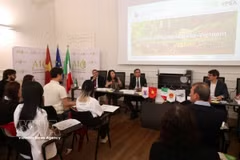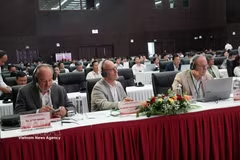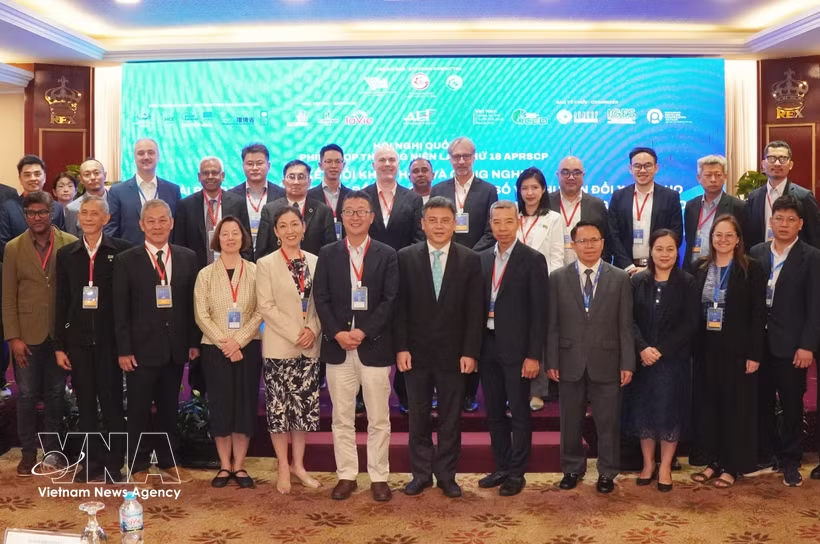
Ho Chi Minh City (VNA) – The 18th Asia-Pacific Roundtable for Sustainable Consumption and Production (APRSCP) took place in Ho Chi Minh City on October 26, focusing on connecting science with industry to accelerate digital and green transformation and promote the circular economy.
The event aims to turn sustainable production and consumption goals into practical, measurable and scalable solutions while strengthening cooperation among authorities, researchers, businesses and international partners.
Held on the sidelines of the Autumn Economic Forum 2026, organised by the Ho Chi Minh City People’s Committee, the conference serves as a step to implement the national action plan on sustainable production and consumption for 2021–2030, led by the Ministry of Industry and Trade.
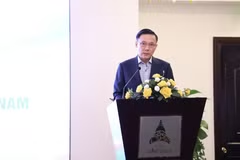
In his opening remarks, Assoc. Prof. Dr Nguyen Minh Tam, Deputy Director of Vietnam National University, Ho Chi Minh City, said the event provides an opportunity to connect scientific knowledge and international experience with practical challenges in economic development and industrial transformation. It looks to help translate research findings into practical applications to strengthen business capacity and support sustainable development.
He expressed his hope that discussions will help participants identify needs, find suitable partners and propose concrete cooperation initiatives, particularly to help small- and medium-sized enterprises access technology, skills and financing.
Dr Yasuhiko Hotta, APRSCP chair, said the network was established in 1997 at the initiative of the United Nations Industrial Development Organisation (UNIDO) and the United Nations Environment Programme (UNEP), initially focusing on cleaner production. It has since expanded to cover sustainable consumption and production, in line with Sustainable Development Goal (SDG) 12 on responsible consumption and production.
The network now focuses on supporting policymaking, building capacity, promoting business innovation and connecting national networks, with an emphasis on the transition towards net-zero, circular and nature-positive economies.
Sharing Thailand’s experience, Chaiyod Bunyagidj, representing SCP Thailand, highlighted the importance of building a national sustainable consumption and production network to strengthen coordination among businesses, government agencies, universities, research institutes and civil society organisations.
Such a network would facilitate information sharing, support national roadmaps and promote evidence-based policymaking, he said.
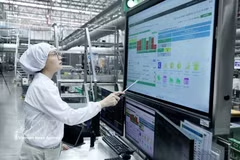
The conference features a high-level dialogue on translating policy ambitions into practical action, alongside four thematic sessions covering advanced technology, innovation and green finance; circular economy solutions in the plastics and textile industries; smart manufacturing, digital traceability and sustainable consumption; and sustainable production, industrial symbiosis and the circular bioeconomy.
Participants are expected to finalise a draft of the APRSCP 2026 Ho Chi Minh City Message, which will prioritise science–industry cooperation, implementable solutions, scalable pilot projects, stronger business capacity and the sharing of practical evidence.
Hotta said the message would be presented at side events of the Asia-Pacific Forum on Sustainable Development and the United Nations High-level Political Forum on Sustainable Development in 2027, as both processes review progress towards SDG 12./.