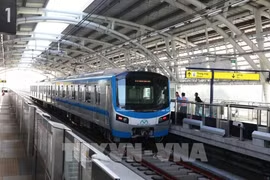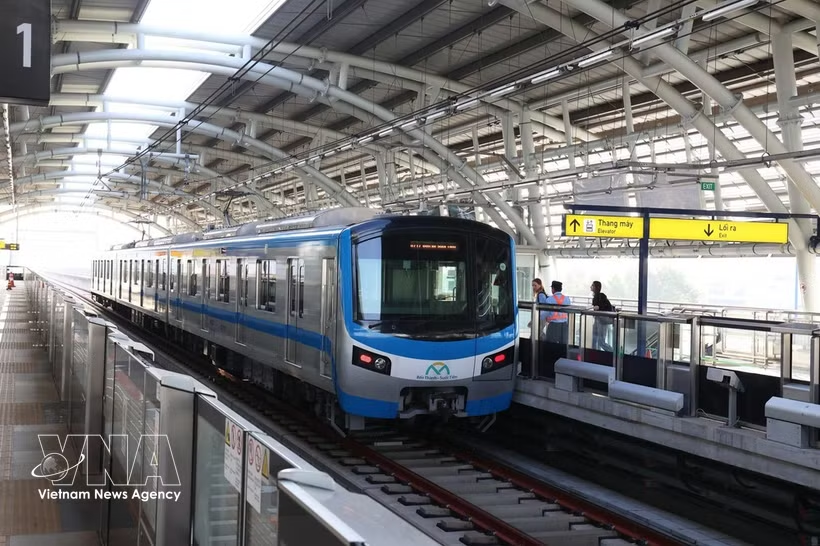
Ho Chi Minh City (VNA) – Ho Chi Minh City is accelerating preparations for urban railway projects, with three publicly funded metro lines expected to break ground by the end of 2026 to improve connectivity with major transport hubs and expand urban development space.
The city plans to build 28 urban railway lines with a combined length of around 1,500 km by 2050, when public transport is expected to meet 55–60% of travel demand. It aims to complete about 255 km of urban railways by 2030 and more than 500 km by 2035.
Tran Quang Lam, Director of the municipal Department of Construction, said metro development was essential for a megacity like Ho Chi Minh City, as expanding roads alone could not fundamentally resolve traffic congestion.
Five railway projects are being prepared for groundbreaking by the end of 2026, including two under the public-private partnership model: Metro Line No. 2's Tham Luong–An Ha section and the Thu Thiem–Long Thanh line. Three publicly funded projects comprise Metro Lines No. 1 and No. 2 in the former Binh Duong area and Phase 1 of Metro Line No. 6, linking Tan Son Nhat Airport with Phu Huu.
For 2026–2030, the city has identified eight priority urban railway projects to strengthen regional connectivity and links with major transport hubs.
The 32.8-km Metro Line No. 1 section from Binh Duong New City to Suoi Tien is estimated to cost 55 trillion VND (about 2.1 billion USD). The 35-km Metro Line No. 2 section from Thu Dau Mot to Tao Dan, connecting with the Ben Thanh–Tham Luong line, has an estimated investment of 113 trillion VND.
Meanwhile, the 22.9-km first phase of Metro Line No. 6, with an investment of more than 86.5 trillion VND, will connect Tan Son Nhat Airport with Phu Huu station and the planned Thu Thiem–Long Thanh railway. The line is expected to ease road congestion and improve access to the city's eastern areas.
Phan Cong Bang, head of the Ho Chi Minh City Urban Railway Management Board, said the three publicly funded projects were scheduled for approval in December 2026 and groundbreaking by year-end, with operations targeted for the 2030s.
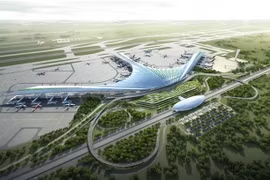
The city is also preparing Metro Line No. 3, connecting Vung Tau, Ba Ria and Phu My, and proposing an extension to Long Thanh International Airport. The move aims to strengthen links between urban railways and key transport hubs across the region.
Prioritising interconnected metro lines is expected to help ease road congestion, improve public transport and create new growth opportunities for Ho Chi Minh City and neighbouring areas./.