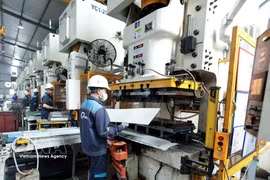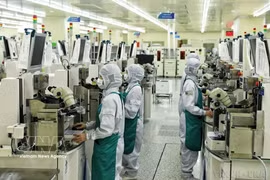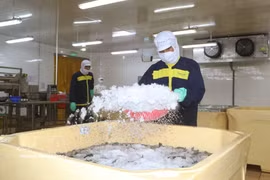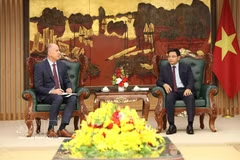
Hanoi (VNA) – Under the Politburo’s Resolution No. 57-NQ/TW on breakthroughs in science and technology development, innovation and national digital transformation, Vietnam aims to raise research and development (R&D) spending to 2% of GDP by 2030, with more than 60% coming from non-State sources.
Experts say this is a major challenge, given that Vietnam’s R&D spending has remained below 0.6% of GDP for years and relies heavily on the State budget.
The resolution calls on private enterprises to become leading forces in core technology development. However, high investment costs, commercialisation risks and legal uncertainties continue to discourage businesses, particularly small- and medium-sized enterprises (SMEs), from investing in R&D.
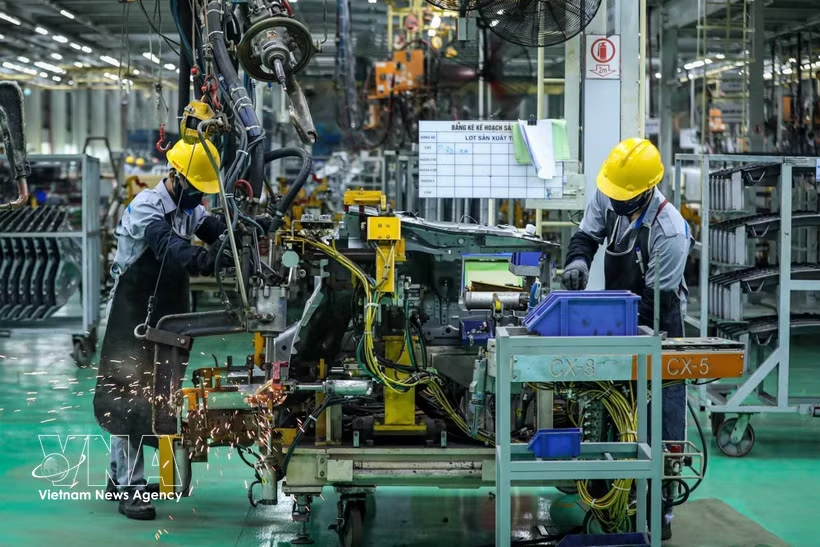
According to the Vietnam Association for Supporting Industries (VASI), manufacturing and assembly remain at the lower end of global value chains, with thin profit margins and high vulnerability to replacement. Although R&D is essential to improving competitiveness, many domestic businesses remain reluctant to make the transition.
Nguyen Huu Yen, Deputy Director of the Ho Chi Minh City Department of Science and Technology, said that businesses have accumulated 8.92 trillion VND (345.1 million USD) in science and technology development funds, but have used only around 33.8% of the total. The challenge is to turn these funds into practical resources for innovation rather than leaving them unused.
New regulations taking effect in 2026, including Government Decree No. 320/2025/ND-CP, allow businesses to allocate up to 20% of their income to science and technology development funds and deduct up to 200% of actual R&D expenses when calculating corporate income tax.
Despite these incentives, businesses remain concerned about stringent accounting requirements and the risk of tax authorities rejecting expenses due to inadequate documentation.
Dinh Hong Ky, Chairman of Secoin Group, noted that complicated finalisation procedures discourage businesses from investing in R&D. Companies fear that failed projects could result not only in substantial financial losses but also in rejected deductions, additional tax payments and penalties.
To mobilise private capital, the State needs to shift from controlling funds to sharing risks. A clear legal framework should recognise that failure is an inherent part of scientific research, allowing legitimate R&D expenses to remain deductible even when projects fail, provided the research process is transparent and free from abuse.
Stronger links between academic research and businesses are equally important. At a meeting on October 14, Deputy Prime Minister Ho Quoc Dung stressed that at least 50% of research projects should be linked to enterprises by 2030, producing tangible products and outcomes.
A transparent, consistent policy framework and effective risk-sharing mechanisms will be essential to encouraging private businesses to invest in core technologies, improve productivity and move beyond low-cost manufacturing, making innovation a genuine driver of Vietnam’s economic growth./.
See more
Vietravel Airlines launches direct Hanoi–Shenzhen route
This marks another step in the carrier’s expansion into the Chinese market, just three months after launching its Ho Chi Minh City–Shenzhen service.
IMF sees positive growth prospects for Vietnam, urges cautious monetary policy
Martin Sommer, head of the IMF’s Article IV consultation mission team to Vietnam, noted that inflation risks in Vietnam remain under control, but several factors could add to price pressures. He therefore called for cautious monetary policy management and readiness to respond promptly if inflationary pressures increased.
An Giang steps up trade cooperation with three Cambodian provinces
Total import-export turnover through border gates connecting An Giang with Kandal, Takeo and Kampot reached approximately 1.127 billion USD in the first nine months of 2026.
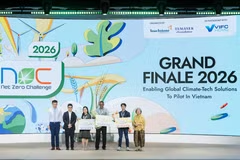
Seven green-tech startups secure 770,000 USD at Net Zero Challenge 2026
In its fourth year, the competition attracted more than 1,100 applications from 80 countries and territories, making it the most competitive edition since its launch in 2023. Nine finalists presented solutions in three categories, namely renewable energy and carbon removal; food systems and sustainable agriculture; and circular economy and waste management.
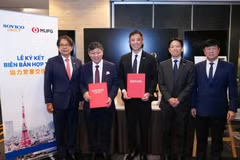
Sovico Group, MUFG forge strategic partnership to mobilise resources for Vietnam–Japan development
The MOU aims to expand financial cooperation, facilitate investment connectivity and mobilise international resources for strategic development sectors, contributing to the realisation of the Vietnam–Japan Comprehensive Strategic Partnership through tangible business opportunities between the two countries.
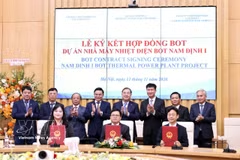
BOT contract signed for 1,200-MW Nam Dinh I thermal power plant
The 1,200-MW Nam Dinh I Thermal Power Plant project is expected to provide an important addition to the national power system, helping ensure electricity supply, particularly in northern Vietnam, in the coming years.
Vietnam, Malaysia connect businesses to boost bilateral trade cooperation
It centred on a business-to-business (B2B) matchmaking session, bringing Vietnamese and Malaysian companies together to discuss import-export needs, seek partners and explore cooperation. Vietnamese businesses aimed to connect with Malaysian importers, distributors and retailers, while expanding access for their products to Malaysia and other markets.
Reference exchange rate continues going up on November 13
The opening-hour buying and selling rates at major commercial banks also saw increases from the November 12 trading session.
Vietnam, Thailand seek to build sustainable economic ties for the future
In his opening remarks, Vietnamese Ambassador to Thailand Pham Viet Hung stressed that the elevation of bilateral ties to a Comprehensive Strategic Partnership in May 2025 has provided fresh impetus for deeper cooperation.
Vietnam-Cambodia trade fair opens in An Giang
The fair features 150 booths representing 200 businesses, cooperatives, household businesses and production and trading establishments from both countries. The exhibition space is arranged into 10 zones showcasing products from Vietnamese localities and three zones featuring Cambodian products, creating opportunities for businesses from the two countries to promote their products, seek partners and expand markets.
Festival to chart new course for rice industry
The second Vietnam International Rice Festival - Can Tho 2026 will take place from November 22 to 25, showcasing the achievements and potential of Vietnam’s rice industry while promoting Can Tho’s image, cultural identity and people, as well as the distinctive river culture of the Mekong Delta.
Vietnam remains attractive destination for Japanese businesses
Fukai Akihiko, President and Representative Director at Gunma Bank and head of a business delegation from Japan’s Gunma prefecture, said cooperation between Gunma and Vietnam has continued to expand in recent years. Around 15,000 Vietnamese people currently live in Gunma, forming the largest foreign community in the prefecture.
Deputy PM urges efficient ODA use, prioritising key projects
Deputy Prime Minister Nguyen Van Thang stressed the need to carefully assess the efficiency of ODA use, as Vietnam is no longer eligible for low-cost loans.
Vietjet launches three new routes to Cebu and Clark, strengthening Vietnam-Philippines air connectivity
The new services further expand Vietjet’s international network while strengthening connectivity and creating fresh opportunities for tourism, trade and cultural exchange between the two countries and across the region.
Vietnam’s pepper and spice exports target 2.4 billion USD in 2026
From January to October, Vietnam exported nearly 237,700 tonnes of pepper, earning more than 1.53 billion USD, up 15.2% in volume and 10.3% in value compared with the same period last year.
Vietnam to access MBIR reactor research capabilities, gradually master nuclear technology
As Vietnam develops its nuclear science and technology and prepares the necessary conditions in terms of human resources, research capacity, safety systems and technical infrastructure, participation in international research programmes and access to MBIR will enable the country to conduct experiments supporting its programme for the peaceful use of atomic energy.
State secret list for financial sector issued
Top secret items include detailed submissions, reports, proposals, explanatory documents, and data concerning state financial and budgetary policies presented to the Party Central Committee, the Politburo, the National Assembly, the National Assembly Standing Committee, or the Government in the event of an emergency related to national defence, national security, social order and safety, or a war for the defence of the Fatherland.
Vietnamese food exporters see EU as major market amid stricter standards
The EU–Vietnam Free Trade Agreement (EVFTA) tariff cuts are opening doors. But the EU is also a market with a strict and frequently updated system of standards and regulations, especially in food safety, quarantine, traceability, environmental protection and sustainable development.
Canadian businesses explore opportunities in Vietnam
Canadian businesses are showing growing interest in exploring cooperation opportunities in the Indo-Pacific, including Vietnam, as they seek to diversify international markets.
Bac Ninh steps up cooperation with Chinese businesses, investors
Bac Ninh has emerged as an important investment destination, with many Chinese enterprises choosing the city to establish operations, expand production and pursue long-term business activities.