Tokyo (VNA) – The southern province of Tay Ninh is seeking to attract more Japanese investment in high-tech industries, logistics, agricultural processing and green transition, aiming to strengthen economic ties and create new growth opportunities.
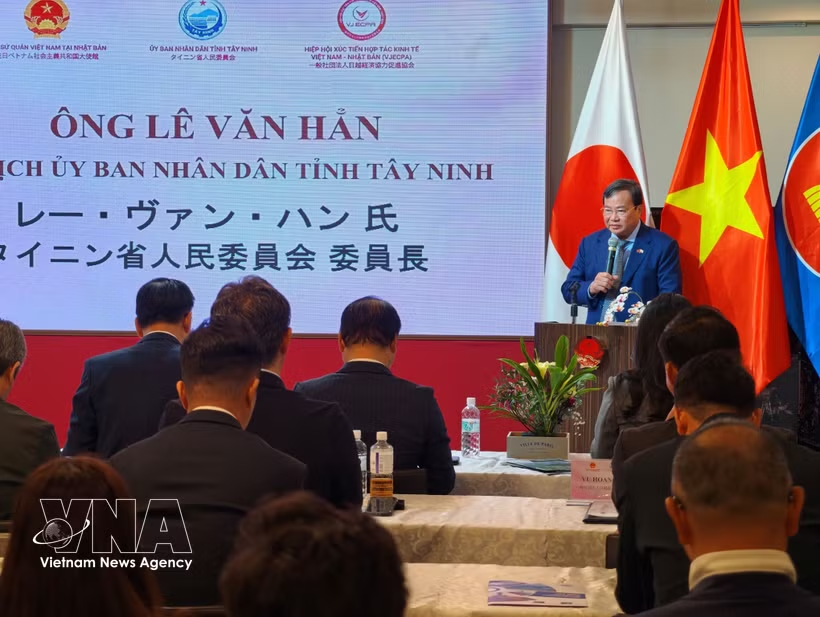
At an investment promotion conference held at the Vietnamese Embassy in Tokyo on October 22, Tay Ninh officials introduced the province’s advantages and investment opportunities to Japanese businesses and investors.
Chairman of the provincial People’s Committee Le Van Han said Japan is an important, reliable and long-term partner of Tay Ninh. Japanese businesses have invested more than 1.4 billion USD in the province, contributing to economic growth, workforce development and the adoption of modern management practices.
Tay Ninh is strategically located between Ho Chi Minh City, the Mekong Delta and Cambodia. It has international border gates, access to seaports and room to expand its industrial land supply. The province’s economy grew by 10.3% in the first nine months of this year, the highest rate in southern Vietnam, Han said.
Building on these advantages, Tay Ninh is prioritising investment in high-tech industries, supporting industries, deep processing of agricultural products, logistics, green transition and other sectors with high added value. These fields match Japanese companies’ strengths in technology, management and market development, he noted.
Han pledged that the provincial authorities would continue administrative reforms, improve infrastructure, develop the workforce and maintain a transparent and secure business environment. They would support businesses throughout project implementation and operations to promote stable, long-term and mutually beneficial partnerships.
Deputy Director of the provincial Department of Finance Hong Le Minh Nguyet said Tay Ninh plans to develop 100 industrial parks and 108 industrial clusters by 2030, covering more than 37,500 hectares, mainly in areas bordering Ho Chi Minh City. More than 1,400 hectares of cleared land are currently available for investment projects. The province also prioritises high-tech agriculture, clean energy, high-quality services, science and technology, innovation and digital transformation.
Vietnamese Ambassador to Japan Pham Quang Hieu said the Comprehensive Strategic Partnership between Vietnam and Japan provides a strong foundation for expanding economic, trade and investment cooperation. As of September 2026, Japan had 5,848 investment projects in Vietnam with registered capital of about 81 billion USD. A survey by the Japan External Trade Organisation (JETRO) found that 56.9% of Japanese firms operating in Vietnam planned to expand their businesses over the following one to two years.
Hieu identified three priority areas for cooperation: integrating Tay Ninh’s industrial production into Japanese companies’ supply chains, particularly in precision engineering, electronic components and supporting industries; developing warehouses, distribution centres and cross-border logistics; and increasing the value of agricultural products through preservation technology, deep processing, traceability and wider market access.
He added that more than 2,400 workers from Tay Ninh have come to Japan for employment since 2024. Their skills and understanding of Japanese business culture could help Japanese firms expand in the province. The embassy would continue connecting partners and supporting business visits and discussions.
Japanese companies operating in Tay Ninh also shared positive experiences. Kamibayashiyama Masao, General Director of Sumitomo Forestry Vietnam, cited convenient access to Ho Chi Minh City and raw materials from the Mekong Delta, competitive land lease costs and support from provincial authorities as reasons for choosing the province.
Ninna Yokoi, General Director of Sapporo Vietnam, also praised the province's efforts to resolve administrative issues and improve infrastructure.
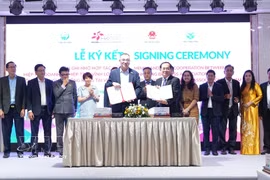
The conference concluded with the signing of memoranda of understanding between Japanese businesses and Tay Ninh agencies and companies to promote specific cooperation projects in the coming period./.