Hung Yen outlines three economic zones, two development corridors

The framework is designed to make better use of the province’s geographical advantages, strengthen regional connectivity and establish new growth drivers across industry, urban development, logistics, services and tourism.

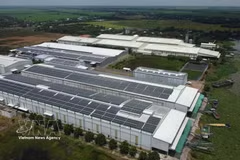
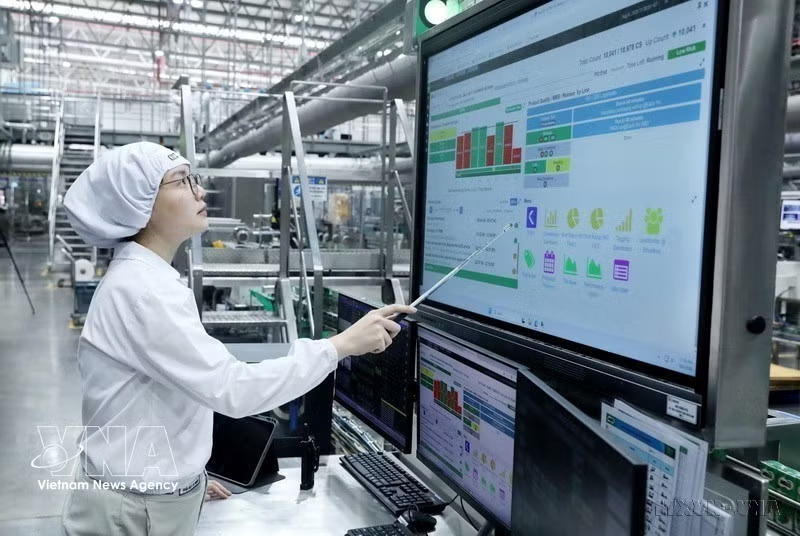
Nestlé Vietnam, a Swiss-invested enterprise, has continuously increased its investment and expanded its operations in Hung Yen province since 2017. (Photo: VNA)

Hung Yen (VNA) – The northern province of Hung Yen is developing a socio-economic development plan based on three economic zones and two development corridors, with the aim of acheiving double-digit economic growth and becoming a centrally governed city by 2030, Chairman of the provincial People’s Committee Nguyen Manh Quyen has said.​

The framework is designed to make better use of the province’s geographical advantages, strengthen regional connectivity and establish new growth drivers across industry, urban development, logistics, services and tourism.​

The three economic zones comprise the northern growth hub, the central zone and the coastal zone, each with distinct development functions.​

The northern growth hub, serving as a gateway to the Hanoi metropolitan area, occupies a strategic position bordering Hanoi, Bac Ninh and Hai Phong. Located along the Lao Cai–Hanoi–Hai Phong–Quang Ninh economic corridor, it is expected to become a centre for high-tech industry, urban development, services and logistics.​

The Hanoi–Hai Phong Expressway (CT.04), National Highway 5, Ring Road 4 and the Hanoi–Hai Phong railway support the connectivity of the region. These transport links will help connect the capital region with the coastal plains and generate spillover growth for the province.​

The central economic zone, located at the heart of Hung Yen’s development space, will link the northern growth hub with the coastal zone. It will also serve as an important connection within the Red River Delta and the coastal economic corridor.​

As the province’s administrative, political, cultural, and educational centre, the zone will help coordinate and balance development between the northern and southern parts of Hung Yen. Its economic structure will combine administration, urban development, clean industry, manufacturing, processing, trade, services and domestic logistics.​

Pho Hien urban area is designated as a regional centre for administration, culture, education and services.

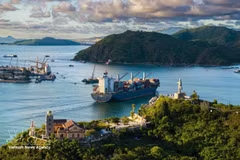
The coastal economic zone, in the eastern and southeastern parts of the province, is expected to become a new strategic growth engine. Positioned along the northern coastal economic corridor between Hai Phong and Ninh Binh, it will serve as Hung Yen’s gateway to the sea.​

The area benefits from its coastal geography, ample available land, strong transport connections, and promising opportunities for seaports, economic zones, and renewable energy projects.​

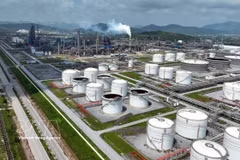
Its development orientation covers energy, manufacturing and processing, port logistics, coastal urban services and marine ecotourism and resort tourism. The proposed model combines a free economic zone with a port city and green energy industries.​

The coastal zone will comprise three functional sub-zones, namely an eastern urban and seaport area, an energy and manufacturing area, and a marine tourism and ecology area.​

In addition to the three economic zones, Hung Yen plans to develop two major corridors.​

The Red River ecological, economic and cultural corridor will extend along the river from the border with Hanoi to the Ba Lat estuary. Linked to the planned Red River Heritage Route, it will promote historical and cultural tourism as well as ecological tourism.​

The industrial, urban and service corridor, associated with the CT.16 expressway network and Longitudinal Route No. 2, will serve as the backbone of the province’s socio-economic development.​

It will also strengthen trade and regional links with Hanoi, Bac Ninh, Hai Phong, Quang Ninh and Ninh Binh, creating space for integrated development in industry, urban areas, services, logistics and innovation.​

Through this spatial development framework, Hung Yen aims to improve regional connectivity, attract investment and build a more balanced and sustainable economic structure as it works towards its 2030 development goals./.
VNA

See more

A solar power system installed on the roof of a factory operating in the rice sector in Truong Xuan commune, Dong Thap province. (Photo: VNA)

Rooftop solar power helps businesses go green

Dong Thap Power Company reported that as of September 2026, the province had 6,150 rooftop solar customers, with total installed capacity of 287.09 MWp. Of these, 751 customers operated self-produced and self-consumed systems with a combined capacity of 42.76 MWp.

Tourists shop at Ngoc Hien Pearl Farm in Phu Quoc city, An Giang province. (Photo: VNA)

Vietnam seeks to boost shopping tourism

Shopping tourism remains underdeveloped in Vietnam despite its potential to attract visitors and boost revenue. Diversifying dining, shopping and entertainment services while extending stays would help increase tourist spending.

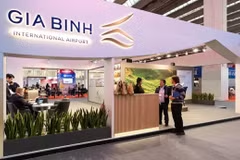
The booth of Gia Binh International Airport at Routes World 2026 (Photo: baoquocte.vn)

Gia Binh airport seeks global airline partnerships at Routes World 2026

Participation in Routes World, an annual route development forum, is intended to help Gia Binh establish relationships with international carriers and strategic partners before the airport becomes operational and position it to participate in the development of future regional and international air links.

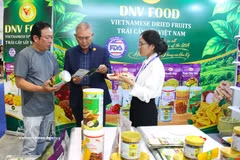
Visitors explore products at the fair (Photo: VNA)

HCMC Export 2026 helps expand trade links with global partners

The 2026 Vietnam Outstanding Export Products Fair (HCMC Export 2026) opened in Ho Chi Minh City on the afternoon of October 22, bringing together more than 700 Vietnamese businesses, along with domestic and international buyers, importers and trade partners.

Vietnamese products are promoted at Lotte Mart’s Seoul Station branch in Seoul. (Photo: VNA)

Vietnam Goods Week in Korea 2026 opens in Seoul

Vietnamese goods have considerable room for growth in the RoK. Closer cooperation in product sourcing and brand promotion will help Vietnamese products strengthen their position in the market.

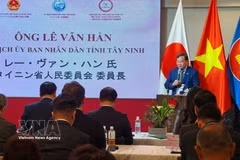
Chairman of the Tay Ninh provincial People’s Committee Le Van Han speaks at the event. (Photo: VNA)

Tay Ninh province seeks Japanese investment in high-value industries

Chairman of the provincial People’s Committee Le Van Han said Japan is an important, reliable and long-term partner of Tay Ninh. Japanese businesses have invested more than 1.4 billion USD in the province, contributing to economic growth, workforce development and the adoption of modern management practices.

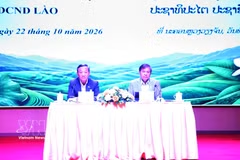
Vietnamese Ambassador to Laos Nguyen Minh Tam (L) and Lao Deputy Minister of Agriculture and Environment Xaynakhon Inthavong co-chair the conference. (Photo: VNA)

Vietnam, Laos eye to boost strategic agricultural cooperation

Tam said agriculture directly supports livelihoods, rural development and Laos’s production capacity, while the two countries have complementary strengths. Laos has abundant land and favourable natural conditions, while Vietnam offers experience in production, scientific and technological application, crop varieties, processing and access to international markets.

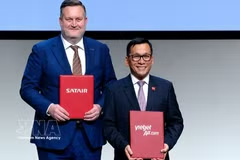
Representatives from Vietjet and Satair exchange a strategic Memorandum of Understanding (MoU) to expand cooperation in aviation supply chains, materials management and solutions supporting aircraft operations and maintenance. (Photo: VNA)

Vietjet, Satair partner to strengthen aviation supply chains

With the foundation of the Integrated Material Services (IMS) programme that currently supports Vietjet's Airbus fleet, the two companies aim to expand materials management solutions, apply digital technologies and optimise resources to improve operational efficiency and strengthen resilience to supply chain disruptions.

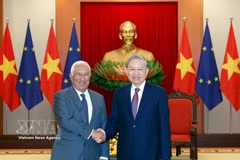
General Secretary of the Communist Party of Vietnam Central Committee and President To Lam (R) receives European Council President António Costa January 2026. (Photo: VNA)

Vietnam, EU seek to deepen economic and trade ties

Since establishing diplomatic relations on November 28, 1990, Vietnam and the EU have developed increasingly close ties. The upgrade to the Comprehensive Strategic Partnership during President of the European Council António Costa's visit to Vietnam in January 2026 marked a historic milestone, making Vietnam the first ASEAN member state to establish the highest-level partnership framework with the EU.