Hung Yen: Project to modernise Bac Hung Hai irrigation system launched

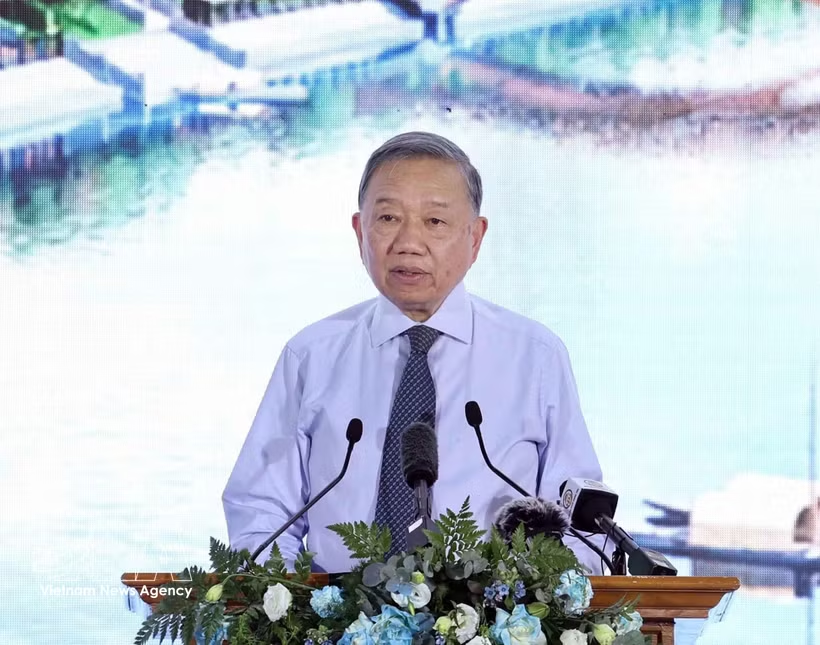
General Secretary of the Communist Party of Vietnam Central Committee and President To Lam stressed that the development of Bac Hung Hai must be integrated into broader efforts to ensure water security, protect the environment and promote sustainable development in the Red River Delta.

General Secretary of the Communist Party of Vietnam Central Committee and President To Lam speaks at the groundbreaking ceremony for a project to upgrade the Bac Hung Hai irrigation system. (Photo: VNA)

​

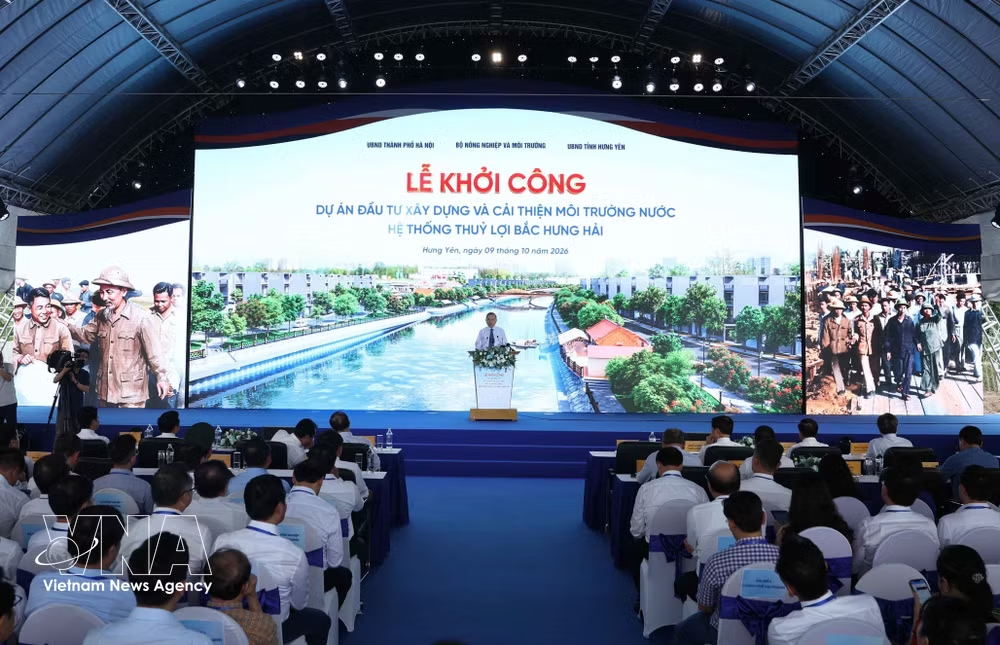
Hung Yen (VNA) – General Secretary of the Communist Party of Vietnam Central Committee and President To Lam on October 9 attended the groundbreaking ceremony for a project to upgrade the Bac Hung Hai irrigation system, calling for coordinated efforts to turn the area into a green, clean, civilised and modern development space.

The project, launched in Nhu Quynh commune, Hung Yen province, is the first component of a broader scheme to develop the irrigation system for multiple purposes while protecting the environment.

Speaking at the ceremony, Minister of Agriculture and Environment Trinh Viet Hung said the system, whose construction began in 1958, has supplied water for about 116,655 hectares of agricultural land and aquaculture areas, provided domestic water sources for around 3.3 million people, and supported drainage and flood prevention across nearly 198,995 hectares in Hanoi, Hung Yen, Bac Ninh and Hai Phong.

In response to growing demand for water supply and drainage, environmental protection and climate change adaptation, upgrading and modernising the system is essential to support production, improve people's livelihoods and promote sustainable development in the region, Hung said.

Addressing the event, General Secretary and President Lam praised the Government, ministries and local authorities for developing a comprehensive plan to improve infrastructure, modernise management and operations, control pollution and preserve the system’s cultural and historical values.

He stressed that the development of Bac Hung Hai must be integrated into broader efforts to ensure water security, protect the environment and promote sustainable development in the Red River Delta.

Protecting irrigation infrastructure and restoring water quality are shared responsibilities of the entire political system, businesses and society, he said.

The top leader called for stronger coordination among localities and sectors, urging authorities to align investment and management plans with urban, industrial, agricultural, transport and environmental infrastructure development. Water infrastructure must be developed ahead of other needs to support socio-economic growth while balancing the interests of localities, sectors and water users.
vnanet_hung-yen-2.jpg
At the groundbreaking ceremony for a project to upgrade the Bac Hung Hai irrigation system (Photo: VNA)

He described protecting water quality as an urgent strategic task, calling for pollution sources to be addressed at their roots, wastewater discharge to be strictly controlled, and wastewater collection and treatment improved in urban areas, industrial parks, production facilities, craft villages and residential areas.

Pollution must not be allowed to persist or recur at the expense of people's health and living conditions, he said, stressing that economic growth must not come at the cost of the environment.

The top leader also called for greater use of science and technology, and digital transformation, and highlighted the need for automated monitoring, forecasting, smart operations and shared databases linking central and local authorities to improve water management, flood prevention and climate change adaptation.

He urged authorities to make better use of the system's economic, ecological, landscape and cultural potential by linking irrigation infrastructure with urban development, ecological agriculture, services and tourism, while safeguarding its water supply and drainage functions.

Emphasising implementation, he called for clear responsibilities, strict oversight, efficient use of public resources and firm action against corruption, wastefulness and other negative phenomena. All project components must be connected and implemented in a coordinated manner to ensure their overall effectiveness.

The leader expressed confidence that, with close coordination among authorities and public support, the project would help strengthen water security, protect the environment and promote sustainable development in the Red River Delta./.
​

VNA

See more

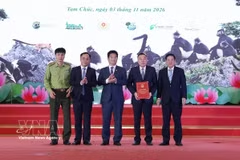
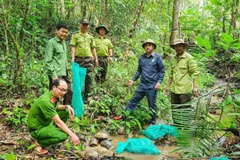
Representatives of the People’s Committee of Ninh Bình province present the decision to establish the Kim Bang Delacour's Langur Species and Habitat Conservation Area. (Photo: VNA)

Ninh Binh establishes world's largest Delacour's langur sanctuary

The establishment of the Kim Bang Delacour's Langur Species and Habitat Conservation Area in Ninh Binh province provides a solid legal and scientific foundation for completing the dossier to seek UNESCO recognition of the Van Long–Kim Bang–Tam Chuc Cultural and Ecological Landscape Complex as a World Heritage Site.

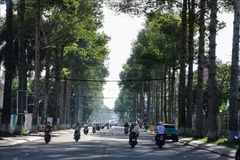
Trees planted along Vo Truong Toan street in Cao Lanh ward, Dong Thap province. Urban tree species capable of reducing fine particulate matter will be planted to reduce air pollution. (Photo: VNA)

Urban trees capable of reducing fine dust to be planted

The Forestry and Forest Protection Department (FFPD) will lead the component on identifying crop and planting structures that help reduce air pollution, while also participating in the design of urban public-space landscapes.

Professor Yucheng Lin, an Assistant Professor at City University of Hong Kong (CityUHK). (Photo: VNA)

Hong Kong expert offers solutions to help Vietnam tackle sea-level rise

In an interview with the Vietnam News Agency’s correspondents in Hong Kong (China), Lin, an expert specialising in sea-level change and climate risk assessment, said Vietnam shared global drivers of sea-level rise with China’s coastal regions, but local conditions could lead to significant differences in the overall risks.

Typhoon Yagi caused severe losses in many provinces in Vietnam in 2024. (Photo: VNA)

Vietnam could face super typhoon like Yagi every seven years

If global average temperatures rise by two degrees Celsius, Vietnam could experience such a super typhoon once every 13 years on average. The frequency would increase to once every nine years under the three-degree warming scenario and once every seven years if temperatures rise by four degrees.

Six of the newly recorded species are of conservation significance, representing four orders and five families. (Photo published by VNA)

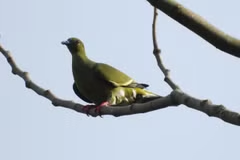
Dakrong Nature Reserve records 35 new bird species

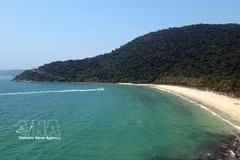
Dakrong Nature Reserve in the central province of Quang Tri has recorded 35 bird species not previously documented, including several endangered and rare species listed on the International Union for Conservation of Nature (IUCN) Red List.

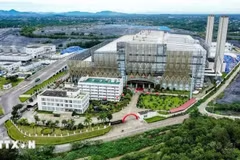
An overview of Soc Son waste-to-energy plant in the Nam Son Waste Treatment Complex, in Hanoi (Photo: VNA)

Hanoi targets collection and treatment of all industrial solid waste

Hanoi aims to ensure that all industrial solid waste from its hi-tech parks, industrial parks and industrial clusters is collected and treated in line with regulations under a new plan to strengthen waste management and tighten control on scrap collection, storage and recycling facilities across the capital.

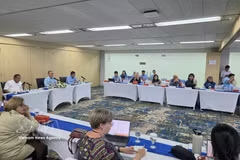
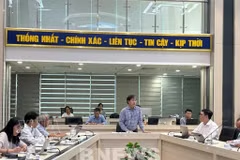
UNICEF Representative in Vietnam Silvia Danailov (first, right) honours first winners of the teaching materials competition. (Photo: VNA)

Deputy minister urges early action on disaster risks

Rapidly shifting climate conditions and increasingly overlapping hazards mean disaster risk reduction can no longer stand alone; it must sit at the heart of sustainable development, tightly integrated with climate response, water security, social welfare and economic growth.

Illustrative image (Source: VNA)

Northern region to experience cold spell

The cold air is forecast to reach northeastern Vietnam from the evening and night of October 4 before spreading to other parts of the north and the area from Thanh Hoa to Hue. Winds will shift to the northeast at levels 2-3 inland and levels 3-4 along coastal areas.