Hanoi (VNA) – El Niño is forecast to reach very strong intensity from September 2026 to February 2027, requiring relevant ministries, sectors and localities to take proactive and timely measures to respond effectively.
The National Centre for Hydro-Meteorological Forecasting (NCHMF) said that from September to November, El Niño is expected to remain at strong to very strong levels, with a 100% probability. Of this, there is a roughly 7% probability of a strong El Niño and a 93% probability of a very strong one.
From October to December, the probability of very strong El Niño is forecast to reach as high as 95%. From December 2026 to February 2027, the phenomenon is expected to continue at strong to very strong levels, with a 93% probability.
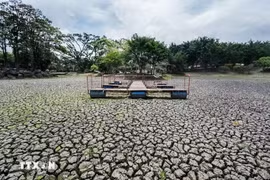
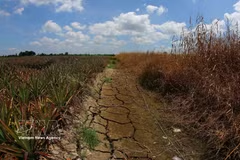
El Niño will bring hot weather and reduced rainfall. Most areas are expected to experience widespread rainfall deficits of between 10% and 50%. Temperatures are forecast to remain above normal, with heatwaves becoming more severe and lasting longer than in 2025.
This could cause water resources in river basins to decline sharply and increase the risk of forest fires. Water levels in reservoirs are also predicted to fall significantly, which may directly affect energy security and water supplies downstream, according to the Vietnam Meteorological and Hydrological Administration under the Ministry of Agriculture and Environment.
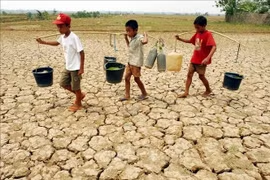
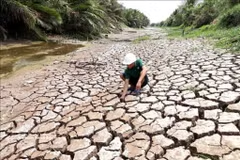
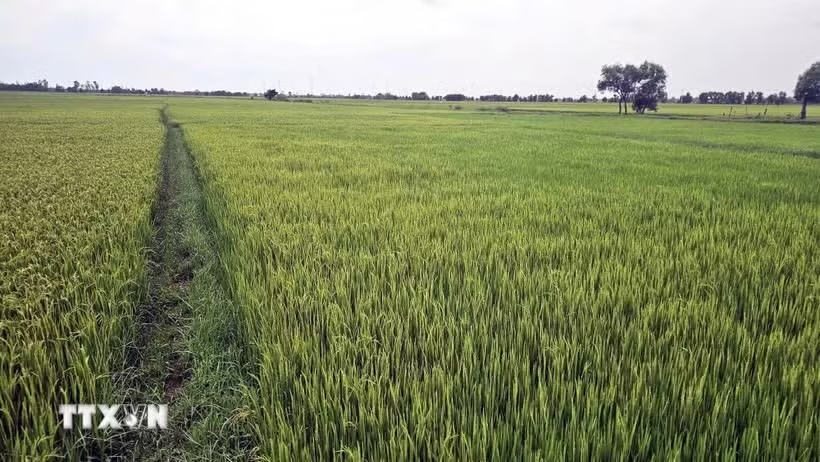
For agriculture, forestry and fisheries, drought, water shortages and saltwater intrusion could reduce the productivity of crops, livestock and aquaculture, particularly in the south-central coast, Central Highlands and Mekong Delta.
Adjusting cropping seasons, expanding water-saving irrigation and increasing pumping and irrigation operations could raise production costs, affecting people's incomes and the sector's added value, the administration warned.
In the industrial and energy sectors, reduced inflows into hydropower reservoirs could weaken hydropower generation. Water shortages in certain areas could also affect some water-intensive production facilities.
For rural domestic water supplies, a high-risk scenario forecasts that around 82,240 households could face water shortages while under a very high-risk scenario, the figure could rise to 254,570 households, mainly in the north-central region, south-central coast and Mekong Delta.
El Niño is also expected to increase the risk of imbalances between water supply and demand in many river basins.
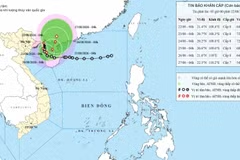
Mai Van Khiem, NCHMF Director, noted that during the El Niño period, the number of storms in the East Sea is forecast to be lower than the long-term average, but there remains a possibility of strong ones with complex tracks.
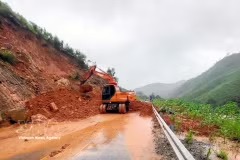
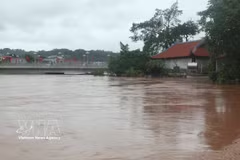
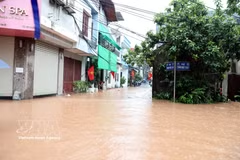
Although total rainfall is projected to decline, there could still be more than 10 periods of heavy rainfall nationwide, he added. Floods on small rivers in northern Vietnam and rivers from Quang Tri to Dak Lak in the central region could reach Alert Level 2 to Alert Level 3, accompanied by risks of flash floods, landslides and inundation.
Deputy Minister of Agriculture and Environment Le Cong Thanh said that in the face of challenges posed by the approaching El Niño, ministries, sectors, local authorities and the business community should coordinate closely with hydro-meteorological agencies to develop detailed and flexible response plans, with a determination to turn risks into development opportunities.
Thanh stressed that key economic sectors, particularly agriculture, energy, trade and logistics, should not merely adopt a passive approach. Instead, they need to proactively adjust production structures and planting schedules, optimise the operation of irrigation systems, regulate reservoirs and strengthen supply-chain management.
Maximising adaptability and existing infrastructure advantages will help firmly safeguard national food and energy security, proactively create competitive advantages and seize opportunities in international markets amid declined global food supply due to the impact of natural disasters, he said./.
VNA