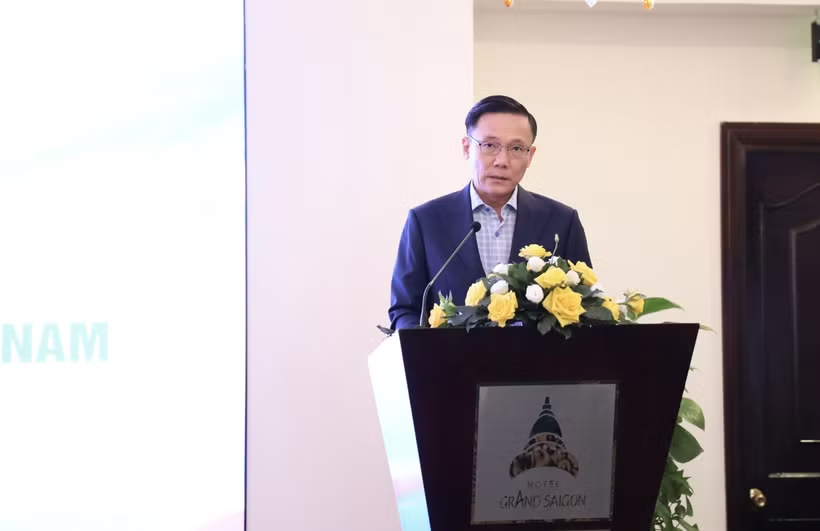
Ho Chi Minh City (VNA) – The Comprehensive Economic Partnership Agreement (CEPA) between Vietnam and the United Arab Emirates (UAE) will boost Vietnamese exports to the UAE and help local businesses reach wider markets across the Middle East and Africa, experts said.
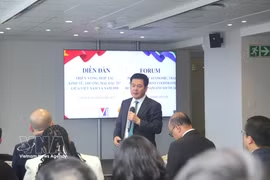
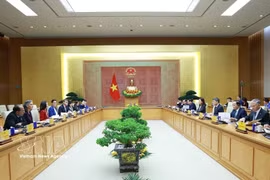
They made the remarks at a seminar on the CEPA and the potential for Vietnamese businesses' exports to the Middle East and Africa, held on October 23 by the Ho Chi Minh City Investment and Trade Promotion Centre (ITPC) and the Ministry of Industry and Trade’s Agency of Foreign Trade.
Le Anh Hoang, ITPC Deputy Director, said the UAE is a promising market and a strategic hub for trade, logistics and transhipment in the Gulf Cooperation Council (GCC), the Middle East and Africa.
The CEPA took effect on February 3, 2026. Under the agreement, the UAE committed to eliminating tariffs on 74.2% of item lines, with the figure expected to rise to 89.2% after five years of implementation. These commitments give Vietnamese goods a significant competitive advantage, he said.
However, businesses must understand the agreement’s provisions and meet market requirements to turn tariff preferences into actual export orders. These include rules of origin, certificates of origin (C/O), quality standards and the development of professional distribution channels.
Pham Binh An, former Deputy Director of the Ho Chi Minh City Institute for Development Studies, said the UAE had a gross domestic product of 517.7 billion USD in 2025 and maintained real economic growth of 6.2%.
The country has successfully diversified its economy beyond oil, with non-oil sectors accounting for 77% of GDP, or about 398 billion USD. Finance, logistics, retail and high technology are among its key economic pillars.
With foreign nationals accounting for 88.5% of its population and agricultural land making up less than 1% of its territory, the UAE relies heavily on food imports, meeting an estimated 85-90% of its daily food demand through overseas supplies. This creates opportunities for Vietnamese exporters, particularly those supplying agricultural products and processed foods.
Although the CEPA only took effect in February 2026, bilateral trade had already expanded in previous years. Vietnam’s exports to the UAE rose steadily from 2021 to 2025, reaching 5.91 billion USD last year. Key export groups included iron and steel, cashew nuts, transport vehicles and fruit and vegetables.
An said the agreement established a comprehensive framework for bilateral economic cooperation and could also encourage investment from major UAE financial funds in Vietnam, particularly in infrastructure, clean energy and digital transformation.
However, he cautioned that lower tariffs did not automatically mean easier customs clearance. The UAE continues to apply strict technical barriers to trade (TBT), as well as sanitary and phytosanitary (SPS) measures and food safety requirements.
Halal certification is particularly important for products intended for Muslim consumers. Businesses must ensure compliance throughout the supply chain, from raw material sourcing to production processes designed to prevent cross-contamination in storage and transportation. To be eligible for market circulation, products must have certification officially recognised by the relevant UAE authorities under the National Halal Mark system.
Truong Xuan Trung, Head of the Vietnam Trade Office in the UAE, said businesses should view the UAE not only as a consumer market but also as a modern logistics and distribution centre serving neighbouring markets in the Middle East and Africa.
He recommended that Vietnamese companies first use the UAE market to test products, assess consumer demand and build brand recognition for key Vietnamese exports, including fresh agricultural produce, processed foods, textiles and garments, footwear and furniture.
Businesses could then expand into GCC countries by taking advantage of the bloc’s customs union and harmonised intra-regional customs arrangements. For the expanded Middle East and Africa, where markets differ considerably, companies should adopt targeted strategies based on geographical clusters and specific industries, working with reliable local partners rather than spreading resources too thinly.
Trung also urged exporters to diversify their distribution channels, including direct exports, partnerships with intermediaries in the UAE and the gradual development of local warehousing and logistics facilities. Instead of pursuing individual buyers, businesses should build long-term relationships with specialised importers, regional retail chains, warehouse operators in free trade zones and cross-border e-commerce platforms./.
See more
Da Nang forum highlights integrated planning for sustainable development
Planning is a key means of translating development orientations into spatial organisation and resource allocation. Its quality reflects leaders’ vision, their understanding of development rules and their ability to address major development challenges.
Asian-American businesses help expand Vietnam-US trade ties
Beyond tariffs, Vietnamese businesses must also meet increasingly stringent requirements concerning product origin, trade remedies, supply chain transparency, technical standards and compliance with US market regulations.
Ho Chi Minh City prioritises metro links to airports, major transport hubs
The city plans to build 28 urban railway lines with a combined length of around 1,500 km by 2050, when public transport is expected to meet 55–60% of travel demand. It aims to complete about 255 km of urban railways by 2030 and more than 500 km by 2035.
Vietnam seeks to boost shopping tourism
Shopping tourism remains underdeveloped in Vietnam despite its potential to attract visitors and boost revenue. Diversifying dining, shopping and entertainment services while extending stays would help increase tourist spending.
Reference exchange rate continues going down on October 23
With the current trading band of ±5%, the ceiling rate applicable to commercial banks stood at 26,908 VND/USD, while the floor rate was 24,346 VND/USD.
Leveraging coastal, highland strengths to expand development space
The South Central Coast and Central Highlands hold a strategic position linking domestic and international regions, serving as a driving force for the development of the marine economy, commercial agriculture, and national security and defence.
Vietnam Airlines to launch direct Da Nang-Singapore flights on November 17
The route will be operated by Airbus A321 aircraft, with flights departing Da Nang at 3:00 pm and Singapore at 7:45 pm (local time).
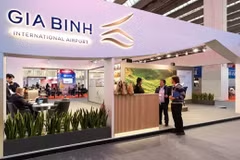
Gia Binh airport seeks global airline partnerships at Routes World 2026
Participation in Routes World, an annual route development forum, is intended to help Gia Binh establish relationships with international carriers and strategic partners before the airport becomes operational and position it to participate in the development of future regional and international air links.
Measures taken to boost industrial development along North Central Coast
The rapid development of these projects is not only creating new growth momentum for individual localities but also helping establish a competitive coastal economic belt for a new phase of development.
HCMC Export 2026 helps expand trade links with global partners
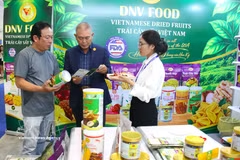
The 2026 Vietnam Outstanding Export Products Fair (HCMC Export 2026) opened in Ho Chi Minh City on the afternoon of October 22, bringing together more than 700 Vietnamese businesses, along with domestic and international buyers, importers and trade partners.
Vietnam Goods Week in Korea 2026 opens in Seoul
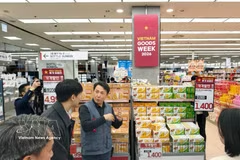
Vietnamese goods have considerable room for growth in the RoK. Closer cooperation in product sourcing and brand promotion will help Vietnamese products strengthen their position in the market.
Tay Ninh province seeks Japanese investment in high-value industries
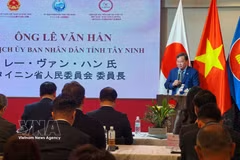
Chairman of the provincial People’s Committee Le Van Han said Japan is an important, reliable and long-term partner of Tay Ninh. Japanese businesses have invested more than 1.4 billion USD in the province, contributing to economic growth, workforce development and the adoption of modern management practices.
Vietnam, Laos eye to boost strategic agricultural cooperation
Tam said agriculture directly supports livelihoods, rural development and Laos’s production capacity, while the two countries have complementary strengths. Laos has abundant land and favourable natural conditions, while Vietnam offers experience in production, scientific and technological application, crop varieties, processing and access to international markets.
Transactions at Vietnam International Financial Centre expected to start in November
Thang tasked the operating agencies in both cities with completing the necessary conditions in October and working directly with financial institutions and investors to attract members and generate transactions in November, while ensuring legal compliance and financial security.
Vietjet, Satair partner to strengthen aviation supply chains
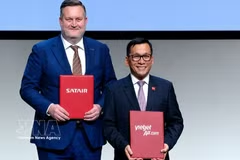
With the foundation of the Integrated Material Services (IMS) programme that currently supports Vietjet's Airbus fleet, the two companies aim to expand materials management solutions, apply digital technologies and optimise resources to improve operational efficiency and strengthen resilience to supply chain disruptions.
Vietnam, EU seek to deepen economic and trade ties
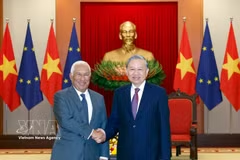
Since establishing diplomatic relations on November 28, 1990, Vietnam and the EU have developed increasingly close ties. The upgrade to the Comprehensive Strategic Partnership during President of the European Council António Costa's visit to Vietnam in January 2026 marked a historic milestone, making Vietnam the first ASEAN member state to establish the highest-level partnership framework with the EU.
Petrol prices fall further, diesel prices rise
E5 RON92 petrol was capped at 25,361 VND (0.98 USD) per litre, down 1,610 VND, while E10 RON95-III fell by 1,816 VND to 25,213 VND per litre.
More measures needed to boost private investment in R&D
The resolution calls on private enterprises to become leading forces in core technology development. However, high investment costs, commercialisation risks and legal uncertainties continue to discourage businesses, particularly small- and medium-sized enterprises (SMEs), from investing in R&D.
Vietnam’s shrimp exports hit 3.7 billion USD in nine months
The figure represented an 11% year-on-year increase, slowing from the 14% growth recorded in the first half of the year.
Colon Free Zone offers Vietnamese goods gateway to Latin America
Using the zone as a distribution hub could help businesses reach customers more easily, but they should carefully assess market demand, operating costs and sales potential before deciding to invest.