Hanoi (VNA) – Vietnam is stepping up cooperation with GS1, the global organisation that develops and manages standards for product identification, barcodes and supply chain data, to help businesses improve efficiency and competitiveness in digital supply chains.
With more than 115 member organisations worldwide, GS1 provides standards for consistent product identification and information sharing. It is expanding practical application in retail, healthcare, logistics and traceability to build a trusted global data ecosystem.
Nguyen Nam Hai, Chairman of the Commission for Standards, Metrology and Quality of Vietnam, said GS1 Vietnam was implementing its orientations towards 2030, focusing on promoting GS1-standard QR codes to enhance traceability, improve product information transparency and strengthen data connectivity across supply chains.
GS1 Vietnam is also helping businesses standardise product data, adopt internationally compliant barcodes and improve data management to support e-commerce, logistics, modern retail and exports.
Amid global digital transformation, the organisation is studying a roadmap for transitioning from traditional barcodes to next-generation identification solutions. The move is expected to help Vietnamese businesses meet increasingly stringent international requirements for traceability, data transparency, product lifecycle management and sustainable development.
According to Hai, the rapid development of artificial intelligence (AI), digital commerce and traceability is driving demand for accurate, transparent product data that can be authenticated globally.
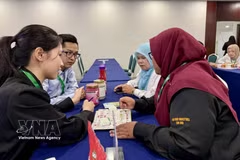
At the GS1 Asia-Pacific Regional Forum 2026 held recently, participants attended training on the transition to two-dimensional (2D) barcodes, digital product passports (DPPs) and electronic labels. High-level meetings were organised for leaders of GS1 member organisations so that they could exchange strategic priorities, implementation plans and regional coordination to accelerate digital transformation across supply chains.
The forum enabled GS1 Vietnam to update its understanding of emerging global trends and explore ways to promote GS1 standards in Vietnam, supporting digital transformation, supply chain management and international integration.
GS1 Vietnam also strengthened ties with member organisations and global technology partners, exchanging experience in standards, data management and traceability.
The models and experience shared at the forum will provide a basis for GS1 Vietnam to promote advanced standards and data solutions, helping domestic businesses improve data management, enhance information transparency and integrate more effectively into global supply chains.
These efforts also contribute to implementing the Politburo’s Resolution No. 57-NQ/TW on science and technology development, innovation and digital transformation, particularly in developing data infrastructure, standardisation, connectivity and data sharing to support the digital economy, digital society and international integration./.