Vietnam seeks deeper role in global semiconductor value chain

As global semiconductor supply chains are restructured, experts said Vietnam’s opportunity lies not only in attracting projects but also in accumulating knowledge, technology and management expertise to move into higher-value activities.

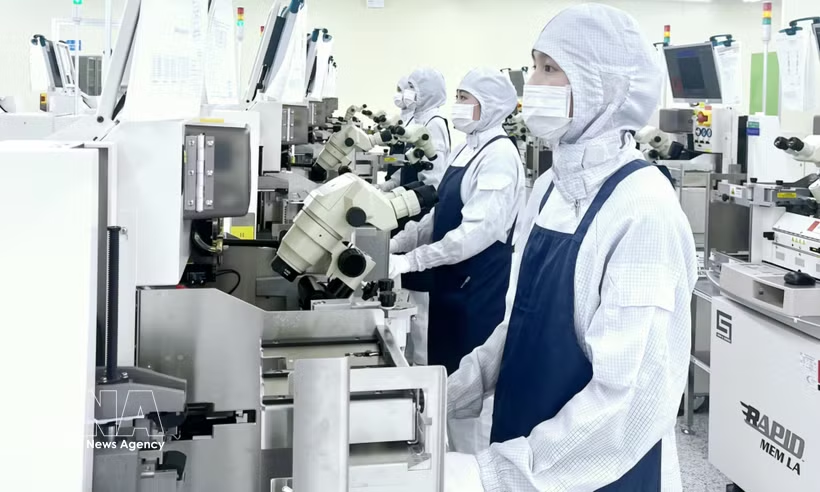
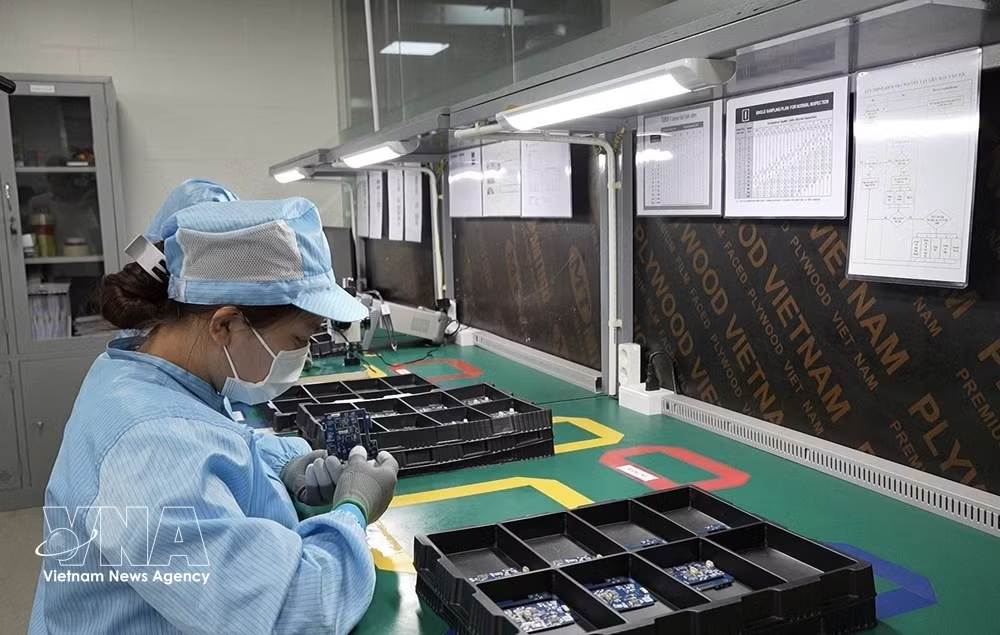
A modern production line of Hana Micron Vina Co., Ltd in Bac Ninh city (Photo: VNA)

Ho Chi Minh City (VNA) – The investment boom in AI, data centres, and electric vehicles is fueling demand for chips, opening doors for Vietnam to expand its presence in the semiconductor industry.

Opportunities from global supply chains

FedEx’s report, “From AI to EVs: How APAC Semiconductors Drive the Global Innovation Map,” highlights how APAC has become the centre of the global semiconductor ecosystem, accounting for approximately 58% of global semiconductor industry revenue.

Vietnam is benefiting from manufacturing shifts thanks to its electronics industry, regional trade links and competitively priced workforce. According to the report, Vietnam’s semiconductor exports grew at a compound annual growth rate (CAGR) of 31.8% between 2006 and 2025, while semiconductor imports grew by 30% over the same period. Vietnam exported 32.4 billion USD in integrated circuits in 2023, underscoring its growing participation in regional and global semiconductor trade.

“Vietnam is becoming an increasingly important part of APAC’s semiconductor ecosystem, as more semiconductor and high-tech companies expand their presence in the country,” said Ee-Hui Tan, Managing Director of FedEx Vietnam and Cambodia.

By late 2025, Vietnam had around 170 foreign direct investment (FDI) projects in semiconductors, with registered capital nearing 11.6 billion USD, according to the Ministry of Science and Technology. The presence of Samsung, Intel, MediaTek, and other technology groups offers opportunities to access technologies, manufacturing processes, and international customer networks. Meanwhile, the electronics components market is forecast to reach 145 billion USD by the end of 2026.

However, rising investment and exports do not necessarily translate into domestic mastery of high-value stages of the semiconductor chain. FDI spillovers depend on local firms’ supply-chain participation, technology absorption and capacity to develop technically advanced products and services.

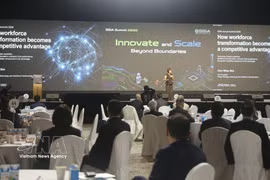
At the recent Vietnam Innovation Summit 2026 in Ho Chi Minh City, Thomas Pang, acting CEO of Neuron Digital Group, noted that Vietnam’s semiconductor activities remained concentrated in design, packaging and testing. Upstream activities, including materials, equipment and wafer fabrication, remained limited, while advanced downstream applications and system integration are still developing.

Choosing priorities and strengthening foundations

Under Vietnam’s semiconductor industry development strategy to 2030, with a vision to 2050, the country aims to participate in all stages of the global value chain, from design and fabrication to packaging and testing. Achieving this goal requires clear priorities and effective resource allocation.

Pang said Vietnam should build on existing strengths and develop specialised capabilities rather than spread resources too thinly. Since semiconductor investments usually span five to ten-year time horizons, having stable, predictable policies and smooth coordination between agencies is crucial. He recommended looking into Singapore’s Economic Development Board model, which brings together relevant agencies to promote and support investments.
vnanet_tinh-phu-tho-uu-tien-thu-hut-cac-du-an-dien-tu-ban-dan-vat-lieu-moi-cong-nghe-so-tri-tue-nhan-tao-va-nang-luong-sach.jpg
Phu Tho province prioritises attracting investment in electronics, semiconductors, new materials, digital technology, artificial intelligence and clean energy. (Photo: VNA)

Digital infrastructure is another key requirement. Advanced manufacturing generates vast amounts of data on energy, equipment, environmental conditions and logistics. AI, digital twins and real-time data can support simulation, monitoring and production optimisation, improving efficiency and reducing operating costs.

Vietnam has advantages in geographical location, political stability, a young workforce and policymakers’ attention, Pang said. He went on to say that what the country needs now is ecosystem depth, built through a consistent strategy, coordinated governance and smart infrastructure.

Calvin Yong, Regional Director for Southeast Asia, India and Oceania at Yole Group, said Vietnam needed to address domestic supply shortages, fabrication capabilities and manufacturing management experience.

Most suppliers serving Vietnam’s semiconductor industry are foreign-owned, while many inputs are imported. This underscores the need to develop domestic supply networks to help Vietnamese companies gradually integrate more deeply into the production chains of international corporations.

Developing fabrication capabilities could bridge chip design and commercial production, but requires substantial capital, advanced technology and experienced personnel. Investment decisions should therefore reflect market demand and the country’s actual capabilities.

Yong also highlighted shortages of professionals experienced in factory operations, production management and advanced packaging. Beyond engineering education, Vietnam needs experienced specialists, stronger international cooperation and opportunities for local workers to gain hands-on experience.

As global semiconductor supply chains are restructured, experts said Vietnam’s opportunity lies not only in attracting projects but also in accumulating knowledge, technology and management expertise to move into higher-value activities./.
VNA

See more

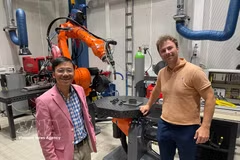
Associate Professor Vu Viet Hung (left) visits a 3D-printed space built by robots (Photo: VNA)

Solutions proposed to harness overseas Vietnamese expertise

Assoc. Prof. Vu Viet Hung, President of the Canadian Vietnamese Scientists and Experts Association (CVSEA), said the effectiveness of OV intellectuals’ contributions depends on programme design, resource allocation and stakeholder coordination.

Vietnam International Digital Week 2026 (VIDW 2026) will take place in Quang Ninh from October 28 to 30.

Vietnam Digital Week to drive international cooperation in AI, strategic technologies

Under the theme “Intelligent Connectivity: AI Governance, Shaping AI Transformation,” the event, slated for October 28-30 in Quang Ninh city, aims to deepen policy dialogue, forge international partnerships and accelerate technology research, development, transfer and commercialisation, particularly in strategic and emerging technologies.

Deputy Prime Minister Ho Quoc Dung speaks at the meeting the Ministry of Science and Technology (MOST) and the Ministry of Finance (MOF) on October 21. (Photo: VNA)

Vietnam moves to standardise digital economy measurement

The digital economy is a strategic priority for Vietnam, which aims to raise its share of GDP to at least 30% by 2030, in line with the Politburo’s Resolution No. 57-NQ/TW on breakthroughs in science and technology, innovation and national digital transformation.

With well-developed infrastructure, the Saigon Hi-Tech Park in Ho Chi Minh City has attracted investment from numerous technology corporations. (Photo: VNA)

Concentrated digital technology parks to drive growth

As the nucleus of the southeastern region, Ho Chi Minh City is well positioned to lead the transition towards a growth model driven by science, technology and innovation. The city has approved a plan to develop 17 new concentrated digital technology parks covering a total area of 750-1,000 hectares.

Vietnam is stepping up the development of the semiconductor industry. (Illustrative photo: VNA)

Vietnam should look to EU experience to develop national quantum technology capacity

Quang said Vietnam should first develop high-quality human resources through interdisciplinary training programmes in quantum technology, photonics, microchips and artificial intelligence at leading universities. Scholarships, internships at European quantum labs, and strategies to bring Vietnamese experts from abroad could help speed up progress.

Ten Make in Vietnam and Australia digital technology products on display at the Vietnam–Australia forum on investment and development cooperation in digital technology and AI. (Photo: VNA)

Creating value through technological cooperation, digital transformation

From expanding international cooperation to develop core technologies and helping Vietnamese businesses to participate in global value chains to improving public services through digital solutions, these efforts are gradually turning technological advances into a driver of development and a source of tangible social benefits.

A business representative engages with the platform via a "tap-to-connect" feature at the event. (Photo: VNA)

AI platform launched to help businesses build brands

Addressing the event, experts and business representatives stressed that harnessing digital technologies requires businesses to adopt a new mindset, use data in decision-making, and maintain brand identity and consumer trust.

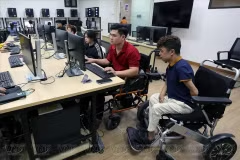
AI opens up opportunities for people with disabilities

AI opens up opportunities for people with disabilities

Amid the rapid development of the Fourth Industrial Revolution, artificial intelligence (AI) is changing the way people learn, work and communicate. For persons with disabilities (PwDs), AI is opening up new opportunities to overcome barriers once considered insurmountable, narrow the digital divide, and promote an inclusive society where no one is left behind.

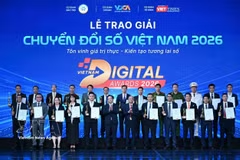
Representatives of organisations and individuals receive the 2026 Vietnam Digital Awards (Photo: VNA)

Vietnam Digital Awards 2026 honours 56 organisations, products and solutions

The 2026 awards place greater emphasis on practical effectiveness, applicability and the ability of digital transformation models to generate wider impact. They recognise not only technological innovations but also the benefits these technologies bring to people and society. Beyond acknowledging achievements, the awards also encourage initiatives capable of shaping the future.

The transformation of museums from “static repositories” into “dynamic experiential spaces” is driving the development of cultural industries. (Photo: VNA)

Digital heritage opens new avenues for cultural preservation, public access

The Southern Women’s Museum has so far digitised 1,113 artefacts, but only 113 are currently accessible to the public. According to deputy director of the museum Pham Thi Dieu, thousands of other artefacts are awaiting an exhibition system under an expansion project. The museum hopes to complete the system in 2027, enabling online visitors to explore the digitised collections.

A citizen interacts with an AI-powered robot for guidance on administrative procedures at the Public Administration Service Centre of Xuan Huong–Da Lat ward, Lam Dong province. (Photo: VNA)

Vietnam taps Vietnamese talent in Canada to advance AI cooperation

As Vietnam-Canada relations enter a new phase under their strategic partnership, mobilising this resource is consistent with the orientation of Politburo Resolution No. 23-NQ/TW on overseas Vietnamese affairs, particularly the goal of harnessing knowledge, science and technology for national development.