Solutions proposed to harness overseas Vietnamese expertise

Assoc. Prof. Vu Viet Hung, President of the Canadian Vietnamese Scientists and Experts Association (CVSEA), said the effectiveness of OV intellectuals’ contributions depends on programme design, resource allocation and stakeholder coordination.

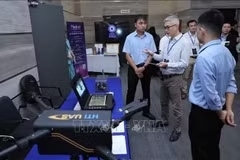
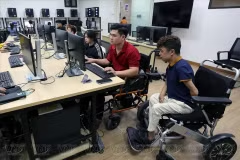
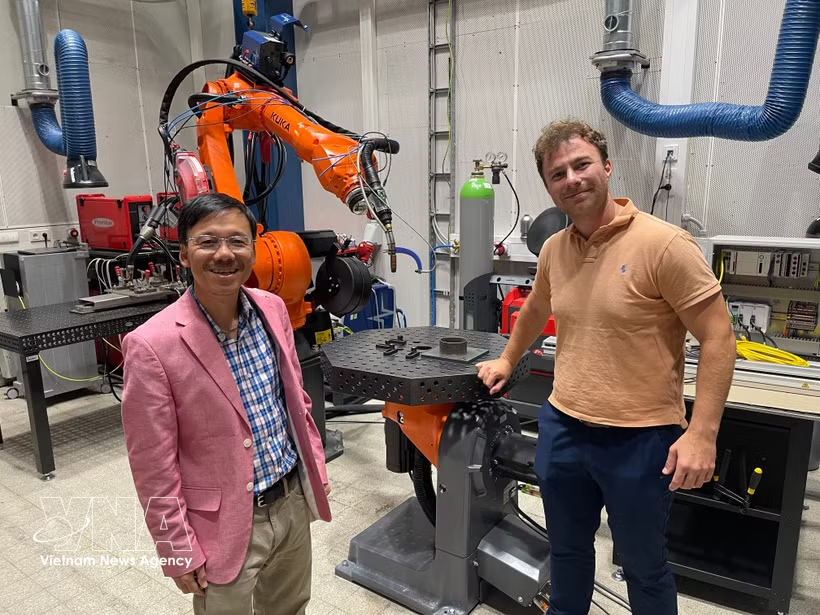
Associate Professor Vu Viet Hung (left) visits a 3D-printed space built by robots (Photo: VNA)

Ottawa (VNA) – Vietnamese scientists in Canada have proposed ways to mobilise overseas expertise by matching specialists’ capabilities with Vietnam’s technological needs and workforce training requirements, towards effectively implementing the Political Bureau's Resolution No. 23-NQ/TW.

The resolution calls for breakthrough policies to attract, connect and harness the expertise of overseas Vietnamese, particularly experts, intellectuals and scientists. Turning these policies into concrete research opportunities is key to enabling them to contribute to national development.

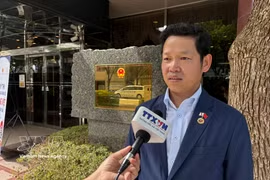
Talking to Vietnam News Agency correspondents in Ottawa, Assoc. Prof. Vu Viet Hung, President of the Canadian Vietnamese Scientists and Experts Association (CVSEA), said the effectiveness of OV intellectuals’ contributions depends on programme design, resource allocation and stakeholder coordination. He noted that experts need regular opportunities to participate, clearly defined roles and sustained cooperation with partners in the homeland throughout project development and implementation.

The lack of a dedicated national programme to mobilise OV experts for science, technology and innovation projects is a major obstacle, he said, adding that existing connections established by universities, research institutes, businesses and individuals need a common framework, clear guidelines and funding support.

According to Hung, information gaps also hamper cooperation, with overseas experts often unaware of research activities in the homeland, potential partners or specific needs, while domestic research teams lack information about their overseas counterparts’ expertise and interests.

Hung also stressed the need to address professional friction and competition to foster cooperation and help both sides pursue shared research goals.

He proposed allowing Vietnamese scientists and experts working abroad to serve as co-leads on research projects funded by national funds, including the National Foundation for Science and Technology Development (NAFOSTED).

Under this model, overseas experts would help shape research directions, select collaborators and connect international partners, while their domestic counterparts would manage finances and disbursements.

Hung also called for adequate funding and time for major scientific challenges, with mechanisms flexible enough to support international cooperation, research equipment and workforce training.

To mobilise private-sector resources, he suggested tax incentives for businesses that engage overseas Vietnamese experts in projects, along with stronger support for cooperation and technology transfer. He noted that these measures could encourage businesses to seek expertise aligned with their technological and product development needs.

Hung also emphasised the need for a national science and technology database covering research institutions, personnel, equipment and areas of expertise, with a platform for overseas Vietnamese scientists to showcase their capabilities. Funding agencies should also publish accessible information on funding programmes, research topics and participation requirements to help scientists prepare proposals.

Drawing on his experience connecting Vietnamese intellectuals in Canada, Hung proposed linking technology research with the training of young talent in four fields with cooperation potential between the two countries: digital technology, artificial intelligence, aerospace, and nuclear energy./.

VNA

See more

Vietnam International Digital Week 2026 (VIDW 2026) will take place in Quang Ninh from October 28 to 30.

Vietnam Digital Week to drive international cooperation in AI, strategic technologies

Under the theme “Intelligent Connectivity: AI Governance, Shaping AI Transformation,” the event, slated for October 28-30 in Quang Ninh city, aims to deepen policy dialogue, forge international partnerships and accelerate technology research, development, transfer and commercialisation, particularly in strategic and emerging technologies.

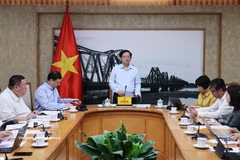
Deputy Prime Minister Ho Quoc Dung speaks at the meeting the Ministry of Science and Technology (MOST) and the Ministry of Finance (MOF) on October 21. (Photo: VNA)

Vietnam moves to standardise digital economy measurement

The digital economy is a strategic priority for Vietnam, which aims to raise its share of GDP to at least 30% by 2030, in line with the Politburo’s Resolution No. 57-NQ/TW on breakthroughs in science and technology, innovation and national digital transformation.

With well-developed infrastructure, the Saigon Hi-Tech Park in Ho Chi Minh City has attracted investment from numerous technology corporations. (Photo: VNA)

Concentrated digital technology parks to drive growth

As the nucleus of the southeastern region, Ho Chi Minh City is well positioned to lead the transition towards a growth model driven by science, technology and innovation. The city has approved a plan to develop 17 new concentrated digital technology parks covering a total area of 750-1,000 hectares.

Vietnam is stepping up the development of the semiconductor industry. (Illustrative photo: VNA)

Vietnam should look to EU experience to develop national quantum technology capacity

Quang said Vietnam should first develop high-quality human resources through interdisciplinary training programmes in quantum technology, photonics, microchips and artificial intelligence at leading universities. Scholarships, internships at European quantum labs, and strategies to bring Vietnamese experts from abroad could help speed up progress.

Ten Make in Vietnam and Australia digital technology products on display at the Vietnam–Australia forum on investment and development cooperation in digital technology and AI. (Photo: VNA)

Creating value through technological cooperation, digital transformation

From expanding international cooperation to develop core technologies and helping Vietnamese businesses to participate in global value chains to improving public services through digital solutions, these efforts are gradually turning technological advances into a driver of development and a source of tangible social benefits.

A business representative engages with the platform via a "tap-to-connect" feature at the event. (Photo: VNA)

AI platform launched to help businesses build brands

Addressing the event, experts and business representatives stressed that harnessing digital technologies requires businesses to adopt a new mindset, use data in decision-making, and maintain brand identity and consumer trust.

AI opens up opportunities for people with disabilities

AI opens up opportunities for people with disabilities

Amid the rapid development of the Fourth Industrial Revolution, artificial intelligence (AI) is changing the way people learn, work and communicate. For persons with disabilities (PwDs), AI is opening up new opportunities to overcome barriers once considered insurmountable, narrow the digital divide, and promote an inclusive society where no one is left behind.

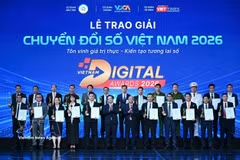
Representatives of organisations and individuals receive the 2026 Vietnam Digital Awards (Photo: VNA)

Vietnam Digital Awards 2026 honours 56 organisations, products and solutions

The 2026 awards place greater emphasis on practical effectiveness, applicability and the ability of digital transformation models to generate wider impact. They recognise not only technological innovations but also the benefits these technologies bring to people and society. Beyond acknowledging achievements, the awards also encourage initiatives capable of shaping the future.

The transformation of museums from “static repositories” into “dynamic experiential spaces” is driving the development of cultural industries. (Photo: VNA)

Digital heritage opens new avenues for cultural preservation, public access

The Southern Women’s Museum has so far digitised 1,113 artefacts, but only 113 are currently accessible to the public. According to deputy director of the museum Pham Thi Dieu, thousands of other artefacts are awaiting an exhibition system under an expansion project. The museum hopes to complete the system in 2027, enabling online visitors to explore the digitised collections.

A citizen interacts with an AI-powered robot for guidance on administrative procedures at the Public Administration Service Centre of Xuan Huong–Da Lat ward, Lam Dong province. (Photo: VNA)

Vietnam taps Vietnamese talent in Canada to advance AI cooperation

As Vietnam-Canada relations enter a new phase under their strategic partnership, mobilising this resource is consistent with the orientation of Politburo Resolution No. 23-NQ/TW on overseas Vietnamese affairs, particularly the goal of harnessing knowledge, science and technology for national development.

Prime Minister Le Minh Hung speaks at the ceremony (Photo: VNA)

VNU-HCM must become hub for national top talent: PM

VNU-HCM should become a leading national hub for education - training, scientific research, science -technology, innovation and digital transformation, striving to rank among Asia’s top 100 higher education establishments by 2030 and one of the region’s leading research university systems by 2045, with at least four disciplines in the global top 50.