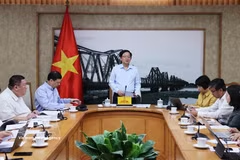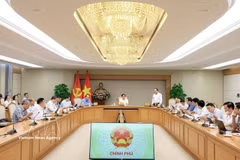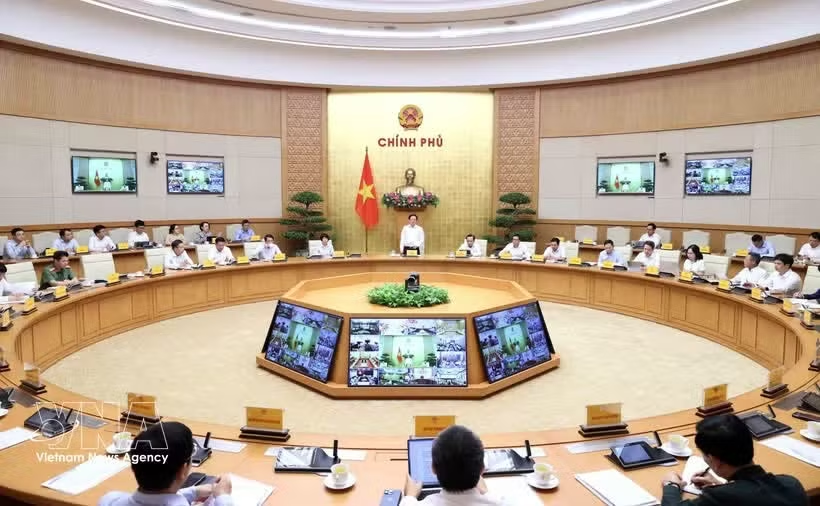
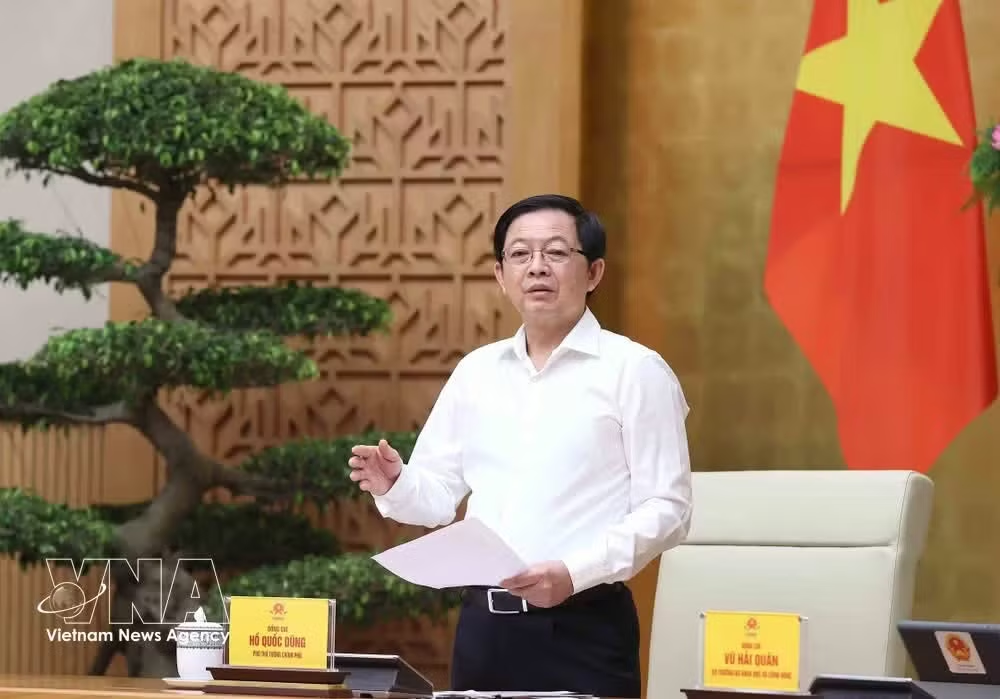
Hanoi (VNA) – The organisation of research activities must be overhauled to ensure that they start from practical needs and generate tangible outputs, with findings more widely applied and commercialised, Deputy Prime Minister Ho Quoc Dung has said.
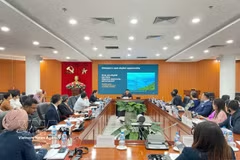
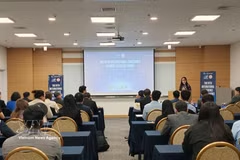
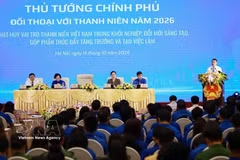
He made the call at a nationwide hybrid conference on strengthening links among research institutes, universities and businesses in science and technology research and development (R&D), held in Hanoi on October 23.
Strong research capacity but limited commercialisation
Reporting at the conference, Deputy Minister of Science and Technology Le Xuan Dinh said that during 2021-2025, businesses led 181 of the 1,451 national-level science and technology tasks, accounting for 12.5% of the total number and 25.7% of the overall funding.
Business expenditure on R&D in Vietnam currently stands at just 0.3% of GDP, compared with 4.2% in the Republic of Korea.
According to the Ministry of Science and Technology, technology exchanges recorded 72 successful transactions in the first eight months of 2026, with a total value of more than 11 billion VND (425,680 USD). In higher education, Deputy Minister of Education and Training Pham Quang Hung said universities produced more than 21,000 publications indexed in Scopus in 2025, accounting for 83.61% of the national total. However, as of October 2026, only 334 of the 1,022 products and technologies compiled by 41 organisations were assessed as having a high level of readiness for technology transfer. Many research findings remain at the laboratory stage, lacking the resources needed for further development, testing and commercialisation.
At the conference, representatives of localities, research institutes, universities and businesses shared cooperation models closely linked to production, including the development of specialised vehicle technologies, products derived from medicinal plants and agricultural produce, and partnerships spanning rice variety research through to the commercialisation of rice products.
They stressed that businesses should be involved from the outset in identifying problems and commissioning research through to adopting technologies and developing markets for research-based products. Participants also discussed difficulties related to research commissioning, co-funding, technology transfer and application.
Mapping research capacity nationwide
Concluding the conference, Deputy PM Dung acknowledged cooperation outcomes but noted that Vietnam has yet to fully harness its research and innovation potential. He called on relevant agencies to effectively implement existing mechanisms and policies while reviewing them to amend and supplement shortcomings within their respective jurisdictions.
The Government stands ready to consider resolving genuine institutional bottlenecks, he said, stressing that the effectiveness of cooperation must be reflected in signed cooperation contracts, technologies mastered and products applied and commercialised, rather than merely the number of programmes, projects or agreements signed. He tasked the Ministry of Science and Technology with leading a comprehensive assessment of the capabilities of publicly funded scientific research institutions, in coordination with ministries, sectors and localities. Their strengths and expertise are to be systematised by industry and field to build a nationwide map of research capacity, paving the way for a database that will help businesses identify and connect with suitable research institutions.
The ministry was urged to coordinate with relevant agencies to review research activities by industry and field, study orientations and targets for technology development over the next three to five years, and identify scientific and technological problems that need to be addressed to support development goals. These priorities will serve as the basis for commissioning research from institutes, universities and businesses.
Building on the research capacity map, development orientations for different industries and fields, and the project to restructure national science, technology and innovation programmes for 2026-2035, the ministry will guide other ministries and sectors in working with research institutes and universities to formulate and implement annual science and technology tasks. These must match the capabilities of each institution, clearly define responsibilities and avoid duplication or fragmented allocation of resources.
The Deputy PM called for a fundamental shift in the way research is organised, moving away from selecting individual topics proposed by research institutions towards defining tasks based on development orientations and practical needs. Each task must clearly identify the problem to be addressed, the expected output and its potential for application.
He highlighted a target under which at least 30% of research projects have identified applications and involve businesses in cooperation, research and resource sharing, with the proportion expected to rise to at least 50% in the subsequent period. The Deputy PM called for existing research results to be reviewed so that promising technologies and products, along with businesses ready to adopt them, could be selected for targeted support and further development. Resources should focus on remaining gaps, including intellectual property protection, testing, certification, pilot production and market access.
For projects that have already received investment but lack funding at the final stage, further support should be considered in line with existing policies and within the scope of authority, preventing research findings from being left unable to reach the market.
The official gave specific guidelines in developing infrastructure, evaluating cooperation among research institutes, universities and businesses using 2026 data as the baseline and publishing the results periodically, and matching university education and research plans with businesses’ demand for human resources, technologies and products.
The Ministry of Finance, in coordination with the Ministry of Science and Technology, was asked to continue examining ways to deal with difficulties concerning financial mechanisms, public assets, research commissioning and public procurement in support of research, technology transfer and commercialisation.
For their part, businesses were urged to increase investment in R&D and technological innovation and proactively make use of incentive policies, including corporate science and technology development funds, the Deputy PM said./.