Ca Mau connects businesses to expand markets

The southernmost province of Ca Mau is stepping up trade promotion and business networking to expand markets for local products, turning its natural, economic and ecological advantages into drivers of rapid and sustainable growth in the Mekong Delta.

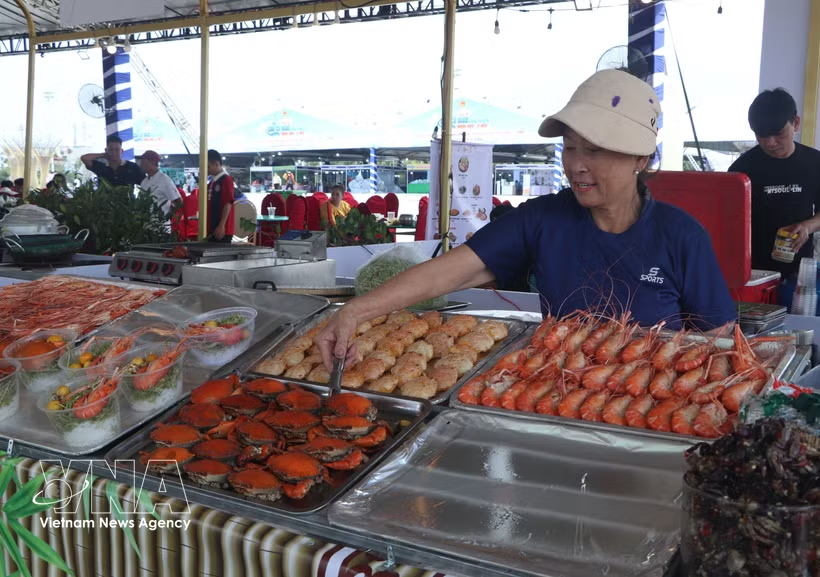
Various dishes made from Ca Mau crabs and shrimps. (Photo: VNA)

Ca Mau (VNA) – The southernmost province of Ca Mau is stepping up trade promotion and business networking to expand markets for local products, turning its natural, economic and ecological advantages into drivers of rapid and sustainable growth in the Mekong Delta.

With fisheries as a key economic sector, the province supplies large volumes of aquatic products to domestic and international markets. Its crab farming area covers approximately 365,421 hectares, producing more than 50,000 tonnes of commercial crabs annually. Raised beneath natural mangrove forests, Ca Mau crabs have secured two forms of intellectual property protection: the “Nam Can – Ca Mau Crab” collective trademark and the Ca Mau crab geographical indication.

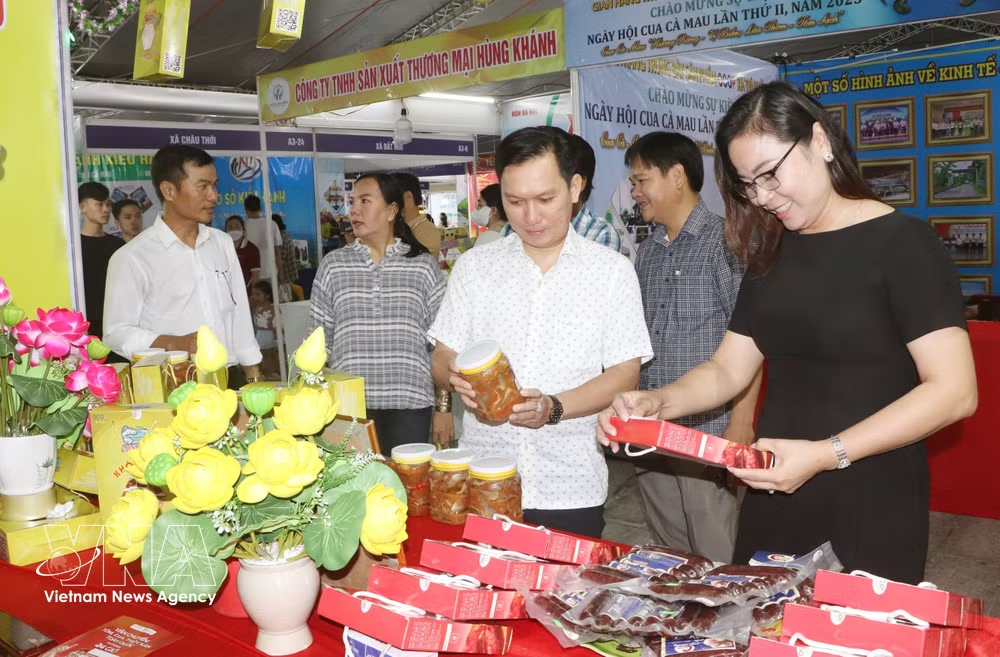
The province is also promoting its agricultural and aquatic products, along with products under the One Commune One Product (OCOP) programme through trade fairs, business-matching events and domestic and international partnerships.

Ca Mau currently has 330 OCOP products, including two rated five stars, 74 four stars and 254 three stars, and aims to increase the total to 460 by the end of 2026. More than 50 products are available through major retail chains, including AEON, Co.opmart and MM Mega Market, while over 100 have established stable distribution links with Ho Chi Minh City, Hanoi, Da Nang and other Mekong Delta localities.

Duong Vu Nam, Deputy Director of the Provincial Department of Industry and Trade, said that trade promotion must go beyond organising conferences to help businesses overcome market access barriers, connect with distribution networks and build brands. The ultimate goal is to turn promotional activities into partnerships that generate tangible commercial value.

Nguyen Hoang An, Chairman of the Cai Bat Cooperative, said participation in trade promotion activities has helped the cooperative expand sales of its OCOP products. It is also working with Minh Phu Group to develop ASC-certified shrimp farming areas and expand crab farming under safe production standards.

Alongside traditional channels, local authorities and businesses are accelerating digital transformation through e-commerce, electronic contracts and invoices, and cashless payments.

Strengthening the private sector

Since the beginning of 2026, Ca Mau has issued 1,349 business registration certificates, up 1.7% year-on-year, with total registered capital of 9.1 trillion VND, up 4.3%. The province now has more than 10,130 operating businesses with combined registered capital exceeding 130 trillion VND.

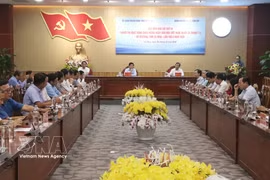
Le Van Su, Vice Chairman of the provincial People's Committee, affirmed that the province will continue supporting businesses and investors, strengthen collective economic models, and facilitate production and distribution linkages for farmers.
vnanet-ca-mau-6879.jpg
Visitors explore a booth at the Ca Mau Crab Festival. (Photo: VNA)

Under the Politburo’s Resolution No. 68-NQ/TW on private sector development, Ca Mau aims to have 20,000 businesses by 2030, equivalent to eight per 1,000 residents. The private sector is expected to grow by 10–12% annually and contribute around 55–58% of the province's gross regional domestic product (GRDP).

Mai Kieu Oanh, Vice Chairwoman of the Ca Mau Young Entrepreneurs Association, said the association aims to recruit 100 additional members during the 2025–2030 tenure, support at least five start-up projects and organise 10–12 business networking activities annually. It will also encourage members to use one another's products and services, build value chains and strengthen interprovincial business connections.

Local businesses are also exploring opportunities in community-based ecotourism. Ngo Huynh Trang, Director of Ca Mau Eco, said the company is working with residents in the U Minh Ha area to develop tourism experiences based on local produce, traditional occupations and rural lifestyles, creating sustainable livelihoods within the Ca Mau Cape World Biosphere Reserve.

By fostering stronger business partnerships, encouraging innovation, and enhancing market connectivity, Ca Mau aims to tap into its local potential and create fresh momentum for sustainable economic growth./.
See more

Aircraft of Vietnamese airlines at Noi Bai International Airport. (Photo: VNA)

Domestic airlines urged to resume, expand domestic air routes by year-end

Director of the Civil Aviation Authority of Vietnam (CAAV) suggested that airlines should identify routes to be resumed or newly launched, as well as existing routes on which flight frequencies could be increased. They should also outline implementation plans and timelines for the final months of 2026 and 2027, assess market demand, and evaluate fleet deployment options and operational sustainability.

Delegates at the Vietnam-Laos agricultural investment promotion conference. (Photo: VNA)

Vietnam, Laos drive agricultural collaboration

Some 208 Vietnamese companies are investing in crops, forestry and livestock in Laos, with registered capital of about 1.4 billion USD. Authorities in both countries are also upgrading transport and energy infrastructure as they aim to lift bilateral trade to 10 billion USD by 2030, while pressing ahead with efforts to draw more investment.

(Illustrative photo: VNA)

Vietnam promotes adoption of GS1 standards

Vietnam is stepping up cooperation with GS1, the global organisation that develops and manages standards for product identification, barcodes and supply chain data, to help businesses improve efficiency and competitiveness in digital supply chains.

Long An International Port is identified as one of the sites supporting Tay Ninh’s plans to develop logistics hubs, helping leverage maritime transport advantages, facilitate trade connectivity and improve cargo circulation and distribution. (Photo: VNA)

Tay Ninh targets at least three logistics centres by 2030

The southern province of Tay Ninh aims to attract investment in at least three logistics centres, two wholesale markets and three to five shopping malls and supermarkets by 2030 as part of efforts to develop modern commercial infrastructure, improve goods circulation and capitalise on regional connectivity and international trade.

Participants pose for a photo at the 18th Annual Meeting of the Asia-Pacific Roundtable on Sustainable Consumption and Production (APRSCP). (Photo: VNA)

Science–industry links key to green transition: conference

The 18th Asia-Pacific Roundtable for Sustainable Consumption and Production (APRSCP) aims to turn sustainable production and consumption goals into practical, measurable and scalable solutions while strengthening cooperation among authorities, researchers, businesses and international partners.

Ben Thanh Station of Metro Line No. 2 (Ben Thanh–Tham Luong). (Photo published by VNA)

Ho Chi Minh City accelerates major infrastructure projects to boost growth

Expanded metro networks could encourage a shift towards public transport and transit-oriented development, with residential, commercial and service hubs emerging around stations. Meanwhile, the combined connectivity of Long Thanh and Tan Son Nhat airports could strengthen the city’s role as a regional aviation, financial and logistics centre.

Nghe An province attracts more than 108.27 trillion VND (4.18 billion USD) in investment in the first nine months of 2026, including around 2.49 billion USD in FDI – ranking sixth nationwide. (Illustrative photo: nhandan.vn)

Nghe An steps up efforts to attract high-quality FDI

Economic experts say that together with available cleared land, an abundant workforce and ongoing infrastructure and logistics projects, streamlined and faster administrative procedures will make the province more attractive to foreign investors.

A key traffic route connecting Da Nang city's downtown zone with new designed Free Trade Zone (Photo courtesy of Quoc Vuong)

Da Nang approves Free Trade Zone 7 investment plan

The Da Nang Special Economic Zone Authority (DSEZA) said the project, the last location of the 1,881ha Da Nang FTZ, would start construction from the fourth quarter of 2027 and begin full operation in 2032.

The 2026 Vietnam–China international trade fair opens in Vietnam’s Tuyen Quang province on October 24. (Photo: VNA)

Vietnam–China international trade fair opens in Tuyen Quang

This year’s fair features 300 booths across 10,000 square metres, including 250 Vietnamese booths and 50 run by Chinese partners. They showcase a wide range of products, including agricultural produce, food, medicinal herbs, consumer goods, machinery, equipment, and handicrafts.

Germany’s Karcher Group puts its cleaning equipment manufacturing plant into operation at the the Tam Hiep Port and Logistics Industrial Park in Nui Thanh commune, Da Nang city (Photo: VNA)

Da Nang boosts FDI attraction to drive industrial growth

The central city of Da Nang is ramping up efforts to attract foreign direct investment, leveraging its upgraded infrastructure and welcoming business environment to boost industrial growth and establish a new economic driver.

Vietnamese Ambassador to Mozambique Tran Thi Thu Thin (third from right) poses with IAM Director and staff (Photo published by VNA)

Vietnam, Mozambique seek stronger agricultural ties

Vietnamese Ambassador to Mozambique Tran Thi Thu Thin praised the industry’s potential and its contribution to the economy, livelihoods and exports in the southeastern African nation. She also shared Vietnam’s experience in developing the industry, particularly in boosting processing capacity and adding value to products.