Panama’s export processing zones offer opportunities for Vietnamese firms

After more than 15 years of operation, Panama’s system comprises 27 export processing zones, including 20 operational and seven under development. They host 201 companies conducting 282 business activities, nearly half of which involve logistics, services, and the processing of finished or semi-finished products.

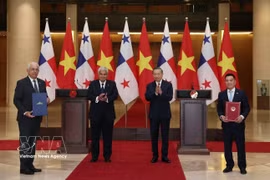
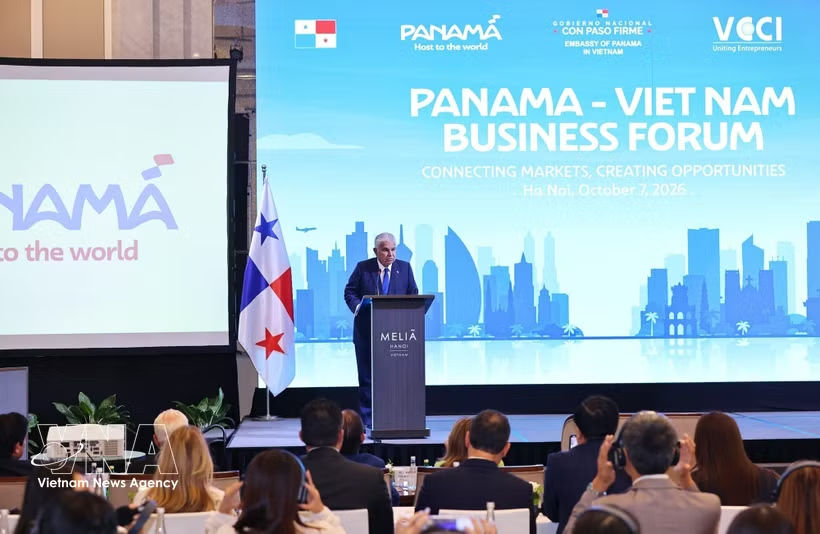
Panamanian President José Raúl Mulino speaks at the Panama - Vietnam Business Forum on October 7, 2026 (Photo: VNA)

Hanoi (VNA) – Panama’s export processing zones, with their dedicated legal framework and tax, immigration and labour incentives, are creating opportunities for foreign businesses, including those from Vietnam, to invest in production, processing and goods supply facilities serving Latin American and North American markets.

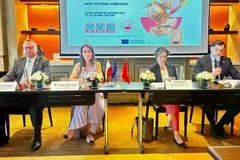
The Panamanian side highlighted this at a conference on export opportunities and business cooperation between Vietnam and Panama, organised in Panama City by the Vietnam Trade Office in Mexico.

Vietnamese businesses are encouraged to explore investment opportunities in Panama’s export processing zones, which operate under a legal framework introduced in 2011 to attract foreign investment and create jobs.

During his official visit to Vietnam in early October, Panamanian President José Raúl Mulino highlighted the American country’s transport and logistics advantages, particularly the Panama Canal, describing Panama as a complementary partner and gateway to the Americas, while Vietnam serves as a bridge to Asia.

At the conference, held one week after the Panamanian President’s visit to Hanoi, Cristina Danello, an adviser to the General Directorate of Free Trade Zones under Panama’s Ministry of Commerce and Industries, said the zones had clearly defined, enclosed boundaries and could be established anywhere in the country. Each must cover at least two hectares and involve an initial investment of 250,000 USD, which she described as “almost negligible”.

After more than 15 years of operation, Panama’s system comprises 27 zones, including 20 operational and seven under development. They host 201 companies conducting 282 business activities, nearly half of which involve logistics, services, and the processing of finished or semi-finished products. Examples include Panaparc, the largest zone, near Tocumen International Airport, and a seafood export processing zone that benefits from an adjacent seaport.

From 2019 to 2025, the Panamanian zones attracted more than 365 million USD in investment and generated around 8,000 direct jobs. Investors are expected to create another 23,359 jobs in the time to come.

Eligible activities in the zones include manufacturing, assembly, processing, high-tech development, services, logistics and property leasing. Pure import-export operations without any transformation of goods are not permitted.

According to Danello, companies face no minimum capital requirement to obtain a licence. Licences are free, issued within 90 days of application, and valid indefinitely, subject to annual reporting. Foreign businesses are exempt from import duties on production materials and machinery, income tax on export earnings, and the 7% VAT on domestically purchased materials. They must export a specified share of output, ranging from 40% to 60% in some cases, while domestic sales remain subject to applicable taxes.

A representative from the Panamanian Ministry of Commerce and Industries said the ministry was legally authorised to support investors after licences were granted, helping address concerns over lengthy procedures involving environmental assessments, fire safety and design reviews.

Rules of origin are also crucial for businesses exporting finished products to the US. Danello said Vietnamese investment should focus on genuine sourcing and processing in Panama, rather than relying on components or materials from third countries.

Immigration incentives allow owners and shareholders to obtain permanent residency from the outset, while investors visiting to explore the market can receive nine-month visas. Labour arrangements are also more flexible than those under Panama’s Labour Code.

Potential cooperation between the two countries includes aquaculture in Panama using Vietnamese technology and expertise, followed by processing in the zones, as well as finishing and re-exporting Vietnamese wood products and furniture, provided full traceability documentation is available. These arrangements could facilitate access to markets across Latin America and the US./.
VNA

See more

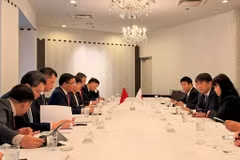
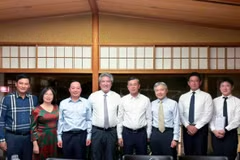
Minister of Industry and Trade Le Manh Hung holds working sessions with leaders of major Japanese corporations on November 10 to discuss investment cooperation opportunities in Vietnam’s mineral industry (Photo: Ministry of Industry and Trade)

Vietnam steps up cooperation with leading Japanese corporations

Minister of Industry and Trade Le Manh Hung spoke highly of economic, trade and investment ties between the two countries, highlighting the important role of Japanese businesses in developing production, transferring technology and strengthening supply chain linkages in Vietnam.

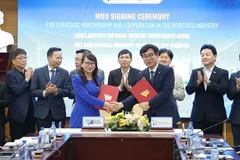
The MOU signing ceremony between Vietnam National University-Ho Chi Minh City and the Korea Institute for Robot Industry Advancement (KIRIA) on November 11, 2026 (Photo: tuoitre.vn)

Vietnam, RoK cooperate in robot industry

Vietnam National University-Ho Chi Minh City (VNU-HCM) and the Korea Institute for Robot Industry Advancement (KIRIA) will establish a cooperation framework based on their respective capabilities, strengths and networks in industry, academia, research and development (R&D).

The opening ceremony of the Vietnam International Food Industry Exhibition 2026 (Vietnam Foodexpo 2026) on November 11 (Photo: VNA)

Vietnam Foodexpo 2026 opens in Ho Chi Minh City

Vietnam Foodexpo 2026 brings together more than 500 leading enterprises from over 20 provinces and cities nationwide, alongside large national pavilions representing more than 20 countries and territories. Exhibitors are showcasing over 700 booths, creating a platform for leading technologies, products and solutions from the global food industry.

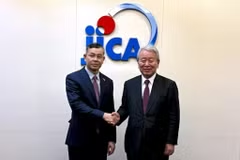
Vietnamese Finance Minister Ngo Van Tuan (right) meets with his Japanese counterpart Katayama Katsuki on November 10. (Photo: The Vietnamese Ministry of Finance)

Vietnam, Japan discuss cooperation in finance and strategic sectors

The two ministers exchanged views on the socio-economic development of their respective countries, as well as cooperation within the ASEAN-Japan framework and multilateral initiatives. They highlighted the importance of closer coordination to enhance their countries’ roles and voices at regional and international forums.

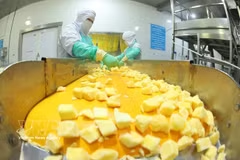
Processing frozen mangos for export in An Giang province (Photo: VNA)

Vegetable, fruit export boom hinges on technology

Pham Quoc Liem, General Director of U&I Agricultural JSC (Unifarm), said Vietnam needs chain-linked models for each key product, with clear roles for lead enterprises and clear responsibilities and benefits for stakeholders. The State should issue coordination policies and preferential credit support to build standardised raw material zones with stable productivity and quality. Research, development and commercialisation of competitive varieties will add further momentum.

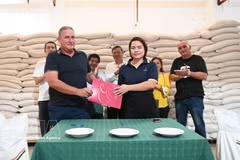
At the rice handover record signing ceremony. (Photo: VNA)

Vietnamese company hands over 1,500 tonnes of rice to Cuban partner

Vietnamese rice producer AgriVMA has expanded its cultivation area from 1,000ha to more than 2,500ha across the provinces of Pinar del Rio, Granma, Sancti Spiritus and Villa Clara. Its CT16 hybrid rice variety has achieved yields of more than 7 tonnes of fresh paddy per hectare.

A ballpoint pen production line at Thien Long Group in Ho Chi Minh City. (Photo: VNA)

Ho Chi Minh City steps up efforts to unlock growth drivers

The municipal People's Committee has identified the year-end period as crucial to mobilising more than 1.2 quadrillion VND (46.7 billion USD) for development investment, boosting traditional and new growth drivers, and removing bottlenecks related to land, planning, site clearance, construction materials and investment procedures.

At the business networking programme between Vietnamese and Polish enterprises in Ho Chi Minh City on November 10. (Photo: sggp.org.vn)

Poland promotes trade, culinary culture in Ho Chi Minh City

The “Taste Europe!” programme is part of a series of promotional activities aimed at demonstrating that European food products represent not only high quality but also a commitment to environmental responsibility, Polish Ambassador to Vietnam Joanna Skoczek said.