Hanoi (VNA) - Vietnam aims to collect 1.85 million units of blood nationwide in 2025, with 99% expected from voluntary donors.
This goal, announced at a January 11 conference reviewing blood donation efforts in 2024 and planning for 2025, reflects the ongoing commitment to saving lives through voluntary blood donations.
The goal also envisions 1.9% of the population participating in blood donation campaigns, and repeat donors making up more than 60% of the national blood figure.
The new target builds on remarkable achievements in 2024, where nearly 1.75 million blood units were collected. Impressively, over 98% of these donations came from volunteers, with more than 63% of donors returning to give.
The growing generosity of donors was also evident in the fact that 68% of donations were 350ml or larger.
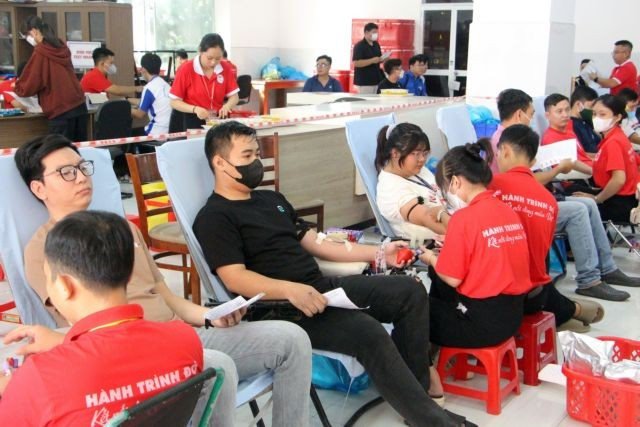
Key initiatives such as the Tet Blood Donation Campaign and the Spring Red Festival contributed over 300,000 units of blood, while Summer Blood Drops and the Red Journey added another 500,000 units.
Nationwide events such as National Blood Donation Day on April 7 and World Blood Donor Day on June 14 also played a pivotal role in raising awareness and engaging communities.
To meet the 2025 goal, Deputy Minister of Health Tran Van Thuan emphasised the need for tailored local plans that align with the specific needs and capabilities of each region.
Blood donation goals will increasingly be based on population size, while investments in infrastructure and medical equipment will ensure smoother operations and greater capacity to store and distribute blood.
Improved communication will be a cornerstone of the strategy. Efforts will focus on leveraging social media alongside traditional platforms to reach a wider audience.
A unified blood management software system will be adopted to improve coordination, reduce shortages, and enhance efficiency.
The country also plans to complete the development of four major blood centres in Hanoi, Hue, Ho Chi Minh City, and Can Tho. These centres, part of a broader healthcare development plan, will serve as regional hubs for blood collection, storage, and distribution.
Special focus will be given to retaining a dedicated pool of regular and reserve donors, particularly those with rare blood types. The Government is committed to recognising and supporting donors through incentives, ensuring they feel valued for their contributions.
Blood donation in Vietnam is a deeply communal effort, drawing support from all walks of life. In 2024, over 7,400 awareness events were organised to engage more than 1.8 million people, underscoring the power of collective action.
The contributions of donors and volunteers have not gone unnoticed. Over 48,000 individuals, families, and organisations were recognised nationwide for their efforts in 2024.
The National Steering Committee honored 100 outstanding blood donors, highlighting their dedication and inspiring others to join the cause./.