Vietnam can share development experience through BRICS: Indian professor

Vietnam is an important country with significant potential to contribute to BRICS’ development. Over the past year, it has emerged as an increasingly important economy and a notable manufacturing hub, particularly in textiles and garments, electronics and other industries.

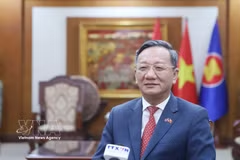
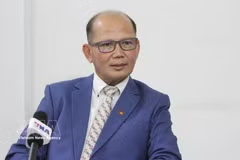
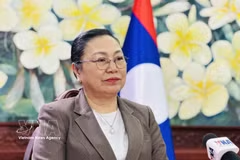
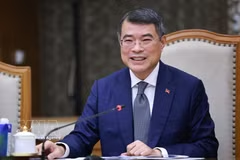
Professor Gulshan Sachdeva of Jawaharlal Nehru University (JNU). (Photo: VNA)

New Delhi (VNA) – Vietnam could contribute valuable development experience to BRICS and may emerge as a leading candidate for membership in any future expansion of the grouping, according to Professor Gulshan Sachdeva of Jawaharlal Nehru University (JNU).

Talking to Vietnam News Agency correspondents in New Delhi ahead of the BRICS Summit 2026, scheduled for September 12-13, he said Vietnam is an important country with significant potential to contribute to BRICS’ development. Over the past year, it has emerged as an increasingly important economy and a notable manufacturing hub, particularly in textiles and garments, electronics and other industries.

Vietnam has also managed its relations with regional and global partners effectively. Its participation in the Asia-Europe Meeting (ASEM) and the Comprehensive and Progressive Agreement for Trans-Pacific Partnership (CPTPP), as well as its trade agreement with the European Union, demonstrates the country’s deep economic integration.

Drawing on that experience, Vietnam has practical lessons that other countries in the Global South could learn from, Sachdeva said. As a BRICS partner country, Vietnam’s experience could be valuable to members in a range of areas.

He also said Vietnam could be among the leading candidates considered for BRICS membership in any future expansion. Its participation would give the grouping additional momentum and strengthen the role of an economy deeply integrated into Asian and global markets.

Another important contribution Vietnam can make is its development experience, Sachdeva said. Despite a challenging geopolitical environment, Vietnam has emerged as a major economy and an important link in global value chains across a range of industries.

Many countries would like to see Vietnam contribute and participate more actively in BRICS activities, he added.

The outlook is also linked to the increasingly broad relationship between India and Vietnam. The two countries have longstanding ties and have upgraded their relationship to an enhanced comprehensive strategic partnership, providing a basis for expanded cooperation across a range of areas, he stated.

Economically, India and Vietnam have identified several areas for cooperation, particularly manufacturing, information technology and the digital economy. The two countries also maintain close cooperation in defence and security.

Both India and Vietnam have their own development experiences and have managed their respective transitions relatively well. They could therefore share expertise and jointly implement projects in other developing countries.

Such cooperation will benefit not only India and Vietnam but also other developing countries, he said.

Against a complex and challenging geopolitical backdrop in Southeast Asia and the wider Indo-Pacific, the two countries are cooperating in economy, trade, sustainable development, defence and security. Energy transition and green transition are also emerging as areas of shared interest.

The expert said India-Vietnam relations now extend well beyond any single area, encompassing economic ties, development experience and broader security issues in the Indo-Pacific. The two countries are also seeking to boost trade and investment and expand cooperation in energy and green transitions.

There is considerable scope for further India-Vietnam cooperation, he said, adding that such partnerships could benefit not only the two countries but also others in the region and, more broadly, the Global South.

Regarding BRICS India 2026, Sachdeva said India’s agenda for its 2026 BRICS presidency is built around several priorities under the theme of “Building for Resilience, Innovation, Cooperation and Sustainability.” A key focus, however, is India’s push for a more people-centred BRICS, with greater attention to the interests and priorities of the Global South.

The approach comes amid a volatile geopolitical environment, including complex developments involving some BRICS members and security challenges in neighboring regions. These developments pose a challenge for India as it seeks to maintain cohesion and build consensus among BRICS members, he noted./.

VNA

See more

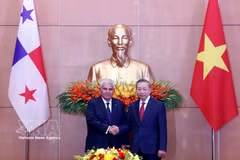
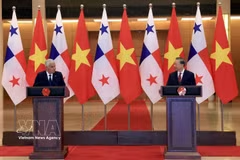
General Secretary of the Communist Party of Vietnam Central Committee and President To Lam (right) and President of Panama José Raúl Mulino at their meeting in Hanoi on October 6. (Photo: VNA)

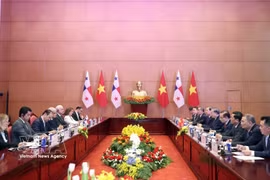
Top Vietnamese, Panamanian leaders hold talks in Hanoi

General Secretary and President Lam believed that the two countries will continue tapping their potential for cooperation in trade, agriculture, maritime affairs, aviation, logistics and digital transformation, thus making bilateral ties more substantive, effective and sustainable for the benefit of their people and contributing to peace, cooperation and development in both regions.

General Secretary of the Communist Party of Vietnam Central Committee and President To Lam and his spouse welcome Panamanian President José Raúl Mulino and his spouse (Photo: VNA)

Vietnam, Panama cast themselves as gateways between Southeast Asia and Latin America

In his speech, General Secretary and President Lam stressed that Mulino's official visit holds special significance for bilateral ties. He expressed his belief that the visit will not only resume high-level contacts after a long gap but also give new momentum to ties, moving them into a more substantive, effective and deeper phase.

General Secretary of the CPV Central Committee and President To Lam and President of Panama José Raúl Mulino meet with the press immediately after their talks (Photo: VNA)

Vietnamese, Panamanian leaders meet the press following talks

Both sides agreed that there is ample room for cooperation, particularly in trade, investment and services. They pledged to step up joint work in the economic, trade, investment, agriculture, port logistics, finance, banking, tourism and transport sectors, as well as other areas of mutual strength. They also plan to continue negotiating agreements on investment protection, aviation and other areas to create a more favourable framework for expanding cooperation.

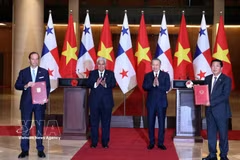
General Secretary of the Communist Party of Vietnam Central Committee and President To Lam (second, right) and Panama President José Raúl Mulino (second, left) witness the exchange of an agreement on maritime transport cooperation between the Governments of Vietnam and Panama (Photo: VNA)

Vietnam, Panama exchange cooperation documents witnessed by top leaders

The documents include an agreement on maritime transport cooperation between the Governments of Vietnam and Panama, an agreement on cooperation in combating transnational crime, a memorandum of understanding (MoU) on agricultural cooperation, and an MoU on tourism cooperation between the Vietnam National Authority of Tourism and the Panama Tourism Authority.

Uch Leang, Acting Director of the Department of Asia, Africa and Middle East Studies at the Royal Academy of Cambodia’s Institute of International Relations speaks to Vietnam News Agency correspondents in Phnom Penh (Photo: VNA)

Vietnam, Cambodia strengthen connectivity, create new momentum for growth

The visit’s focus is expected to be on translating high-level agreements into economic and infrastructure connectivity projects and practical cooperation that benefit people and businesses, said Uch Leang, Acting Director of the Department of Asia, Africa and Middle East Studies at the Royal Academy of Cambodia’s Institute of International Relations.

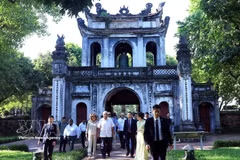
President of the Republic of Panama José Raúl Mulino and his spouse, Maricel Cohen De Mulino, visit Hanoi's Van Mieu - Quoc Tu Giam on October 6, 2026 (Photo: VNA)

Panamanian President and spouse visit Temple of Literature

Visiting Van Mieu - Quoc Tu Giam (Temple of Literature - Imperial Academy) in Hanoi, Panamanian President José Raúl Mulino showed keen interest in the historical, cultural and artistic values of the World Documentary Heritage site, which houses 82 stone steles honouring doctoral laureates. He praised Vietnam’s tradition of learning, respect for teachers and appreciation of talent.

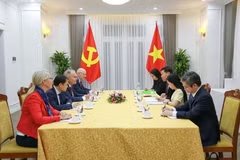
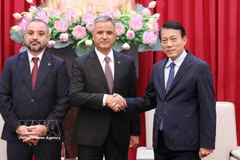
Member of the Communist Party of Vietnam (CPV) Central Committee, Standing Deputy Secretary of the Ministry of Foreign Affairs Party Committee and Deputy Minister of Foreign Affairs Nguyen Manh Cuong holds talks with visiting President of the Hungarian Workers' Party Gyula Thürmer in Hanoi. (Photo courtesy of the Ministry of Foreign Affairs)

CPV, Hungarian Workers' Party seek to deepen ties

The CPV pursues a policy of expanding relations with political parties, including the Hungarian Workers' Party, a traditional partner that has consistently shown interest in and supported Vietnam.

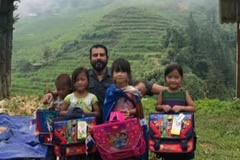
Former Panamanian Ambassador to Vietnam Servio S. Samudio with Vietnamese children he met during his trip to a Vietnamese northern mountainous region (Photo courtesy of Former Panamanian Ambassador to Vietnam Servio S. Samudio)

People-to-people exchanges forge stronger Vietnam-Panama ties

The October 5-8 official visit to Vietnam by Panamanian President José Raúl Mulino and his spouse is expected to create new avenues for collaboration and open more doors for the people of the two countries to meet, for Vietnamese culture to become more familiar to Panamanians, and for Vietnamese people to have more opportunities to discover Panama.

The meeting between Politburo Member and Standing Member of the Communist Party of Vietnam (CPV) Central Committee’s Secretariat Tran Cam Tu and President of the Hungarian Workers’ Party Gyula Thürmer in Hanoi on October 5, 2026 (Photo: VNA)

Key Party leader hosts Hungarian Workers’ Party chief

The Communist Party of Vietnam always values its solidarity and friendship with the Hungarian Workers' Party and communist and workers' parties worldwide, which helps build political trust and supports Vietnam's relations with other countries, said key Party leader Tran Cam Tu.