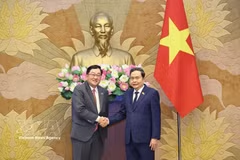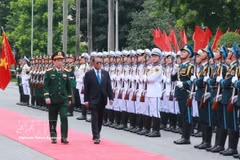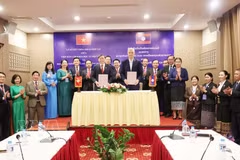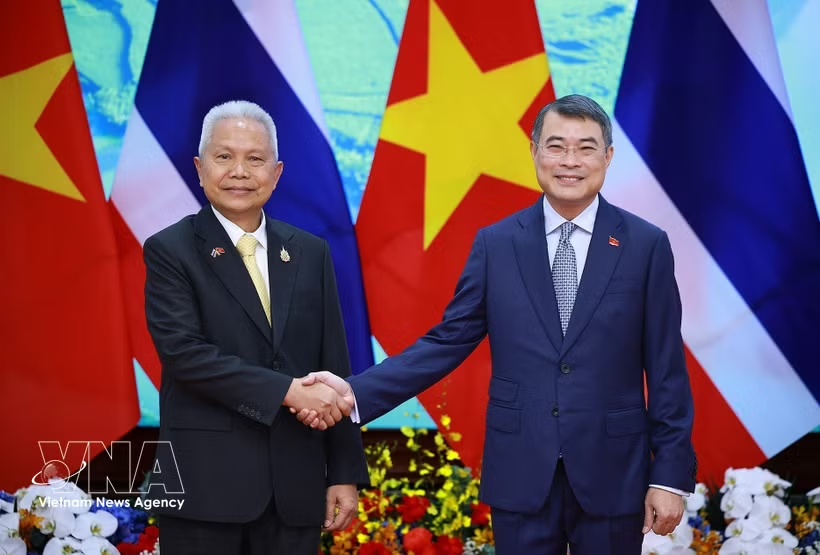
Hanoi (VNA) - Prime Minister Le Minh Hung and President of the National Assembly and Speaker of the House of Representatives of Thailand Sophon Zaram agreed on August 6 to step up the substantive implementation of the "Three Connects" Strategy.
During their meeting in Hanoi, the leaders also consented to strengthen links between supply chains, businesses, localities, and sustainable development strategies.
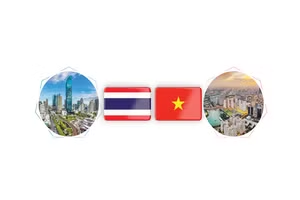
PM Hung said the Thai leader’s visit is of special significance as it coincides with the 50th anniversary of diplomatic ties between Vietnam and Thailand (August 6, 1976-2026), helping reinforce political trust, deepen cooperation between the two legislatures and further advance the countries' Comprehensive Strategic Partnership in a more substantive and effective manner.
The PM stressed that Thailand is a close neighbour, an important partner and a trusted companion of Vietnam, with the two countries sharing many common values and strategic interests. He affirmed that they have maintained close coordination to uphold ASEAN centrality, promote Mekong subregional cooperation and contribute to peace, stability, cooperation and development in the region and beyond.
He commended the Thai parliament's role and positive contributions to bilateral ties, expressing confidence that the visit would create fresh momentum for cooperation between the two legislatures and support the effective implementation of high-level agreements.
Thai NA President Sophon Zaram said he was pleased to make his first official visit to Vietnam, and affirmed Thailand's commitment to its traditional friendship and Comprehensive Strategic Partnership with Vietnam.
The leader commended Vietnam's socio-economic achievements and its recent efforts to streamline the state apparatus, saying Thailand was keen to learn from Vietnam's experience. He also expressed confidence that bilateral cooperation would continue to expand across all areas, particularly following Party General Secretary and State President To Lam's official visit to Thailand in May 2026 and Thai Prime Minister Anutin Charnvirakul's official visit to Vietnam in June.
The leaders expressed satisfaction with the positive progress in Vietnam-Thailand relations. They noted that the Comprehensive Strategic Partnership has continued to gain momentum, with political trust further strengthened through high-level visits and exchanges as well as bilateral cooperation mechanisms. Defence and security cooperation has remained a key pillar, while cooperation in trade, investment, science and technology, culture, education, tourism and people-to-people exchanges has continued to expand, bringing tangible benefits to the people and businesses of both countries.
Both leaders stressed the importance of fostering political trust by maintaining exchanges across all levels, making full use of key bilateral cooperation mechanisms, particularly the Joint Cabinet Meeting co-chaired by the two PMs, and closely coordinating the effective implementation of the 2026-2031 action programme for the Comprehensive Strategic Partnership, with concrete outcomes in defence, security, economy, science and technology, culture, tourism and people-to-people exchanges.
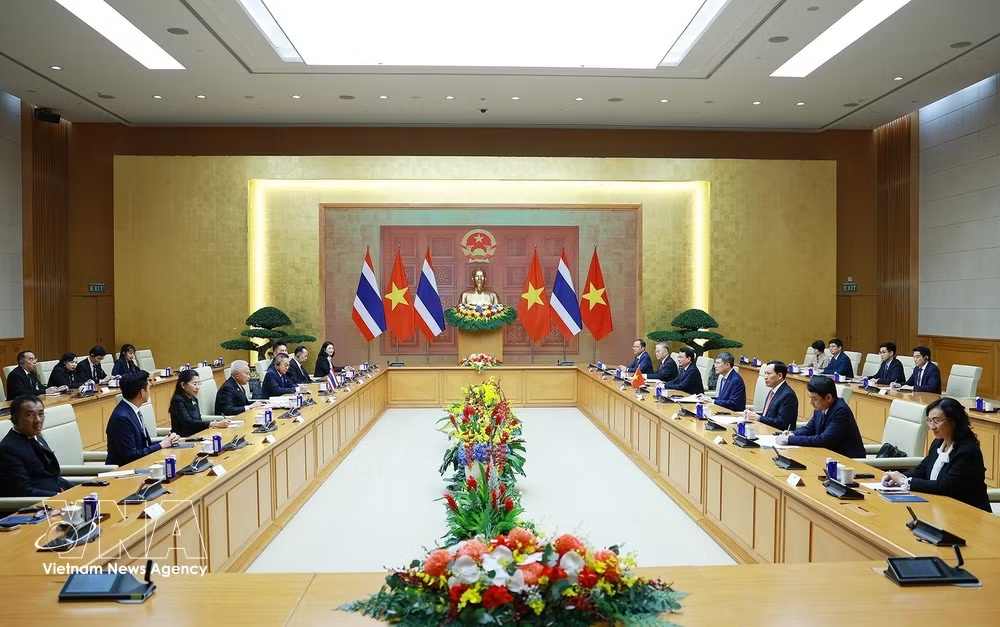
The two sides will work to maintain the effectiveness of existing defence and security cooperation mechanisms while strengthening collaboration in maritime security and safety, defence industry, logistics, military medicine, search and rescue, and border management. They will also step up coordination in combating transnational crime, particularly drug trafficking, human trafficking and online fraud. They reaffirmed their commitment not to allow any individual or organisation to use the territory of one country to undermine the other.
They also pledged to make more effective use of the East-West Economic Corridor and the Southern Economic Corridor, expand road, air and maritime connectivity, and encourage businesses from both countries to increase investment.
The two sides agreed to enhance the effectiveness of the Vietnam–Thailand Joint Trade Committee, with the aim of raising bilateral trade to 25 billion USD in the near term and ultimately 50 billion USD, while ensuring balanced and sustainable growth.
PM Hung called on the two legislatures to enhance delegation exchanges, share legislative and oversight experience, and continue supporting cooperation between the two countries. He also encouraged them to serve as a bridge between localities, helping promote collaboration in investment, trade, culture, education, tourism and people-to-people exchanges, thereby reinforcing the foundation of the long-standing friendship between the two nations.
For regional and international issues, the two leaders agreed to continue close coordination at multilateral forums and within Mekong subregional cooperation mechanisms. They also pledged to work closely to strengthen ASEAN unity and uphold the bloc's centrality, while promoting ASEAN's common stance on the East Sea and maintaining peace, stability, security, safety, and freedom of navigation and overflight in the sea in accordance with international law and the 1982 United Nations Convention on the Law of the Sea (UNCLOS).
The Thai leader lauded the Vietnamese community in Thailand for its contributions to local socio-economic development, saying it has played an important role in strengthening people-to-people exchanges and political trust between the two countries.
PM Hung called on Thailand to continue creating favourable conditions for the community to live and work stably, enabling it to further contribute to Thailand's development as well as to the bilateral ties.
Both leaders noted confidence that, with strong political will and close coordination between the relevant agencies of both countries, the Vietnam–Thailand Comprehensive Strategic Partnership would continue to develop in a more substantive and effective manner, serving the interests of their peoples while making a positive contribution to peace, stability, cooperation and development in the region and the world./.