Vietnam to remain active player in shaping ASEAN’s future: minister

Entering a new era of national development with the aspiration of building a strong and prosperous country, the mindset of "growing alongside ASEAN" will guide Vietnam’s more proactive, positive, and substantive contributions to the ASEAN Community and the co-creation of the region’s shared future, noted Minister of Foreign Affairs Le Hoai Trung.

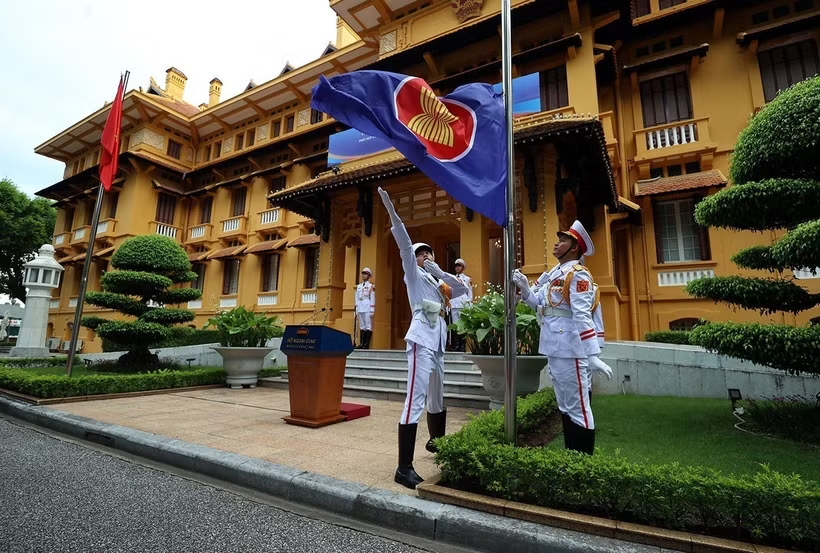
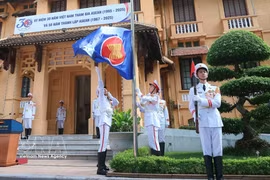
The ASEAN flag hoisting ceremony held in Hanoi on July 31, 2026 to mark the 59th founding anniversary of ASEAN and the 31st anniversary of Vietnam's accession to the bloc. (Photo published by VNA)

Hanoi (VNA) – Vietnam will continue to serve as a positive factor in helping shape major strategic shifts and the future development of ASEAN, Minister of Foreign Affairs Le Hoai Trung has affirmed.

The official made the statement in an article written on the occasion of the 59th founding anniversary of the Association of Southeast Asian Nations (ASEAN) (August 8, 1967–2026) and the 31st anniversary of Vietnam's accession to the bloc (July 28, 1995–2026).

In the writing, he noted that on August 8, 1967, ASEAN was established, laying the groundwork for regional cooperation in Southeast Asia founded on the core principles of dialogue, trust, and friendship.

Nearly six decades later, the bloc has evolved into one of the world's most successful models of regional cooperation. From a deeply divided region, ASEAN has forged a peaceful and stable regional environment, an epicentre of economic growth, and a cohesive common home where member states are jointly making strong strides forward.

The year 2026 marks a new development phase for ASEAN, starting the implementation of the targets under the ASEAN Community Vision 2045. The bloc possesses crucial foundations to realise this vision: a spirit of solidarity and unified political will among member states; institutional framework and regional integration built over decades; a dynamic market of nearly 700 million people with a young population; and a strong demand for deep cooperation to collectively address shared challenges.

However, the evolving landscape presents new imperatives. ASEAN can no longer merely adapt or react passively to shifts in the strategic environment; it must proactively help shape the rules of the game and lead regional development trends. This demands that ASEAN continue to boldly innovate its mindset and cooperation methodology toward a more proactive, effective, and substantive approach, thus delivering tangible benefits to its citizens and member countries, according to Trung.
asean-flag-hoisting-ceremony-3.jpg
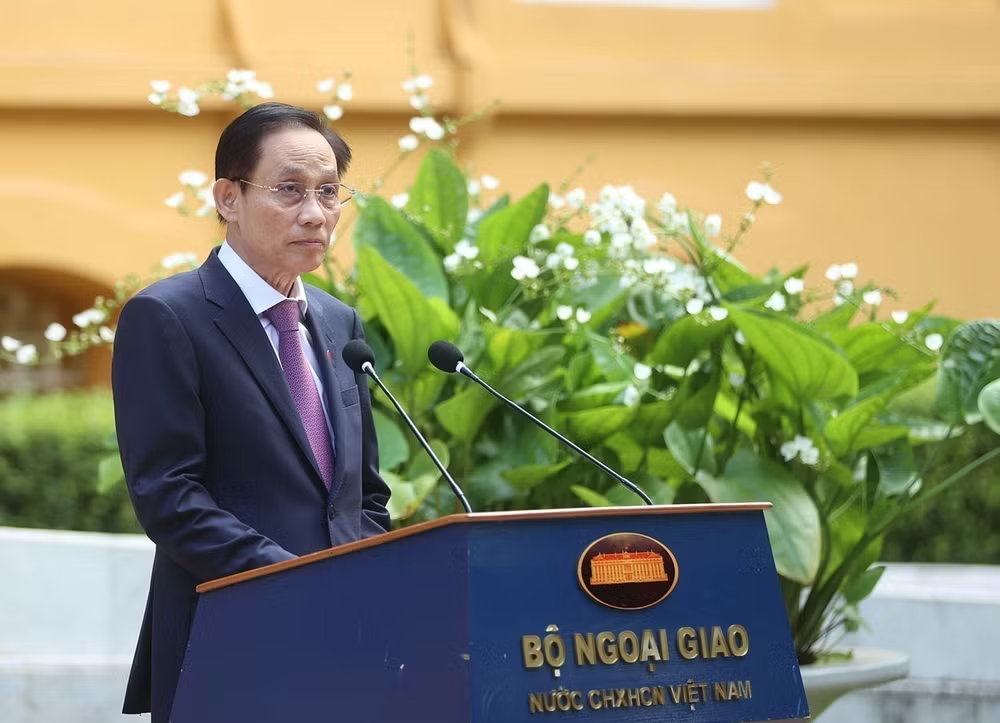
Minister of Foreign Affairs Le Hoai Trung (Photo published by VNA)

Over three decades of journeying with ASEAN have affirmed the correct strategic decisions of the Vietnamese Party and State regarding foreign affairs and international integration. Today, ASEAN has become a vital strategic space closely intertwined with Vietnam’s security interests, development, and international standing, he noted.

As an active, proactive, and responsible member, Vietnam remains steadfast in upholding ASEAN's foundational principles and values. It has actively contributed to maintaining ASEAN solidarity and centrality, promoting international law and a rules-based regional architecture, and fostering a "culture of implementation "—measuring the success of cooperation through substantive outcomes and tangible benefits for the people.

Vietnam’s enduring contributions to ASEAN throughout this journey reflect a consistent conviction: ASEAN’s success is inextricably linked to the success of each member state, and ASEAN’s collective strength is forged through shared responsibility, mutual interest, and a unified strategic vision.

Guided by this spirit and built upon the nation's posture, potential, and standing after 40 years of Doi Moi (Renewal), Vietnam will continue to serve as a positive factor in helping shape major strategic shifts and the future development of ASEAN, the minister added.

Entering a new era of national development with the aspiration of building a strong and prosperous country, the mindset of "growing alongside ASEAN" will guide Vietnam’s more proactive, positive, and substantive contributions to the ASEAN Community and the co-creation of the region’s shared future.

Adhering consistently to the foreign policy of independence, self-reliance, resilience, and multilateralisation and diversification of external relations, and to the spirit of the Resolution of the 14th National Party Congress, Vietnam will strive to elevate its role, initiatives, and ideas to boost its contributions to ASEAN across six strategic priorities.

The first is proactively creating and maintaining a peaceful, secure, and stable regional environment, Trung noted, elaborating that Vietnam will persistently work with other ASEAN countries to consolidate ASEAN solidarity, uphold the bloc’s centrality, adhere to the principles and codes of conduct, and enhance ASEAN’s responsiveness to increasingly complex security challenges.

Vietnam will also make concerted efforts to promote dialogue, build trust, and uphold international law, including the 1982 United Nations Convention on the Law of the Sea (UNCLOS). It will further contribute to conflict prevention, the management of differences, and the harmonious resolution of regional issues based on shared interests and responsibilities.
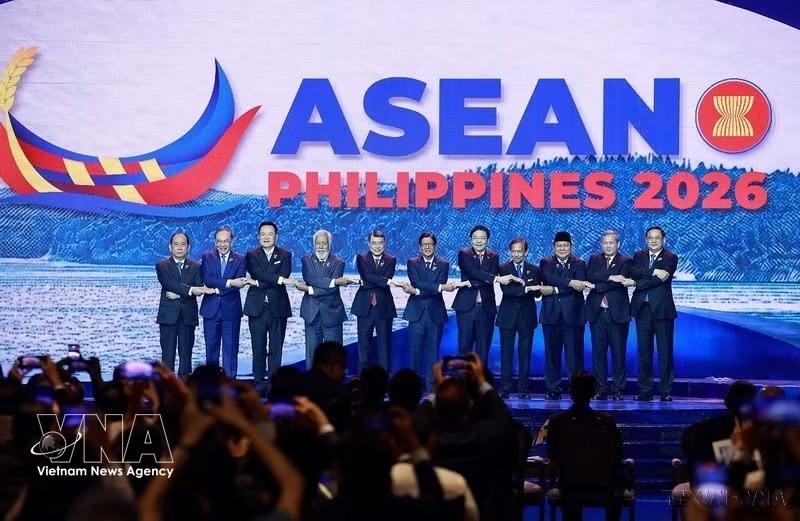
vnanet-48th-asean-summit-2.jpg
Vietnamese Prime Minister Le Minh Hung (fifth from left) and other ASEAN leaders at the opening session of the 48th ASEAN Summit in Cebu, the Philippines, in May 2026 (Photo: VNA)

The second is fostering resilience and the quality of regional economic integration. Vietnam will actively collaborate with other ASEAN members to deepen intra-bloc connectivity, diversify markets and supply chains, guarantee economic security, and strengthen resilience to shocks. It will join efforts to safeguard energy and food security, enhance the quality of infrastructure connectivity, and generate new growth drivers rooted in science, technology, and innovation, while advancing the digital economy, green economy, circular economy, and just energy transition.

The third is strengthening the "culture of implementation". The focus will be on translating agreements into tangible projects and initiatives into measurable outcomes. Priority will be given to supporting disadvantaged countries and sub-regions while leveraging the roles of enterprises, citizens, and regional institutions in narrowing development gaps.

The fourth is enhancing ASEAN’s external relations in a proactive, balanced, and substantive manner. Vietnam will join other member states in deepening and diversifying relations with external partners on the basis of mutual respect, equality, and mutual benefit, ensuring ASEAN centrality and alignment with ASEAN principles.

The fifth is elevating the country’s contributions—from active participation to proactive shaping. Vietnam will actively propose new initiatives and amplify ASEAN’s influence in areas where the countru holds experience and strengths such as digital transformation, innovation, food security, water resource management, climate change response, sub-regional development, Mekong–ASEAN connectivity, and promoting the role of youth, women, and enterprises in the Community building process.

The sixth is reforming operational methods and improving the efficiency of ASEAN institutions. Vietnam and fellow member states aim to build a streamlined and flexible ASEAN equipped with superior forecasting and policy-planning capabilities to meet the requirements of the new development phase, Trung went on.

Against the backdrop of a rapidly changing, complex, and unpredictable world, Vietnam remains firmly convinced that its developmental path is inseparable from the growth of ASEAN. It will continue to accompany, contribute to, and co-create the successful implementation of the ASEAN Community Vision 2045, ensuring ASEAN not only adapts to the times, but also actively shapes and asserts its role, delivering practical benefits to its people and contributing to peace, stability, and shared prosperity in the region and the world, the minister affirmed./.
VNA

See more

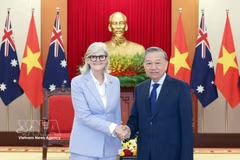
General Secretary of the Communist Party of Vietnam Central Committee To Lam (R) hosts Australian Governor-General Sam Mostyn in Hanoi on September 10, 2025. (Photo: VNA)

New impetus for deeper Vietnam–Australia ties

Party General Secretary and State President To Lam's state visit comes as the Vietnam–Australia Comprehensive Strategic Partnership is booming. Leaders expect it will inject new momentum, making ties deeper, more substantive and more effective.

Vice Chairman of the National Assembly Nguyen Doan Anh (standing) presides over the session on August 8. (Photo: VNA)

National Assembly reviews bill on WMD non-proliferation

Most deputies agreed on the need for the law, saying it will help complete the legal framework for implementing Vietnam’s international commitments and proactively prevent, detect and stop the proliferation of nuclear, chemical and biological weapons and related delivery systems.

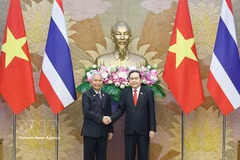
National Assembly Chairman Tran Thanh Man (R) and President of the National Assembly and Speaker of the House of Representatives of Thailand Sophon Zaram in Hanoi during the latter's official visit to Vietnam from August 5-7, 2026. (Photo: VNA)

Thailand's parliamentary leader concludes official visit to Vietnam

Thailand attaches great importance to its Comprehensive Strategic Partnership with Vietnam, and the two countries share a solid foundation of friendship, many common strategic interests and significant potential for cooperation, said President of the National Assembly and Speaker of the House of Representatives of Thailand Sophon Zaram.

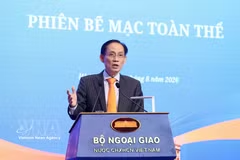
Politburo member and Minister of Foreign Affairs Le Hoai Trung speaks at the 33rd Diplomatic Conference's closing session in Hanoi on August 7, 2026. (Photo: VNA)

33rd Diplomatic Conference wraps up in Hanoi

Foreign relations are no longer viewed simply as relations with the outside world but as an integral component of national comprehensive strength and a responsibility shared by the entire Party, people, armed forces and political system.

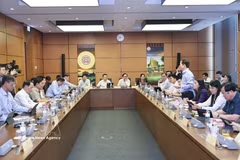
Lawmakers in a group discussion (Photo: VNA)

Lawmakers seek legal reforms to promote telecom infrastructure data sharing

A deputy of Ha Tinh province said there is currently no clear legal basis for sharing technical infrastructure data. While the issue may be less apparent under normal circumstances, it could hamper local coordination and response during storms, floods and other disasters when detailed infrastructure data is not readily available.

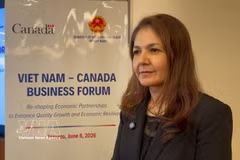
Vina Nadjibulla, former Vice President for Research and Strategy at the Asia Pacific Foundation of Canada (Photo; VNA)

33rd Diplomatic Conference: Vietnam's foreign policy wins praise from Canadian expert

Vina Nadjibulla, former Vice President for Research and Strategy at the Asia Pacific Foundation of Canada, credited pragmatic diplomacy with allowing Vietnam to build relationships with a range of partners without becoming overly dependent on any single country. That approach, she noted, has become more relevant as major-power rivalry heats up, the global economy fragments, and pressure mounts on countries to pick sides.

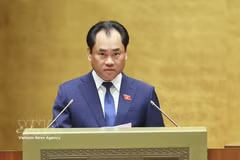
Minister of Agriculture and Environment Trinh Viet Hung speaks at the session (Photo: VNA)

Legislators review bills to streamline administrative procedures in agriculture, environment

Presenting the draft law on amending and supplementing several articles of 10 laws concerning administrative procedures and business conditions in the agriculture and environment sector, Minister of Agriculture and Environment Trinh Viet Hung said it is designed to institutionalise the Party's policy of reducing and simplifying administrative procedures and business conditions, while promoting decentralisation, innovation, and more effective state governance.

General Secretary of the Communist Party of Vietnam (CPV) Central Committee (right) hosts a reception for Australian Governor-General Sam Mostyn in Hanoi during her state visit to Vietnam in September last year (Photo: VNA)

Vietnam, Australia to further strengthen cooperation

The messages posted on Australian Government media platforms highlighted Australia and Vietnam as close regional partners with a long-standing friendship. This will be General Secretary and President Lam’s first visit to Australia since being appointed as President in April and it is also the first in-person meeting between the two leaders.

Lawmakers discuss bills in groups (Photo: VNA)

Lawmakers mull over various bills in group debates

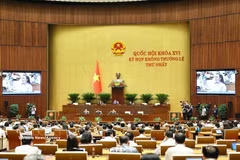
The legislative package includes a draft Law on Urban Development, a bill amending and supplementing several articles of 10 laws that govern administrative procedures and business conditions in agriculture and environment, and the draft Law amending and supplementing several articles of the Law on Radio Frequencies, the Law on Telecommunications, the Law on E-Transactions, and the Law on Technology Transfer.

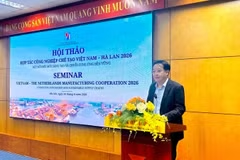
Bui Quang Hung, Deputy Director General of the Trade Promotion Agency, addresses the seminar. (Photo courtesy of the Ministry of Industry and Trade)

Vietnam, Netherlands seek deeper manufacturing cooperation

Manufacturing remains one of Vietnam's core industries, making a major contribution to economic growth, exports and foreign direct investment. The country has become an important production base for multinational corporations in electronics, precision engineering, electrical equipment and high-tech industries.

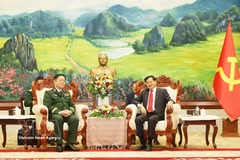
Lao Party General Secretary and President Thongloun Sisoulith (right) receives General Nguyen Trong Nghia, Chairman of the General Department of Politics of the Vietnam People's Army on August 6 (Photo: VNA)

Vietnam, Laos strengthen political, defence ties

The Lao leaders expressed satisfaction with the steady development of bilateral ties, noting that political relations have become increasingly close, deep and trustworthy, serving as the guiding force for overall cooperation.

Collins Chong Yew Keat, a foreign affairs, security and strategy analyst at the University of Malaya (Photo: VNA)

Malaysia-Vietnam defence ties set for more practical cooperation: expert

According to the expert, another key outcome was the reaffirmation of the 2023 defence cooperation MoU and the Action Programme for implementing the Comprehensive Strategic Partnership as the principal roadmap for future collaboration. The framework builds on existing cooperation in delegation exchanges, consultation mechanisms, military education, defence industry, and coordination within ASEAN and other multilateral forums.