Vietnam’s agriculture – deeply rooted to nation’s success

Agriculture in Vietnam is more than an economic sector – it is the cultural root and historical witness of the nation.

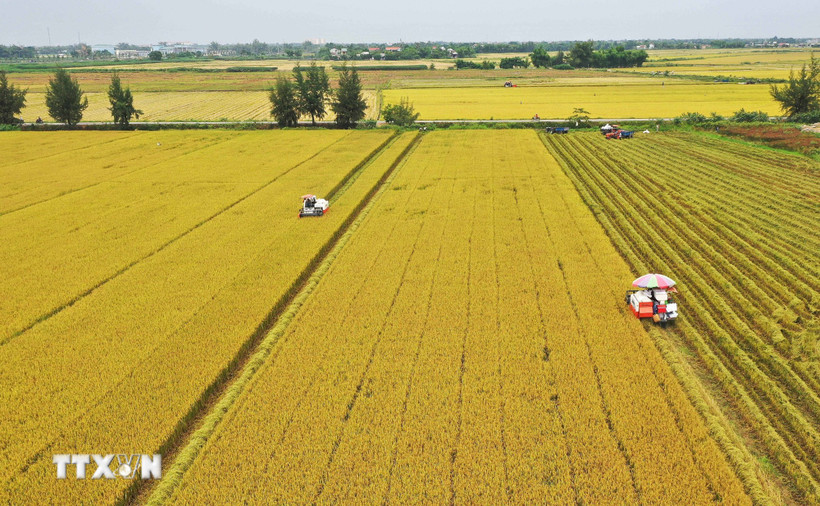
High-quality low-carbon rice farming in Dong Thap province. (Photo: VNA)

Hanoi (VNA) – Agriculture in Vietnam is more than an economic sector – it is the cultural root and historical witness of the nation. From rice grains that sustained soldiers during wartime to today’s position as a global agricultural powerhouse, the journey reflects the resilience, creativity, and aspirations of the Vietnamese people.

During the resistance wars, the slogan “Every grain of rice and every soldier was ensured for the frontline” turned northern Vietnam into a vast agricultural workshop. Rice then carried a sacred meaning – a symbol of national unity and determination to win.

After 1975, the country faced a new battle – the one against poverty. The collective farming model revealed many shortcomings, forcing Vietnam to import millions of tonnes of food in the late 1970s and early 1980s. For a nation with a thousand-year wet rice tradition, enduring chronic food shortages was a painful paradox.

The turning point came in 1988 with Resolution 10 of the Politburo, better known as “Khoan 10. It granted long-term land-use rights to farming households, recognising them as independent economic units. For the first time, farmers became true masters of their fields, entitled to “earn more if they produced more.”

The policy brought immediate results. In 1989, Vietnam moved from being a food importer to exporting 1.4 million tonnes of rice. Since then, Vietnamese rice has steadily conquered global markets, with the country briefly surpassing Thailand in 2012 to become the world’s top rice exporter. In 2024, exports hit a record 9 million tonnes, earning nearly 5.8 billion USD.

Beyond quantity, quality has also risen, with Vietnamese rice winning multiple “World’s Best Rice” awards. The first low-carbon rice shipments for export further demonstrated a sustainable shift.
coffee.jpg
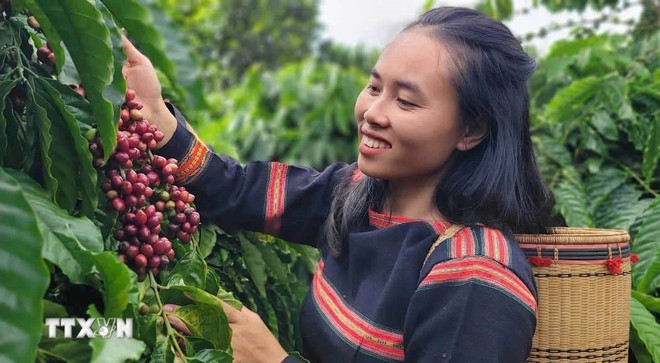
A farmer harvests organic coffee. (Photo: VNA)

Rice success paved the way for broader growth. Vietnam diversified into coffee, fruits, seafood, wood, cashew nuts, and pepper.

In 2024, total agro-forestry-aquatic product exports reached a record 62.5 billion USD. Coffee ranked second worldwide in exports, with Robusta taking first place. In the first half of 2025 alone, coffee exports hit 5.45 billion USD – nearly equal to the full-year value in 2024. Fruit and vegetable exports reached 7.12 billion USD in 2024, with durian alone contributing over 3 billion USD from exports to China. Seafood brought in 10.07 billion USD, including shipments to demanding markets such as the US, the EU, and Japan.

This diversity has ensured national food security while expanding global market reach, cementing Vietnam’s place as a major agricultural exporter.

Yet challenges remain. Climate change, especially in the Mekong Delta, threatens food security. Small, fragmented production hinders high-tech applications and traceability. Heavy reliance on a few major markets like China and the US carries risks, while advanced economies increasingly tighten “green” standards.

Vietnam is restructuring agriculture around three main pillars with a focus on sustainability and technology: ecological agriculture, modern rural development, and smart farmers.

National Assembly Vice Chairman and former Minister of Agriculture and Rural Development Le Minh Hoan stressed that in the new development space, there is no room for siloed thinking. Agriculture must link with industry, science, technology, and culture to create new values – not only producing, but also building a green, sustainable, and humane agricultural space.
anh-nn-2.jpg
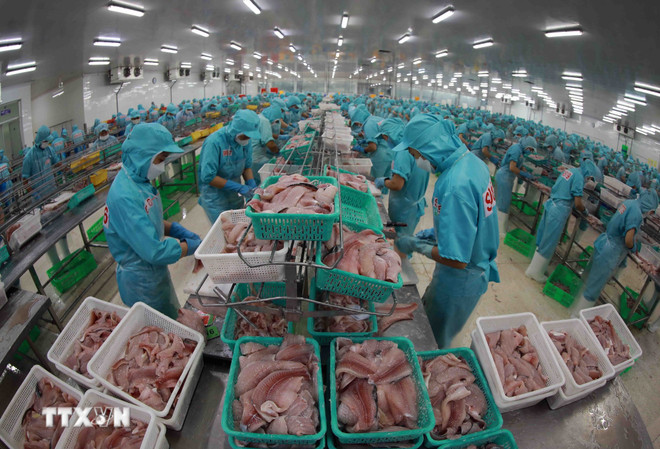
Workers process tra fish for export. (Photo: VNA)

He emphasised that Vietnam’s agriculture needs a unified vision, strong connectivity, and a “brave heart” to create new harvests. “Green agriculture builds a green future; decent agriculture nurtures decent generations – towards people, nature, and ourselves.”

Prime Minister Pham Minh Chinh has also affirmed that farmers must live better and happier lives, rural areas must modernise, and agriculture must advance. Farmers are at the centre and the driving force, agriculture, is the engine, and rural areas are the foundation.

Agriculture will always be a source of pride and a solid root for Vietnam to continue to rise high and fly far in the international arena./.


VNA

See more

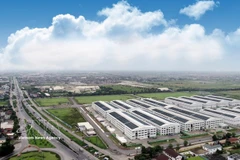
An Phát Complex Industrial Park in Hai Phong City is one of the eco-friendly industrial parks. (Photo: VNA)

Green industrial parks become new magnet for FDI

Statistics show that about 80% of FDI enterprises prioritise investing in industrial parks with green energy infrastructure, reflecting a growing shift in investment preferences amid tightening global environmental standards.

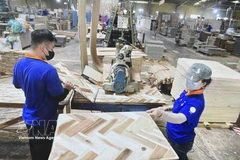
Wood panel production at the Thuan An Wood JSC in Ho Chi Minh City (Photo: VNA)

Vietnamese businesses ride wave of investment in green manufacturing

Recent developments in private investment show that as confidence in the private sector has grown and is a key driver of economic development, investors are strengthening support for enterprises not only through capital but also management expertise and market connectivity.

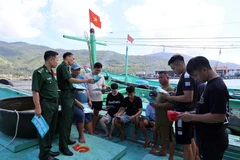
Officers and soldiers of Son Tra Border Guard Station, Da Nang City Border Guard Command tell local fishermen about IUU fishing. (Photo: VNA)

Fishing solidarity groups help Vietnam with IUU “yellow card” warning removal

Over the years, coastal authorities in Da Nang have intensified efforts to educate fishermen about regulations, particularly the need to avoid illegal fishing in foreign waters. Local administrations and competent forces have also strengthened vessel registration and inspection procedures, installed vessel monitoring systems and ensured transparent declarations of catches at ports.

Representatives of Central Retail Vietnam and Lotte Plaza Market sign a distribution cooperation agreement at the networking event in Ho Chi Minh City on March 13. (Photo: VNA)

Vietnamese firms step up cooperation with international distribution chains

Connecting Vietnamese businesses with international distribution networks has been a key component of government-led trade promotion programmes for many years, which are designed to help domestic companies place goods directly into global retail systems rather than exporting solely through intermediaries.

Direct Hanoi–Amsterdam flights by Vietnam Airlines to begin on June 16. (Photo: Vietnam Airlines)

Vietnam Airlines to launch direct Hanoi–Amsterdam service on June 16

Under the plan, the Hanoi–Amsterdam route will commence operations on June 16, 2026, with an expected frequency of three return flights per week using modern wide-body Airbus A350 aircraft. This will be the first direct air link between Vietnam and the Netherlands, helping to shorten travel time and enhance connectivity between Vietnam and one of Europe’s key economic, logistics and aviation transit hubs.

Farmers harvest the 2025 Winter–Spring rice crop in An Giang province. (Photo: VNA)

An Giang accelerates export shift to meet green consumption trends

To enhance competitiveness, authorities are assisting businesses in obtaining globally recognised certifications such as GlobalG.A.P., Organic and HACCP, enabling key exports including rice, seafood and clean agricultural products to strengthen their position in global markets, according to Quang Xuan Lua, Director of the An Giang Centre for Trade and Investment Promotion.

Motorcycle riders refill their vehicles at a petrol station in Hanoi (Photo: VNA)

E5 RON92 biofuel price falls in latest adjustment

Since the beginning of this year, domestic fuel prices have undergone 14 adjustments, including five decreases and nine increases for RON95 and six declines and eight hikes for E5 RON92. Meanwhile, diesel price has fallen three times and risen 11 times.

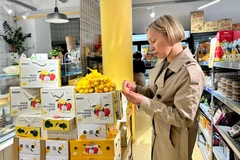
A French customer is tasting Vietnamese lychee. (Photo: VNA)

Vietnamese agricultural products boost global brand recognition

Vietnam aims to achieve about 74 billion USD in agro-forestry-fishery export turnover this year. Expanding value-added products, improving quality standards and strengthening brand building, especially through international supermarket systems, will be key to enhancing the competitiveness and global recognition of Vietnamese agricultural products.

An apartment building developed by BCONS in Binh Duong (Photo: VNA)

Resolution 68 boosts businesses entering market

By the end of 2025, Vietnam had more than one million active enterprises. In the first two months of 2026, about 64,500 enterprises entered or re-entered the market, up 29.4% year-on-year, averaging 32,200 newly established or returning businesses per month.

A Vinh Long official introduces signature local products to Korean guests. (Photo: VNA)

Vinh Long courts Korean investment in key sectors

Vice Chairman of the provincial People’s Committee Nguyen Truc Son vowed to accompany investors and provide them with optimal conditions, while building a transparent and stable business environment to secure long-term engagement from foreign enterprises, particularly those from Daejeon.

Delegates at the launching ceremony (Photo: VNA)

Digital platform on overseas market development launched

With Vietnam’s network of 64 trade offices overseas, Deputy PM Son noted that connecting them through a modern digital platform could help establish a unified national trade information system that operates efficiently, transparently and with strong forecasting capacity.

The Government’s issuance of Decree No. 72/2026/ND-CP revising preferential import tariffs on several petrol products and raw materials is a timely move to diversify supply sources. (Photo: VNA)

Fuel import tariff cuts strengthen Vietnam’s energy resilience: experts

Economic expert Dinh Trong Thinh said revising fuel import tariffs helps diversify supply sources and reduce reliance on traditional markets, thereby strengthening Vietnam’s ability to cope with potential global supply shocks. Ensuring access to multiple energy sources is also vital for safeguarding national energy security, he added.