Vietnam’s economy weathers geopolitical turbulence to maintain growth momentum

Under pressure from the Middle East conflict, the economic picture in the first quarter shows a mix of colors. However, industry and agriculture continue to maintain their growth momentum.

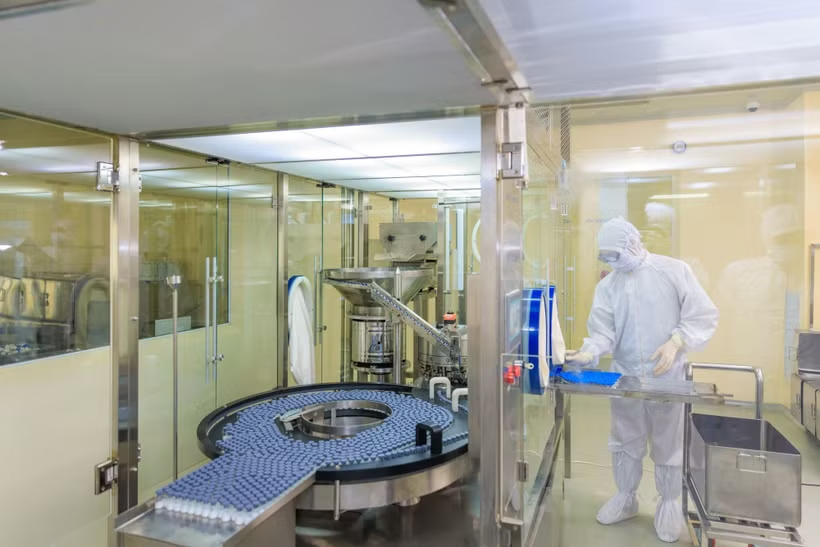
Vietnam's Index of Industrial production index (IIP) for the entire sector rises 9% year-on-year in the first quarter of this year. (Photo: VietnamPlus)

Hanoi (VNA) – Amid mounting geopolitical uncertainty, particularly armed conflicts in the Middle East, Vietnam’s economy showed notable resilience in the first quarter of 2026.

The country’s Index of Industrial Production (IIP) rose 9% year-on-year. Behind this encouraging figure, however, there remained significant challenges as rising logistics costs and energy prices continued to exert pressure across the economy, affecting industrial production, food security, and infrastructure development.

Agriculture remains pillar of stability

Against the backdrop of external headwinds, the agriculture-forestry-fishery sector once again affirmed its role as a stabilising force, helping to safeguard macroeconomic stability.
economy2.jpg
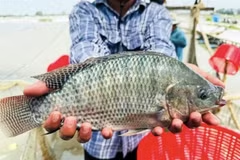
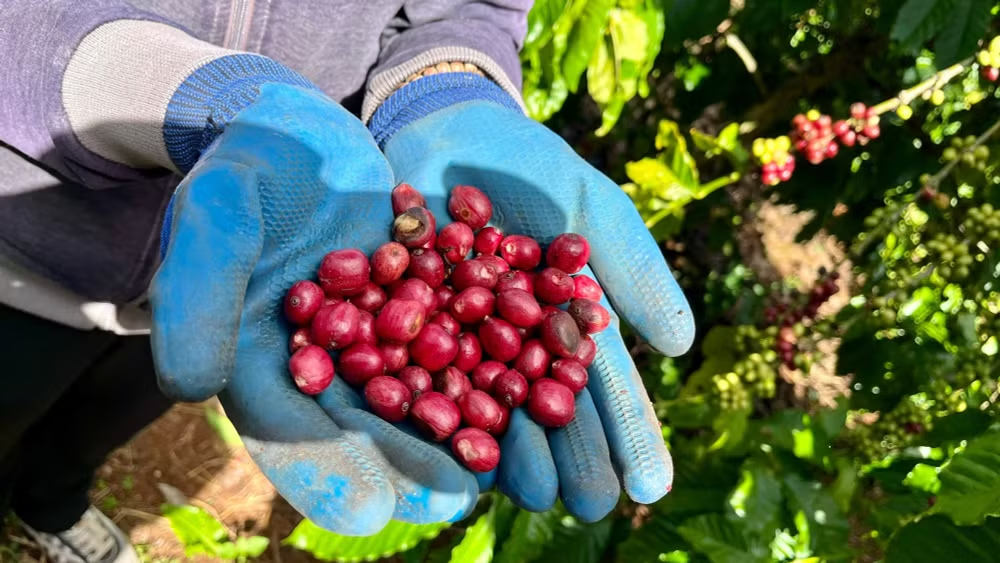
The high prices of input materials such as fertilisers and animal feed are affecting farmers' profits. (Photo: VietnamPlus)

According to the National Statistics Office (NSO), the sector’s added value increased 3.58% in the first quarter, contributing 0.44 percentage points to the country’s overall economic growth. The result reflected effective restructuring in crop and livestock production and the sector’s high degree of self-sufficiency.

Dau Ngoc Hung, Head of the NSO’s Agriculture, Forestry and Fisheries Statistics Division, said that amid supply chain disruptions caused by conflicts in the Middle East, essential production sectors such as agriculture, forestry, and fisheries served as a buffer against major economic shocks.

He noted that agriculture not only ensured domestic food supplies but also helped contain inflationary pressures when global commodity prices fluctuated sharply.
economy3.jpg
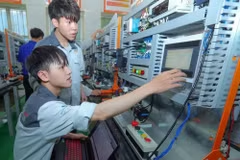
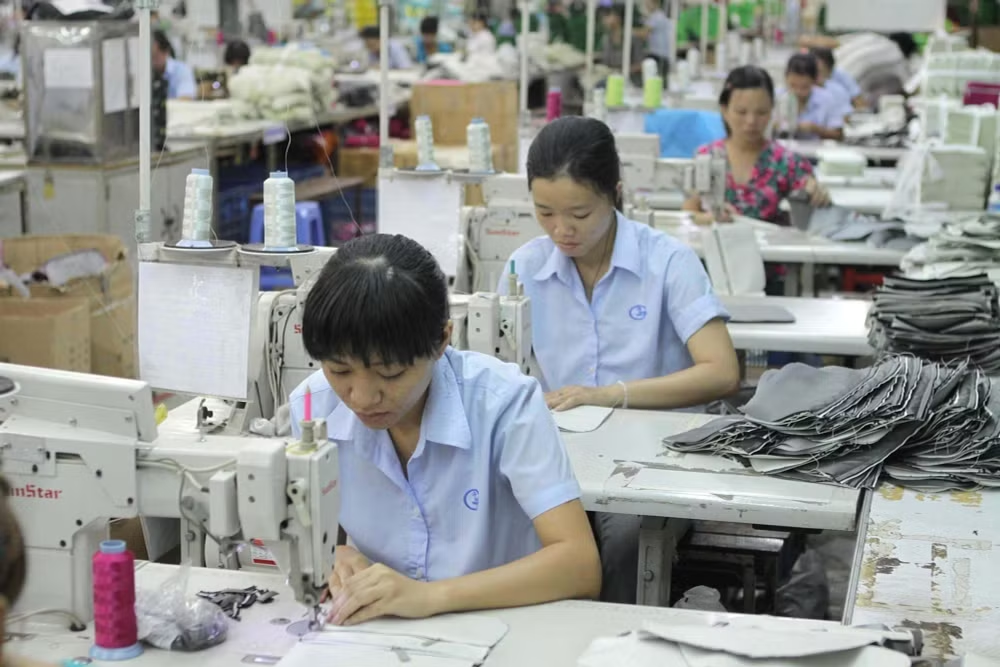
The impact of logistics disruptions has so far been mitigated by accumulated orders and businesses’ adaptability. (Photo: VietnamPlus)

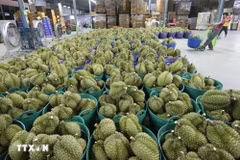
Agricultural production maintained positive growth, especially among perennial crops. Durian output rose by 15%, jackfruit 12.8%, and pepper 5.3%. Agricultural export turnover was estimated at 12 billion USD in the first quarter, up 4.2% year-on-year. Strong demand came from major markets, including China, Japan, and ASEAN member states.

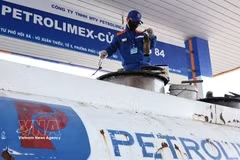
However, the sector remains vulnerable to rising oil prices, which have increased transport and logistics costs. Fisheries output grew 1.6% in the first two months of the year but fell 2.7% in March as higher fuel costs forced many fishing vessels to reduce operations. Rising prices of fertilisers and animal feed have also squeezed farmers’ profits.

Contrasting trends in construction and industry

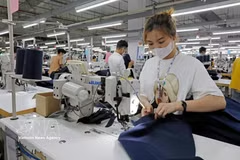
While agriculture provided stability, industry remained the primary engine of growth in the first quarter. The 9% increase in the IIP reflected a recovery in export orders, with electronics, electrical equipment, textiles, and footwear maintaining stable production levels, supported by contributions from both foreign-invested and domestic enterprises.
economy4.jpg
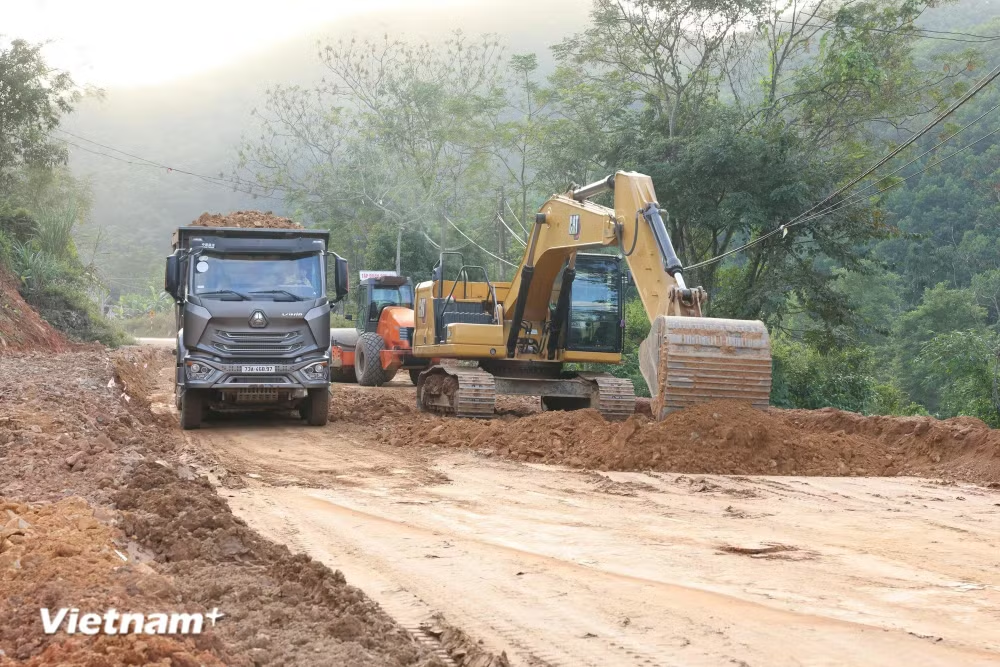
The Cho Chu–Trung Son Junction section of the Ho Chi Minh Highway is under construction. (Photo: VietnamPlus)

Notably, electricity consumption in the industrial and construction sectors rose 8.3%, indicating strong manufacturing activity.

However, Phi Thi Huong Nga, Head of the NSO’s Industry and Construction Statistics Division, noted signs of slowing momentum. The Purchasing Managers’ Index (PMI) hovered around the 50-point mark, suggesting manufacturing expansion was moderating.

According to Nga, the impact of logistics disruptions has so far been mitigated by accumulated orders and businesses’ adaptability. However, continued increases in input costs could place the manufacturing sector under greater strain.

Meanwhile, the construction sector has struggled to meet expectations despite efforts to accelerate public investment. An NSO survey found that 44.4% of construction firms faced more difficult conditions in the first quarter than in the previous quarter.
economy5.jpg
Public investment disbursement must go hand in hand with construction progress on site, while bottlenecks related to administrative procedures and site clearance should be addressed. (Photo: VietnamPlus)

Nga attributed the situation largely to soaring material prices, with 70.1% of surveyed firms citing higher costs for steel, cement, sand, and stone as a major challenge. A sluggish residential property market, payment delays, and cash-flow constraints have further weighed on the sector.

Looking ahead, Nga stressed the need to stabilise material prices, improve cash flows, accelerate the disbursement of public investment, and remove administrative and land-clearance bottlenecks.

Other experts also highlighted the importance of diversifying export markets and preparing response scenarios for geopolitical risks to sustain growth momentum and support Vietnam’s goal of achieving double-digit economic growth./.
VNA

See more

Vietnam's durian exports are expected to exceed 2 billion USD by the end of July. (Photo: VNA)

Durian exports recover despite mounting price pressure

If the Central Highlands harvest proceeds smoothly and pending issues related to growing-area and packing-house codes are resolved promptly, exports could generate an additional 2 billion USD in the remaining months of the year, pushing the whole-year figure beyond 4 billion USD, up from 3.8 billion USD last year.

At a Petrolimex station. Petrolimex said it was increasing fuel procurement, adjusting distribution and moving supplies between regions to ensure fuel supply across its system. (Photo: VNA)

Ministry orders fuel supply inspections amid localised shortages

The ministry has taken steps to immediately inspect locations reporting shortages and identify the cause. Localities where shortages are taking place must examine the entire supply chain, including contracts between retailers and wholesalers, actual supply volumes, delivery schedules and the reasons for any failure to provide fuel.

Garment production for export to the US market at TAL Vinh Phuc Garment Company. (Photo: VNA)

New US tariff policy should be based on objective, comprehensive assessment

This progress has been built on mutual respect, transparency and Vietnam's sustained efforts to improve its legal framework and comply with international standards. However, the US' recent tariff decision appears to overlook realities regarding Vietnam's labour environment and manufacturing practices.

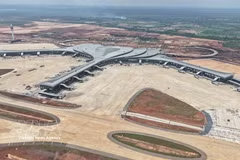
The construction site of Long Thanh International Airport in July 2026. (Photo: VNA)

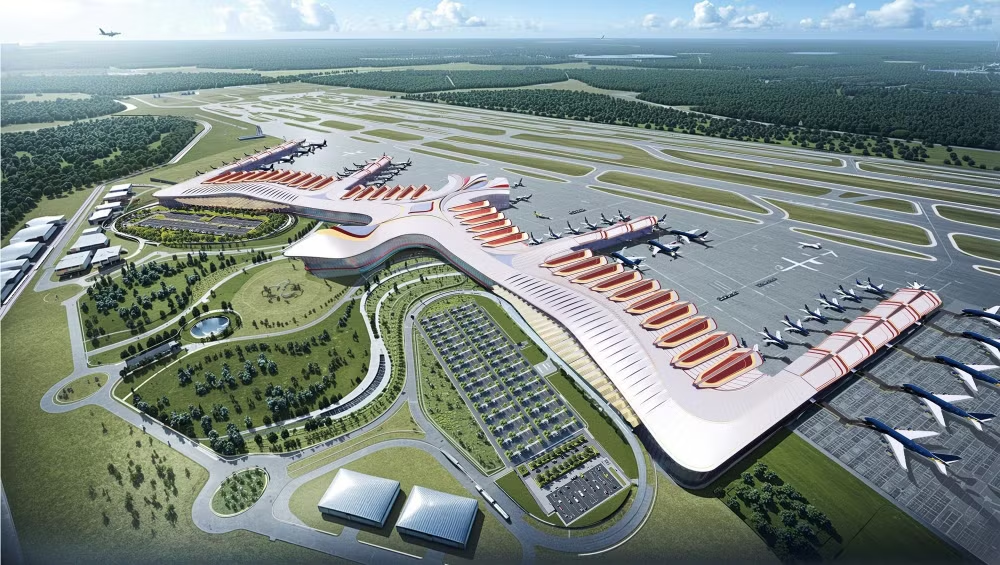
Long Thanh Airport's second runway to be completed in September

According to the Airports Corporation of Vietnam (ACV), after 14 months of construction, the cement concrete pavement for the runway and taxiways has been substantially completed. Contractors are mobilising hundreds of workers and construction equipment to finish the remaining works on schedule.

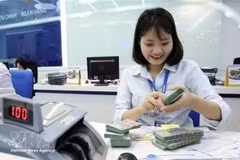
Illustrative image (Photo: VNA)

Vietnam introduces special policies to strengthen anti-money laundering framework

Issued on July 24, Resolution No. 66.23/2026/NQ-CP amends and supplements a number of provisions in the 2022 Law on Anti-Money Laundering and related guiding documents. The revisions focus on key areas, including the definition of beneficial ownership, verification of customer information, transparency of legal arrangements, risk-based customer classification and the frequency of updating customer information.

International buyers explore products at the Vietnam International Sourcing Expo 2025. (Photo: VNA)

Nordic businesses look to Vietnam for deeper trade, supply-chain cooperation

VIS 2025 enabled Nordic businesses to directly explore Vietnamese suppliers while facilitating deeper engagements with management agencies, localities, industry associations, seaports, factories and logistics partners. The programme showed that Vietnam-Nordic cooperation is expanding beyond trade to supply-chain development, investment, logistics and digital transformation.

Phu Quoc airport’s 3,300m runway lights up ahead of landmark flight inspections

Phu Quoc airport’s 3,300m runway lights up ahead of landmark flight inspections

Viewed from above, Runway No. 2 has taken clear shape within the overall layout of Phu Quoc International Airport. Measuring 3,300 metres long and 45 metres wide, the new runway has been built parallel to the existing one. Its pavement and markings have been completed, and the project is now undergoing final technical inspections. At night, the lighting system has been switched on at full intensity for testing.

Villas left unoccupied for years. (Photo: diendandoanhnghiep.vn)

Taxes proposed on vacant land, speculative deals

A key proposal is to introduce a mechanism to regulate windfall gains from differences in land values, while imposing high taxes on vacant land and property transactions conducted within a short period.

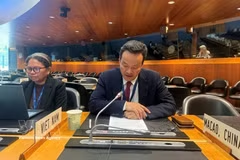
Ambassador Mai Phan Dung, Permanent Representative of Vietnam to the United Nations, the World Trade Organisation (WTO) and other international organisations in Geneva, speaks at the eight WTO Trade Policy Review of India. (Photo: VNA)

Vietnam attends India’s 8th WTO Trade Policy Review

India is one of Vietnam’s leading economic partners in South Asia and its eighth-largest trading partner of the Southeast Asian nation. Bilateral trade accounts for about 80% of Vietnam’s total trade with other South Asian countries. Meanwhile, Vietnam is currently India’s 22nd-largest trading partner globally and the fourth-largest in ASEAN.

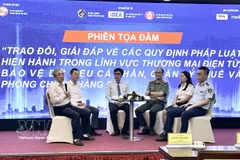
Panellists at the conference (Photo: VNA)

Ho Chi Minh City promotes safe, transparent e-commerce ecosystem

Ho Chi Minh City is stepping up efforts to build a safer and more transparent e-commerce ecosystem as authorities accelerate implementation of the new E-commerce Law, which aims to strengthen consumer protection, enhance platform accountability and support the sustainable growth of Vietnam's digital economy.

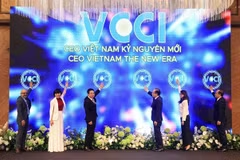
Minister of Foreign Affairs Le Hoai Trung (third, right), VCCI Chairman Ho Sy Hung (third, left), and representatives of government agencies and educational institutions attend the launch ceremony of the programme. (Photo courtesy of VCCI)

Vietnam launches programme to develop globally competitive CEOs

The Vietnam Chamber of Commerce and Industry (VCCI) on July 25 launched a Vietnam business leadership development programme 2026-2030 (CEO Vietnam The New Era), to build a new generation of internationally competitive chief executive officers (CEOs) in Vietnam.

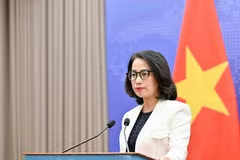
Spokeswoman of the Ministry of Foreign Affairs Pham Thu Hang (Photo: MoFA)

Vietnam strictly prohibits all forms of forced labour: Foreign Ministry

Vietnam will continue working with the US in a constructive and cooperative spirit, while urging the US side to fully take into account the measures Vietnam has adopted when adjusting tariffs on Vietnamese goods, consistent with the actual situation and Vietnam's ongoing legislative and enforcement push.