Vietnam’s role in Mekong cooperation: From strategic connectivity to shared prosperity
As countries in the Mekong subregion navigate profound changes in the global economy, intensifying geopolitical competition and mounting environmental pressures, strengthening regional cooperation has become increasingly important. The 12th Cambodia-Laos-Myanmar-Vietnam (CLMV) Summit and the 11th Ayeyawady-Chao Phraya-Mekong Economic Cooperation Strategy (ACMECS) Summit, held in Hanoi on November 28, have provided fresh impetus for efforts to transform the subregion's potential into shared prosperity.
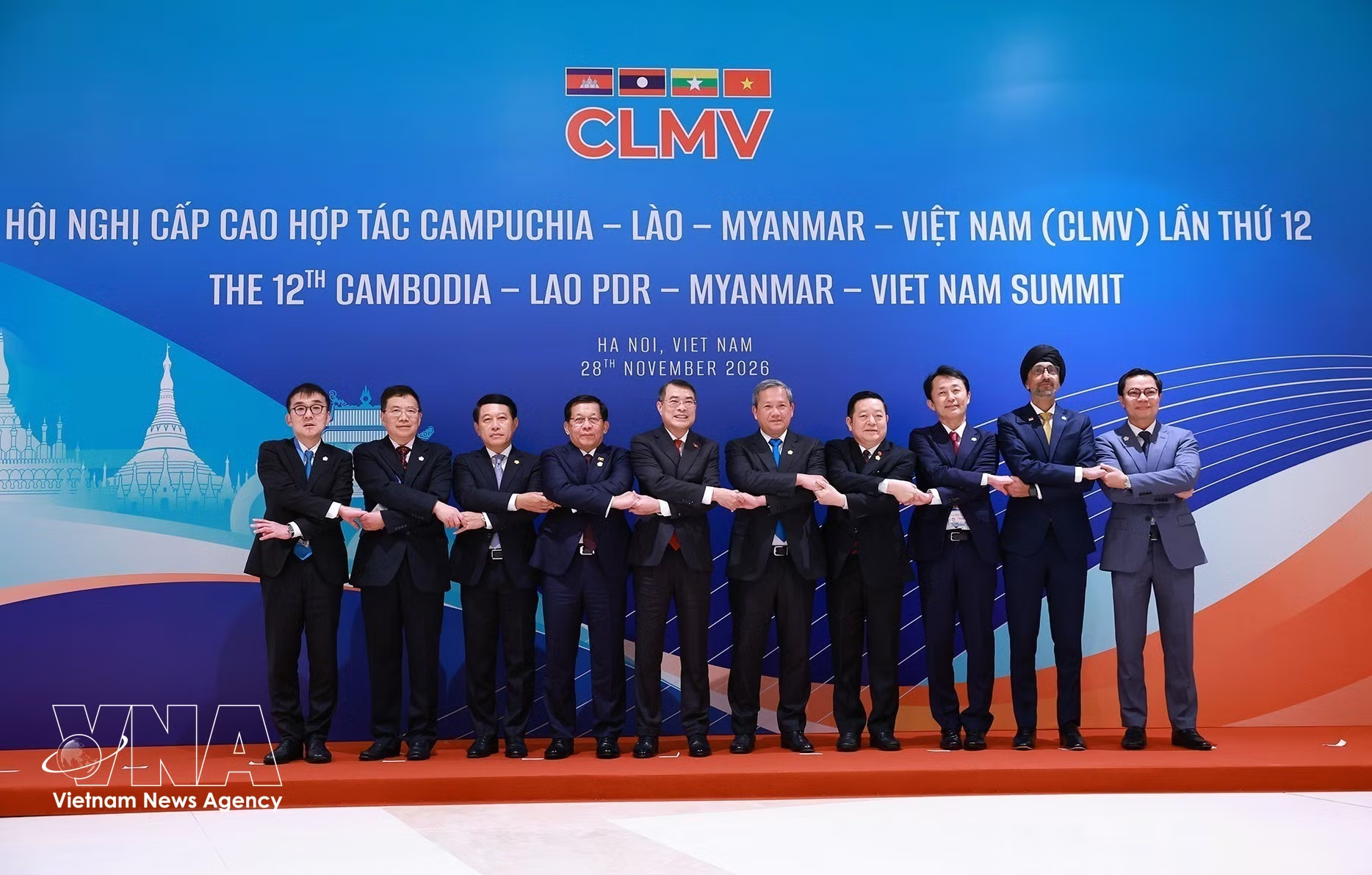
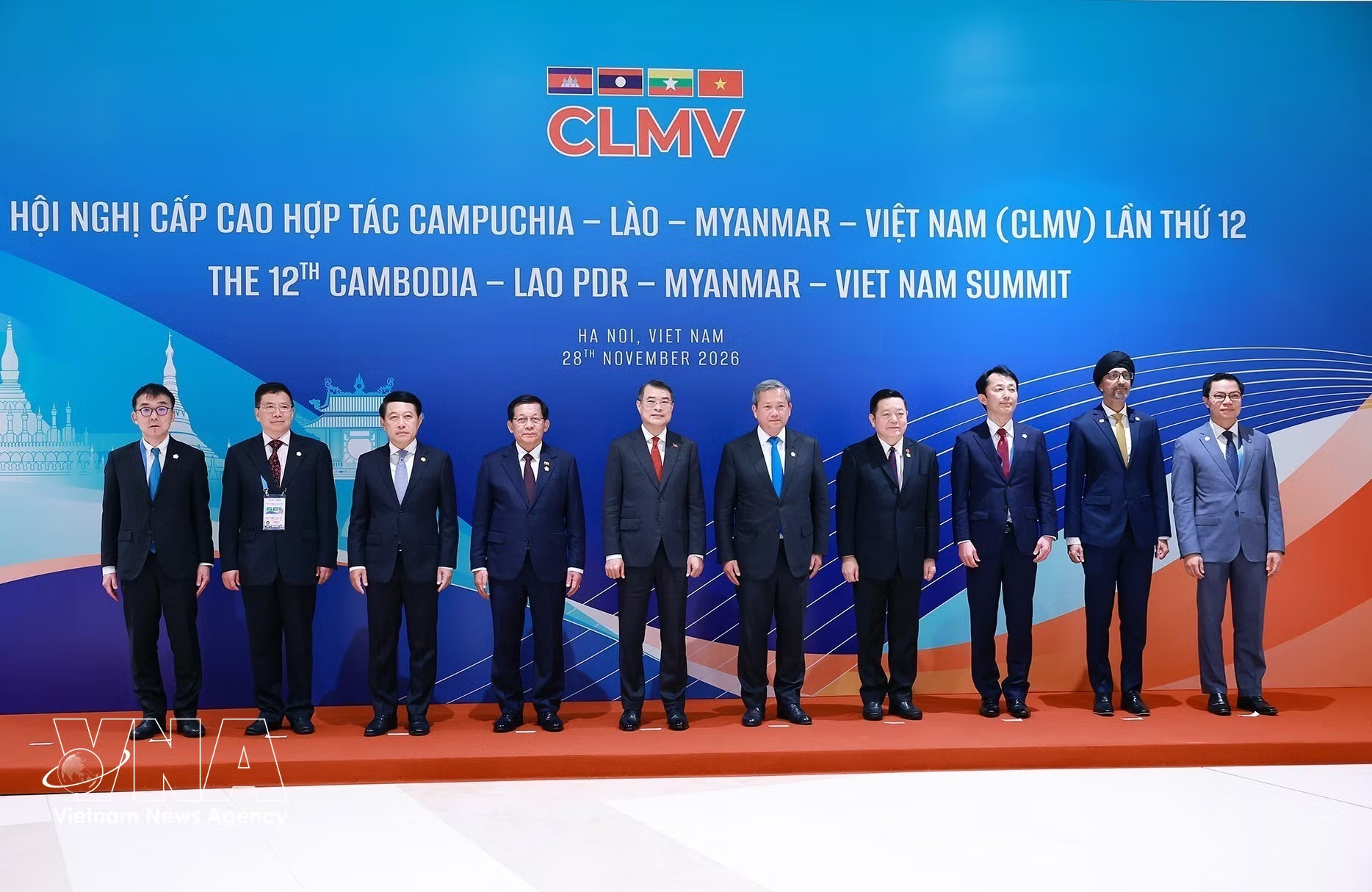
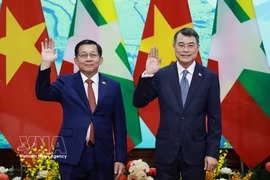
Prime Minister Le Minh Hung, Myanmar President Min Aung Hlaing, Lao Prime Minister Saleumxay Kommasith, Cambodian Prime Minister Hun Manet, ASEAN Secretary-General Kao Kim Hourn and heads of invited delegations pose for a group photo. (Photo: Duong Giang/VNA)
The Mekong subregion is entering a new phase of development, one in which connectivity, economic integration and the ability to respond collectively to shared challenges are becoming increasingly important. For Cambodia, Laos, Myanmar, Thailand and Vietnam, cooperation is no longer simply about expanding trade or building transport links. It is also about strengthening production networks, mobilising resources, developing human capital and ensuring that the benefits of regional integration reach all five countries.
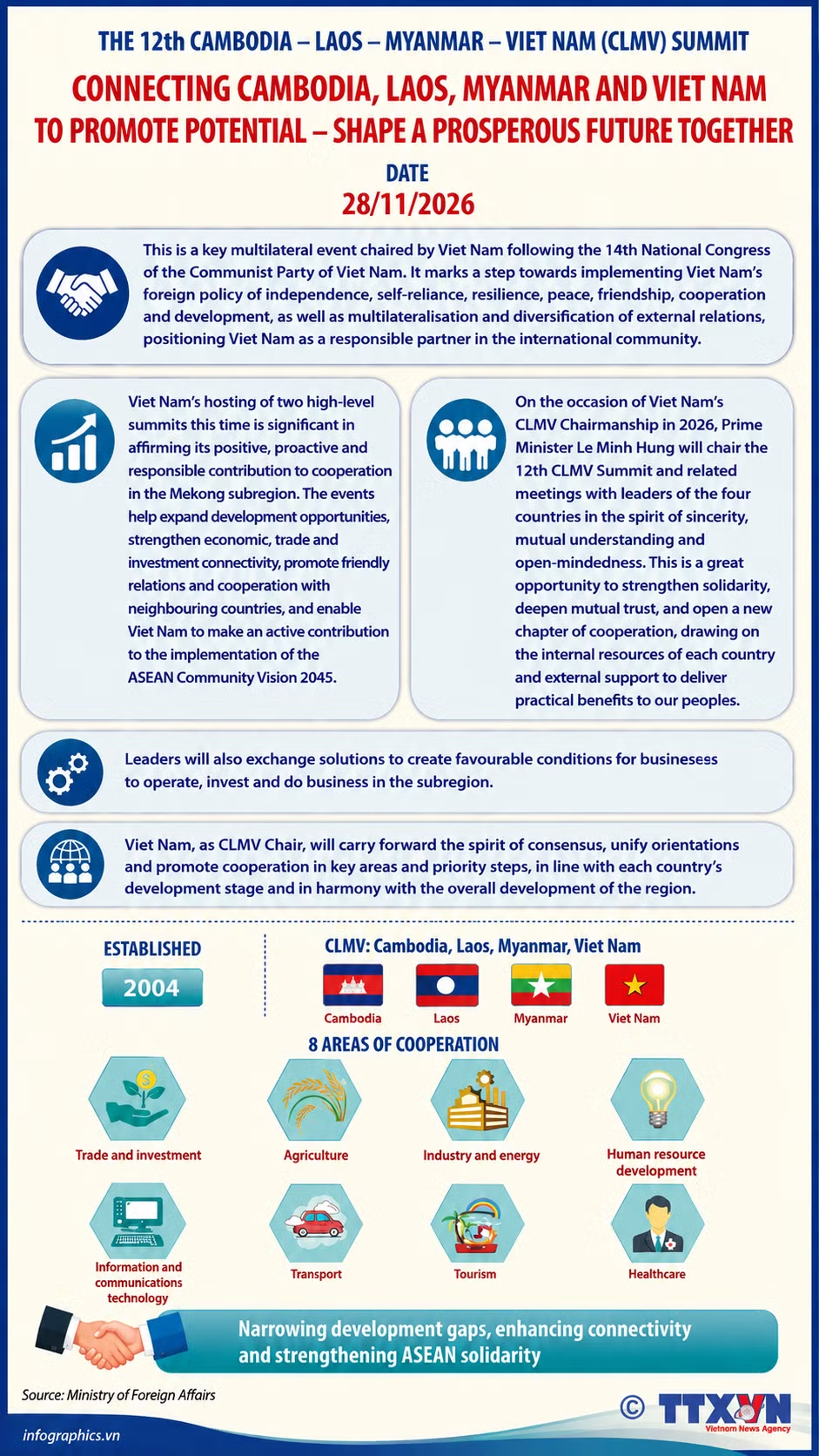
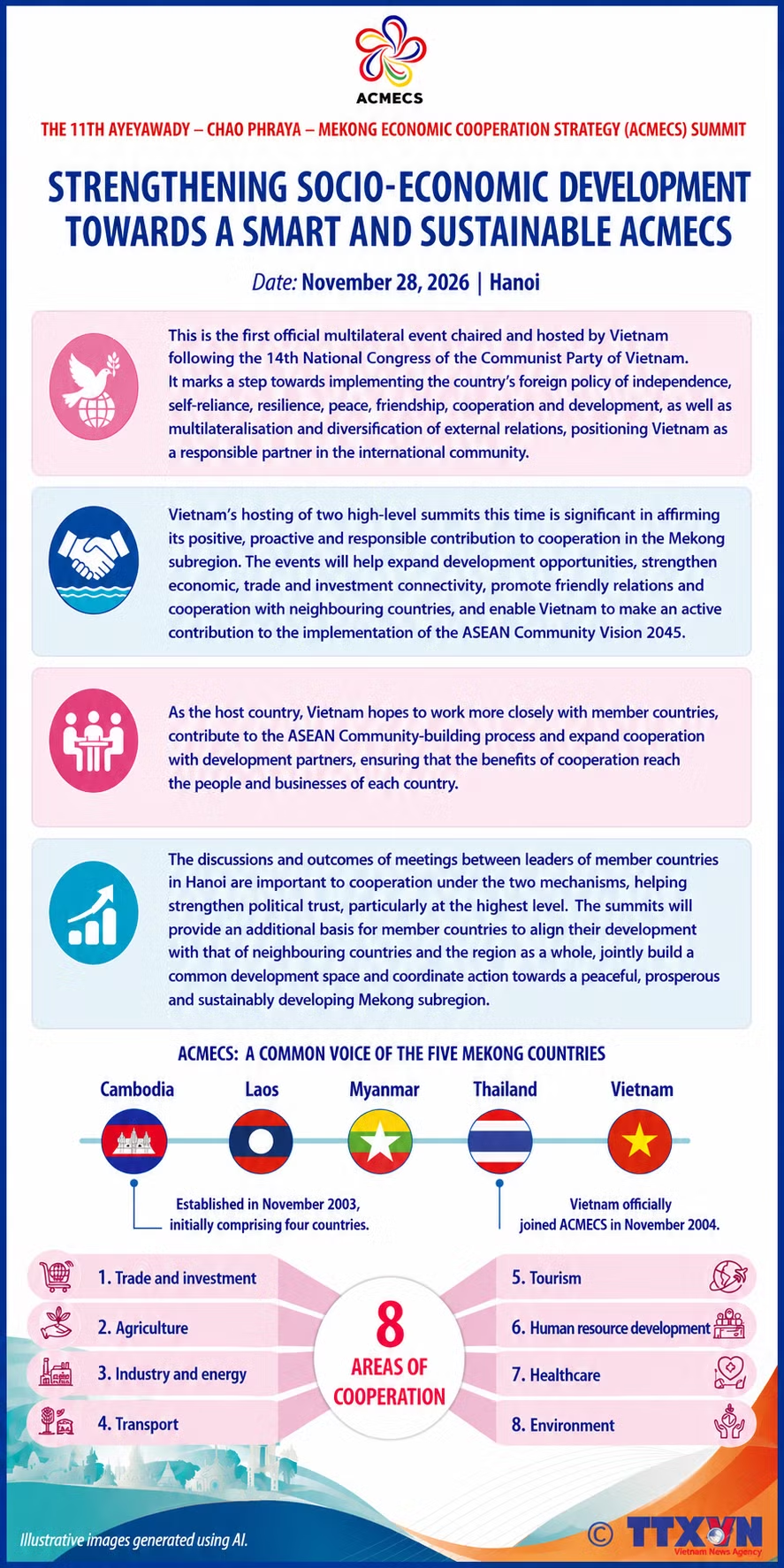
These priorities were at the heart of the 12th Cambodia-Laos-Myanmar-Vietnam (CLMV) Summit and the 11th Ayeyawady-Chao Phraya-Mekong Economic Cooperation Strategy (ACMECS) Summit, held in Hanoi on November 28, 2026. The two meetings offered an opportunity for the five countries to review their cooperation, identify new areas of common interest and set out practical directions for the next stage of subregional development.
Under the theme “Connecting CLMV – Harnessing Potential – Building a Prosperous Future”, the CLMV Summit focused on strengthening connectivity, developing a common production base and enabling member countries to participate more effectively in regional and global value chains. Meanwhile, the ACMECS Summit placed emphasis on sustainable and smart growth, with priorities including infrastructure, digital and institutional connectivity, environmental protection and the sustainable management of water resources.
For Vietnam, which chaired the CLMV mechanism in 2026 and co-organised the ACMECS Summit with Myanmar, the meetings also offered an opportunity to reaffirm its commitment to working with neighbouring countries in shaping a more connected, resilient and sustainable Mekong subregion.
For Vietnam, which chaired the CLMV mechanism in 2026 and co-organised the ACMECS Summit with Myanmar, the meetings offer an opportunity to reaffirm its commitment to working with neighbouring countries in shaping a more connected, resilient and sustainable Mekong subregion. (Photo: VNA)
International experts believe that the two mechanisms have an important role to play in this process, provided that political commitments are translated into practical projects, supported by adequate resources and stronger institutional coordination.
Dr. Valeria Vershinina of the ASEAN Centre at MGIMO University in Russia views CLMV and ACMECS as important mechanisms for addressing one of ASEAN’s longstanding priorities: narrowing the development gap between its members.
“They serve one of the central goals of the association, which is narrowing down the development gap between older members of ASEAN and new members of ASEAN,” she said, referring to the two cooperation frameworks.
“Both mechanisms help to bring these economies more fully integrated into regional and global economy.”
Associate Professor Dr Narut Charoensri of the School of International Affairs, Faculty of Political Science and Public Administration, Chiang Mai University, Thailand (left), and Dr Valeria Vershinina of the ASEAN Centre at MGIMO University, Russia (right), give an online interview to the Vietnam News Agency. (Photo: Screenshot)
For Associate Professor Dr. Narut Charoensri of Thailand, ACMECS also has a distinctive role in the regional cooperation landscape. While the Mekong region has become the focus of numerous initiatives involving major powers, ACMECS provides a platform driven by the countries of the subregion themselves.
“I think ACMECS has played a very important role for being a centre of mainland Southeast Asia,” he said, noting the progress made in economic corridors, economic collaboration and political support for development projects.
He added that ACMECS stands out among the various Mekong cooperation frameworks because it is not led by a major power. This gives the five member countries a platform to discuss their shared concerns and shape cooperation around their own priorities.
Together, the two summits in Hanoi demonstrated that the future of Mekong cooperation will depend not only on the scale of individual projects, but also on the ability of the five countries to coordinate their development strategies and turn shared objectives into concrete outcomes.
Complementary mechanisms in a changing regional landscape
Dr. Valeria Vershinina of the ASEAN Centre at MGIMO University, Russia (Photo: VNA)
CLMV and ACMECS frameworks support ASEAN initiatives for integration and connectivity by turning broad regional goals into concrete subregional projects like economic corridors, cross-border transport, power grids and simpler border procedures.
CLMV and ACMECS have different membership structures and areas of emphasis, but their objectives are closely connected.
CLMV brings together Cambodia, Laos, Myanmar and Vietnam, four ASEAN members that share a number of development challenges. Their cooperation provides a forum for discussing common priorities and strengthening their collective voice within ASEAN. These include trade facilitation, human resource development, energy connectivity and the development of transport infrastructure.
ACMECS, which also includes Thailand, provides a broader framework for cooperation across mainland Southeast Asia. Thailand’s economic capacity, technical expertise and market connections add another dimension to the partnership, linking the four CLMV countries with one of the region’s more established economies.
Dr. Vershinina said the two frameworks complement one another and support ASEAN’s wider integration efforts rather than competing with them.
“They support ASEAN initiatives for integration and connectivity by turning broad regional goals into concrete subregional projects like economic corridors, cross-border transport, power grids and simpler border procedures,” she explained.
This distinction is important. While ASEAN provides the overarching framework for regional integration, subregional mechanisms can focus on specific geographical and development needs. They allow countries with similar circumstances to identify common priorities, coordinate policies and develop projects that may be more difficult to advance through a region-wide process.
The Mekong subregion has been developing significantly, particularly on economic corridors, economic collaboration, and political assistance in many projects and schemes.
Associate Professor Dr. Narut Charoensri, the School of International Affairs, Faculty of Political Science and Public Administration, Chiang Mai University, Thailand
Dr. Charoensri also highlighted the significance of economic corridors and cooperation among the Mekong countries. The subregion has made substantial progress in developing transport links and economic cooperation, creating new opportunities for trade and investment.
“The Mekong subregion has been developing significantly, particularly on economic corridors, economic collaboration, and political assistance in many projects and schemes,” he said.
The two frameworks therefore serve different but mutually reinforcing purposes. CLMV helps four countries with comparable development conditions coordinate their priorities, while ACMECS connects them with Thailand and provides a wider platform for cooperation in mainland Southeast Asia.
Their relevance has become more apparent as the regional landscape grows more complex. The Mekong countries are increasingly involved in multiple cooperation arrangements, including the Greater Mekong Subregion programme, Mekong-Lancang Cooperation and initiatives involving Japan, the United States, Australia, the Republic of Korea and India.
These frameworks bring valuable resources and opportunities. However, they also make coordination more important, particularly when projects cover similar areas or involve overlapping geographical priorities.
For Dr. Charoensri, ACMECS has a particular value because it offers the Mekong countries a platform in which they can discuss regional issues without being part of a major-power-led initiative. Such a space can help member countries articulate their interests and strengthen their capacity to work together.
The challenge is to ensure that the various mechanisms reinforce rather than fragment regional cooperation. This requires clearer coordination, more effective implementation and a stronger connection between subregional projects and ASEAN’s broader development agenda.
Turning economic potential into stronger connectivity
The economic achievements of the Mekong countries provide a solid foundation for deeper integration.
According to Foreign Minister Le Hoai Trung, ACMECS, with a combined population of more than 250 million people and an area exceeding 1.9 million sq.km, has a combined GDP of more than 1.2 trillion USD and trade turnover of nearly 1.5 trillion USD.
The four CLMV countries together cover approximately 1.37 million sq.km, with a GDP of around 563 billion USD and trade turnover approaching 900 billion USD.
These figures demonstrate the considerable economic weight of the subregion and its potential to become a more integrated production and logistics centre.
However, economic scale alone does not guarantee effective integration.
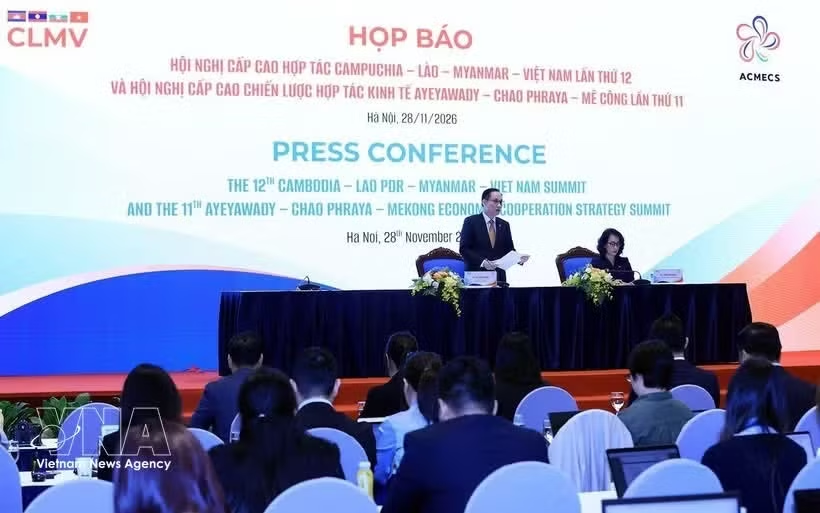
Minister of Foreign Affairs Le Hoai Trung chairs an international press conference on November 28 to brief the media on the outcomes of the 12th Cambodia-Laos-Myanmar-Vietnam (CLMV) Summit and the 11th Ayeyawady-Chao Phraya-Mekong Economic Cooperation Strategy (ACMECS) Summit. (Photo: VNA)
Differences in infrastructure quality, development levels, logistics capacity and administrative procedures continue to affect the movement of goods, capital and people across borders.
While transport links have improved, the benefits of physical connectivity cannot be fully realised without efficient customs procedures, coordinated regulations, digital infrastructure and stronger links between production centres and markets.
At the 12th CLMV Summit, Prime Minister Le Minh Hung emphasised that the 2027-2030 period should mark a qualitative leap in cooperation, with the four countries working towards becoming a regional logistics hub and an advanced business hub connected to global markets.
He proposed five guiding principles: leveraging the strengths of each country to build collective strength; making connectivity central to cooperation; pursuing long-term strategic and sustainable development; promoting integration and resource mobilisation; and ensuring tangible results.
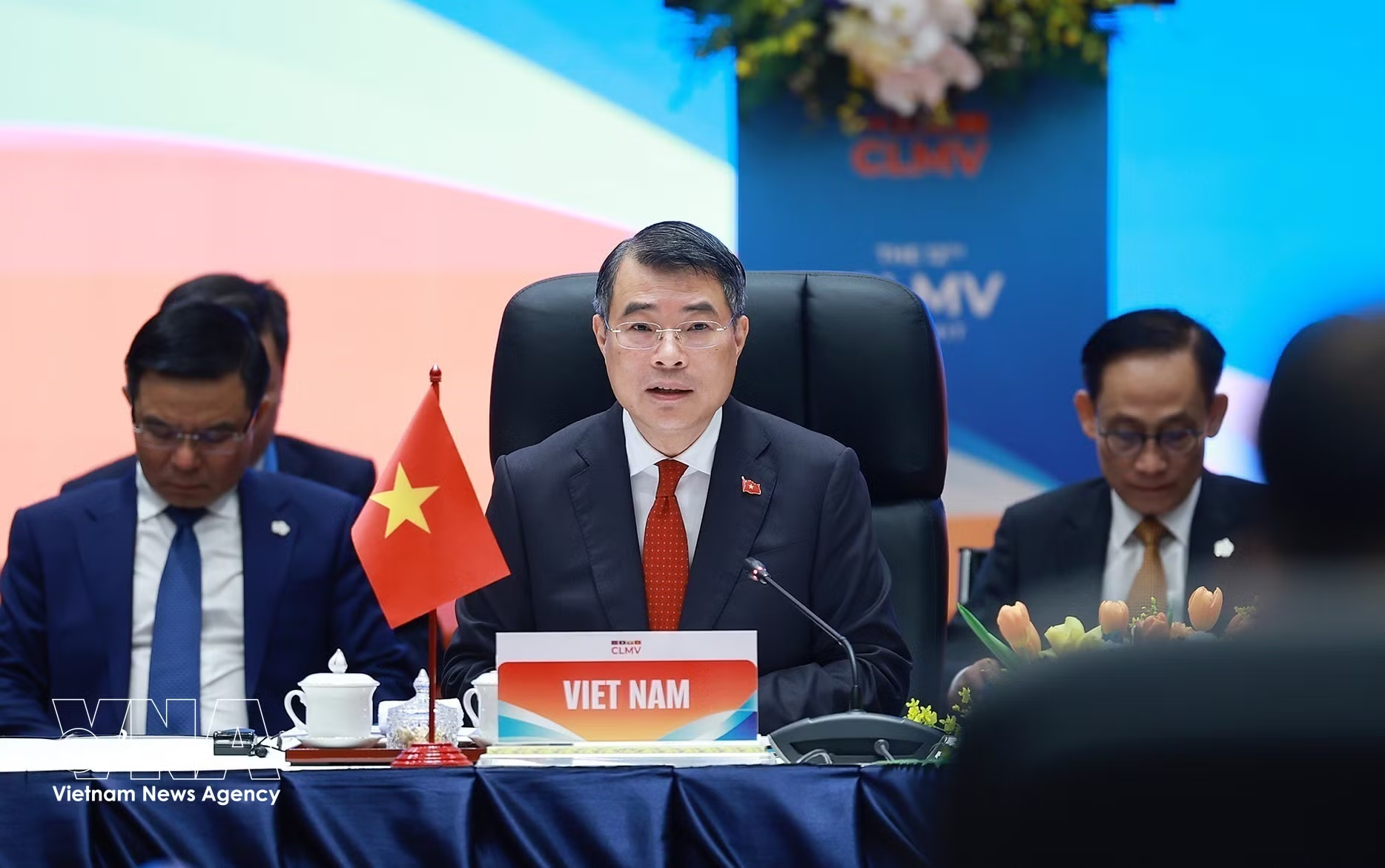
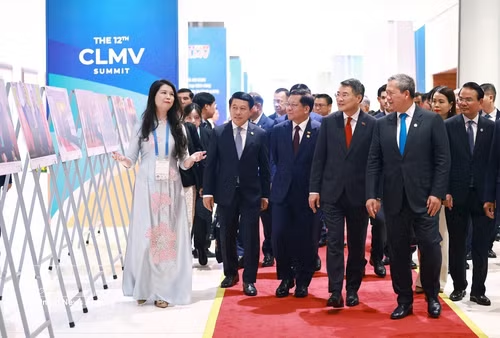
Prime Minister Le Minh Hung chairs the plenary session of the 12th Cambodia-Laos-Myanmar-Vietnam (CLMV) Summit. (Photo: Duong Giang/VNA)
The leaders agreed to strengthen transport connectivity along economic corridors, improve maritime transport and seaport links, develop smart logistics and promote electricity trade and renewable energy.
They also tasked ministers with studying the feasibility of establishing a joint CLMV production base, which would enable the four economies to complement one another and participate more deeply in regional value chains.
Such an approach could help transform the subregion from a collection of relatively separate markets into a more integrated production space, contributing to the formation of a unified ASEAN market.
The leaders also agreed to facilitate cross-border trade, apply smart border-gate models, develop cross-border economic zones and reduce customs clearance bottlenecks and logistics costs.
These priorities reflect the need to shift from connectivity measured mainly through infrastructure construction towards connectivity that generates economic value.
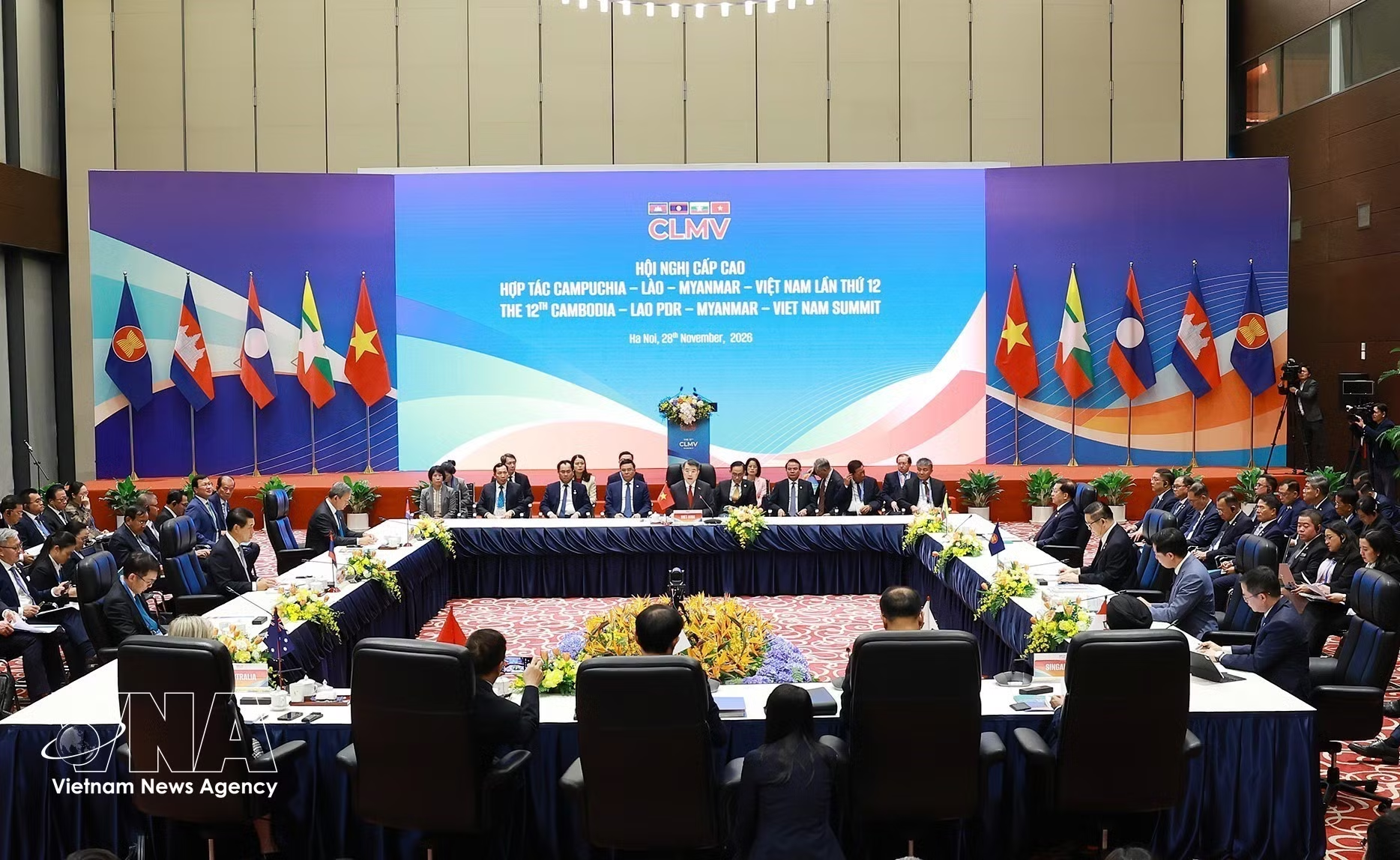
The plenary session of the 12th Cambodia-Laos-Myanmar-Vietnam (CLMV) Summit. (Photo: Duong Giang/VNA)
The same direction was emphasised at the 11th ACMECS Summit, where Prime Minister Le Minh Hung proposed expanding development space, strengthening economic connectivity and enhancing the subregion's competitiveness.
He called for seamless connections among production centres, cities, seaports, border gates and markets, alongside more effective development of the North-South, East-West and Southern Economic Corridors.
Strategic road and railway links connecting the five countries with the wider region were also highlighted, including routes linking China through the Mekong countries to Malaysia and Singapore, and an expressway connecting the subregion with India.
The proposal to develop a common Mekong agricultural products brand also reflects the need to strengthen regional value chains and improve the competitiveness of local products in international markets.
For the Mekong countries, these initiatives could create opportunities to attract investment, diversify production and reduce dependence on individual markets.
They could also enable businesses, particularly small and medium-sized enterprises, to benefit more directly from regional integration.
Nevertheless, the challenge will be ensuring that infrastructure investment is accompanied by coordinated policies and practical arrangements that allow businesses to use these connections efficiently.
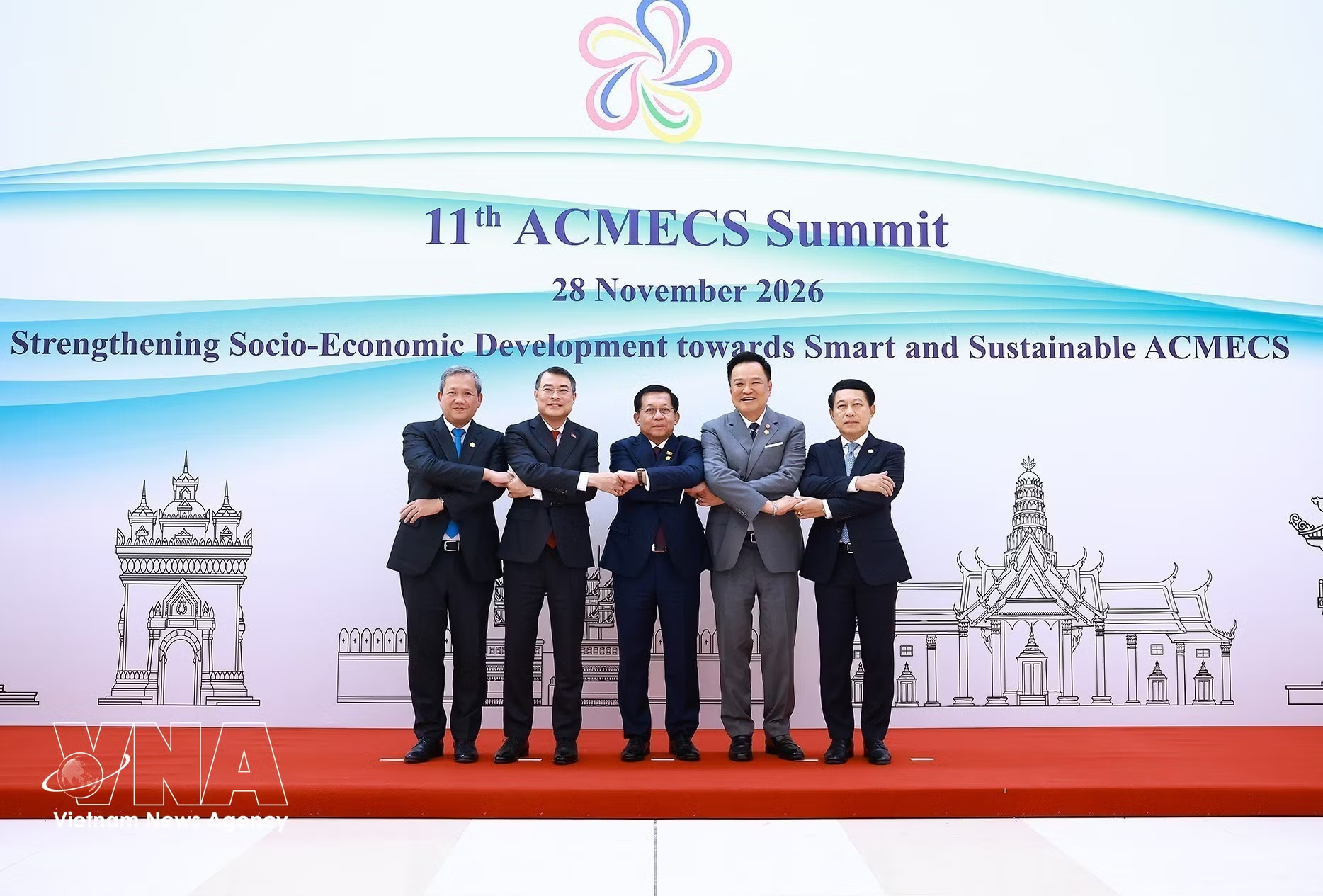
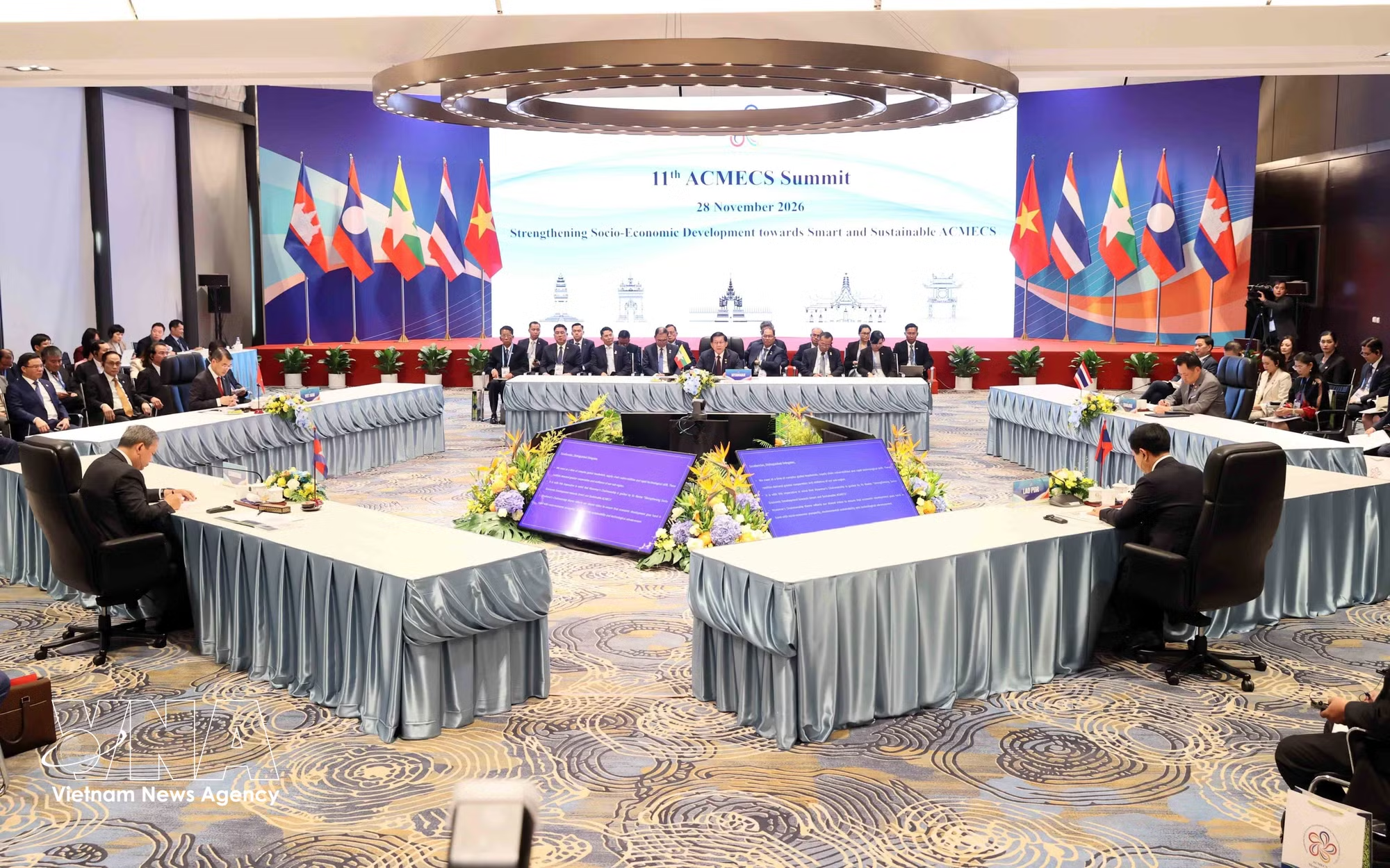
The 11th Ayeyawady-Chao Phraya-Mekong Economic Cooperation Strategy (ACMECS) Summit. (Photo: An Dang/VNA)
Shared challenges demand a collective response
The Mekong countries share not only development opportunities but also challenges that cannot be addressed effectively within national borders.
Environmental degradation, climate change, water-resource management, pollution and other transboundary issues require information-sharing, policy coordination and sustained cooperation. Their effects can spread across the region, making it important for countries to build common approaches and strengthen their capacity to respond.
The ACMECS framework provides an avenue for addressing these issues through dialogue and practical cooperation. At the Hanoi Summit, the countries reaffirmed the importance of environmental protection and sustainable water-resource management, alongside efforts to promote sustainable and smart growth.
“It can monitor and share data and information, help monitor the situation. This can be the platform through which ACMECS can help address transboundary issues.”
Dr. Charoensri noted that regional mechanisms may not be able to resolve the underlying causes of every conflict or transboundary problem. However, they can help countries monitor developments, share information and coordinate responses.
“It can provide mechanisms, methods or collaborations that can at least alleviate these challenges,” he said. “It can monitor and share data and information, help monitor the situation. This can be the platform through which ACMECS can help address these transboundary issues.”
His assessment points to a practical role for subregional cooperation. Even when countries have different interests or capacities, regular exchanges and shared information can help them understand emerging risks and identify areas where joint action is possible.
However, cooperation also depends on the ability of member countries to mobilise resources and sustain their commitments. Dr. Charoensri identified institutionalisation as one of the key challenges facing ACMECS.
“The challenge of ACMECS is its institutionalisation. If it doesn't have the power to gather or to pull resources from every member country to tackle these challenges, it might not be able to put more importance on ACMECS in the international arena,” he said.
This challenge is not unique to ACMECS. Subregional mechanisms often have ambitious objectives but limited institutional resources. Their ability to implement projects can be affected by funding constraints, differences in national priorities and dependence on external support.
Because they are smaller in size, they can move faster than ASEAN as a whole.
Dr. Vershinina similarly observed that the smaller scale of subregional frameworks can make decision-making more flexible, but this does not automatically translate into faster implementation.
“Because they are smaller in size, they can move faster than ASEAN as a whole,” she said.
Nevertheless, implementation has sometimes been slower than expected, with limited resources and a significant reliance on external funding.
She stressed that the value of these frameworks should not be measured solely by the number of projects completed. Their continued role in bringing countries together, maintaining regular interaction and building mutual trust is also important.
“They encourage regular interaction between these countries. It builds trust and contributes to a shared subregional identity,” she said.
This is particularly relevant in a region where development levels and national capacities differ. Sustained dialogue can help member countries identify common interests, manage differences and build the confidence needed to pursue longer-term cooperation.
The challenge for CLMV and ACMECS is therefore twofold: to improve the implementation of existing initiatives while strengthening their institutional capacity to respond to new and emerging issues.
ASEAN support and stronger institutional capacity
A Mekong project with ASEAN backing has a better chance of getting financed and supported.
The future of Mekong cooperation is closely linked to ASEAN’s wider integration agenda. Narrowing development gaps, strengthening connectivity and ensuring that all member countries can participate in regional growth are central to the vision of an integrated ASEAN Community.
The ASEAN Community Vision 2045 provides a long-term framework for this process. For subregional mechanisms such as CLMV and ACMECS, the task is to ensure that their priorities and projects contribute directly to ASEAN’s wider objectives.
Dr. Vershinina argued that ASEAN should provide more consistent support to the subregional frameworks, particularly in areas where their institutional and financial capacities remain limited.
“Subregional mechanisms such as CLMV and ACMECS do much of the work of closing these gaps, and ASEAN can and definitely should support them,” she said.
In her view, this does not require the creation of additional cooperation structures. Instead, ASEAN should make better use of existing mechanisms by providing the resources and institutional support they need.
“ASEAN doesn't need to create any new structures. It just needs to give existing ones what they lack: finance, institutionalisation and support, so they become building blocks of the future ASEAN Community.”
This is a significant point as the region seeks to make its many cooperation arrangements more coherent. The existence of several initiatives can provide countries with access to different partners and resources, but it can also lead to overlapping projects and fragmented implementation if coordination is insufficient.
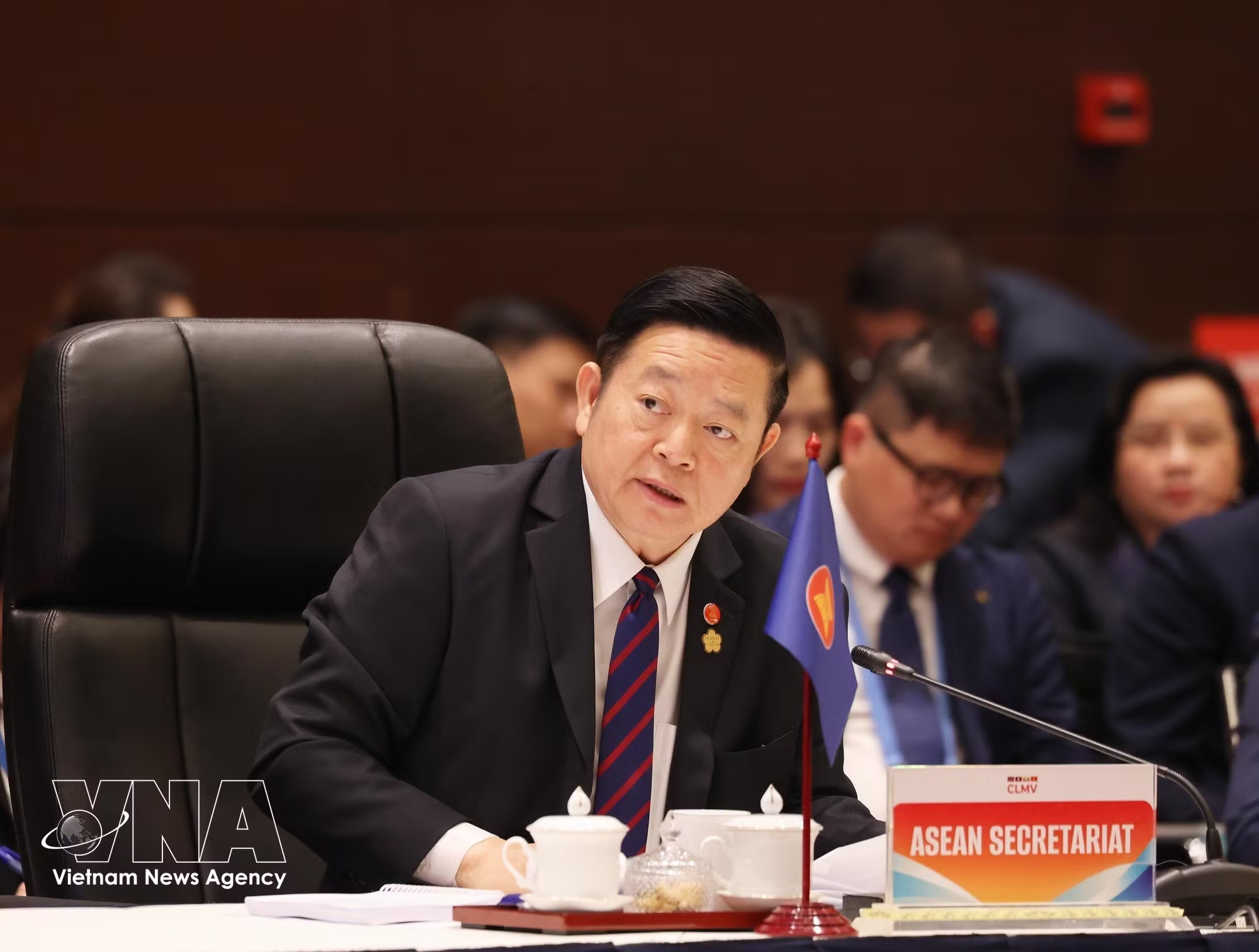
ASEAN Secretary-General Kao Kim Hourn speaks at the 12th Cambodia-Laos-Myanmar-Vietnam (CLMV) Summit. (Photo: Lam Khanh/VNA)
ASEAN could help address this by mapping projects across the different frameworks, promoting regular consultations and providing technical support to subregional mechanisms. It could also help align CLMV and ACMECS priorities with broader regional plans, including the ASEAN Connectivity Strategic Plan and the Initiative for ASEAN Integration.
Greater coordination would make it easier to identify projects that require additional financing and to bring them to the attention of development partners and international financial institutions.
Dr. Vershinina suggested that projects with clear links to ASEAN-wide priorities would have a stronger basis for attracting support from dialogue partners and institutions such as the Asian Development Bank and the World Bank.
“A Mekong project with ASEAN backing has a better chance of getting financed and supported,” she said.
Vietnam’s role as a bridge in Mekong cooperation
Vietnam opened the door for the CLMV group, and it goes beyond symbolism today.
Vietnam occupies a distinctive position in the CLMV and ACMECS frameworks, given its geographical location, economic development and long-standing relationships with the other Mekong countries.
Its role in CLMV cooperation is also linked to its experience of ASEAN integration. Vietnam joined ASEAN in 1995, ahead of Laos, Myanmar and Cambodia, and supported the participation of its neighbouring countries in the regional organisation. The four countries subsequently became members of ASEAN within a relatively short period.
Dr. Vershinina described Vietnam’s early membership as an important factor in the development of the CLMV group.
“In a sense, Vietnam opened the door for the CLMV group, and it goes beyond symbolism today,” she said.
Vietnam’s experience of economic reform, trade liberalisation and deeper integration into global value chains offers lessons for its neighbours, particularly Cambodia, Laos and Myanmar, which continue to face different stages of economic and institutional development.
As the largest and one of the fastest-growing economies in the CLMV group, Vietnam has become an important partner in regional development. Its economic scale, production capacity and expanding international connections give it the potential to contribute to wider cooperation, including through infrastructure, trade and investment.
Dr. Vershinina said Vietnam’s development experience had made it a partner and a reference point for the other CLMV countries. She also highlighted Vietnam’s involvement in promoting major economic corridors, including the East-West and Southern Economic Corridors.
Vietnam’s role is not limited to economic cooperation. Its geographical position and close ties with Cambodia and Laos, as well as its engagement with Myanmar, give it a direct interest in the stability and sustainable development of the wider Mekong region.
For Vietnam, the prosperity of neighbouring countries is closely connected with its own development prospects. Stronger transport and trade links can expand markets and improve access to regional supply chains, while cooperation in water resources and environmental protection is essential to the long-term sustainability of the Mekong basin.
The size of its population, the high level of economic growth and opportunities have helped make Vietnam one of the powerhouses or main economic development drivers in the subregion.
Dr. Charoensri also emphasised Vietnam’s growing economic importance in the subregion, pointing to its population, economic growth and development opportunities.
“The size of its population, the high level of economic growth and opportunities have helped make Vietnam one of the powerhouses or main economic development drivers in the subregion,” he said.
He also highlighted the potential for Thailand and Vietnam to work together in supporting neighbouring countries, particularly through infrastructure development, maintenance and the transfer of technical knowledge.
Such cooperation could help create a more balanced development environment across mainland Southeast Asia. As the two countries strengthen their own economic links, they can also contribute to improving the capacity of their neighbours and expanding the benefits of regional integration.
As Chair, Vietnam can act as a bridge, turning these subregional priorities into an ASEAN-wide agenda.
Vietnam’s role is also reflected in its ability to connect subregional priorities with wider ASEAN objectives. As chair of the CLMV framework, Vietnam can help ensure that the concerns and development needs of the four countries are heard in regional discussions and translated into broader cooperation initiatives.
Dr. Vershinina underlined the close relationship between the unity of CLMV and the cohesion of ASEAN.
“Vietnam understands that ASEAN unity depends on the unity of Cambodia, Laos, Myanmar and Vietnam. And as Chair, Vietnam can act as a bridge, turning these subregional priorities into an ASEAN-wide agenda,” she said.
This bridging role is particularly important as ASEAN seeks to deepen integration while accommodating differences in development levels and national capacities. By helping its neighbours strengthen their participation in regional cooperation, Vietnam can contribute to a more inclusive and cohesive ASEAN Community.
At the same time, Vietnam’s leadership will depend on its ability to work with all partners, build consensus and support initiatives that offer practical benefits to the entire subregion. Its influence will be most effective when it is exercised through cooperation and the shared interests of the five countries.
From shared vision to tangible results
The CLMV-12 and ACMECS-11 summits in Hanoi came at a time when the Mekong countries are seeking new ways to strengthen their resilience and expand their development opportunities.
Their discussions reflected a broad consensus: the region needs stronger infrastructure and economic connectivity, closer institutional cooperation, greater investment in human resources and a more coordinated approach to shared challenges.
The initiatives put forward in Hanoi provide a basis for advancing these priorities. The proposed CLMV Smart Dry Port Corridor, CLMV Heritage Journey, common production base, agricultural cooperation and expanded scholarship programme offer practical ways to connect the countries’ economic and human development agendas. Meanwhile, the ACMECS agenda on sustainable and smart growth, institutional connectivity and the management of shared resources points to the need for more coordinated regional responses.
But the success of these initiatives will depend on what happens after the summits. Political commitments need to be followed by effective coordination, adequate resources and sustained implementation. The five countries will also need to ensure that new initiatives complement existing programmes and contribute to a coherent vision for the subregion.
For Dr. Vershinina, the priority is not to create more cooperation structures, but to make existing ones work better through stronger institutional and financial support. For Dr. Charoensri, ACMECS must strengthen its ability to mobilise resources and coordinate action if it is to fulfil its potential as a platform for mainland Southeast Asia.
Their assessments point to a common conclusion: the Mekong countries already have a substantial network of cooperation mechanisms. What matters now is their ability to use these frameworks more effectively to address shared needs and deliver concrete benefits.
Vietnam’s position gives it an important role in this process. Its experience of regional integration, economic development and cooperation with neighbouring countries provides a foundation for helping CLMV and ACMECS move forward. By connecting national priorities with subregional initiatives and ASEAN’s wider agenda, Vietnam can help strengthen the links between the five countries and support a more inclusive regional community.
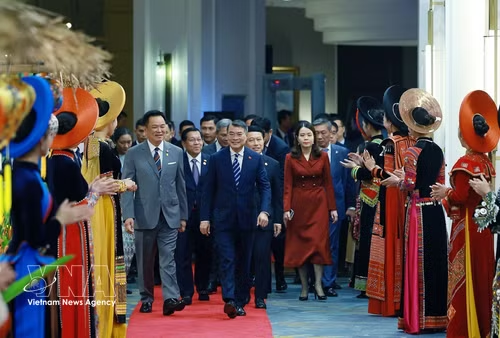
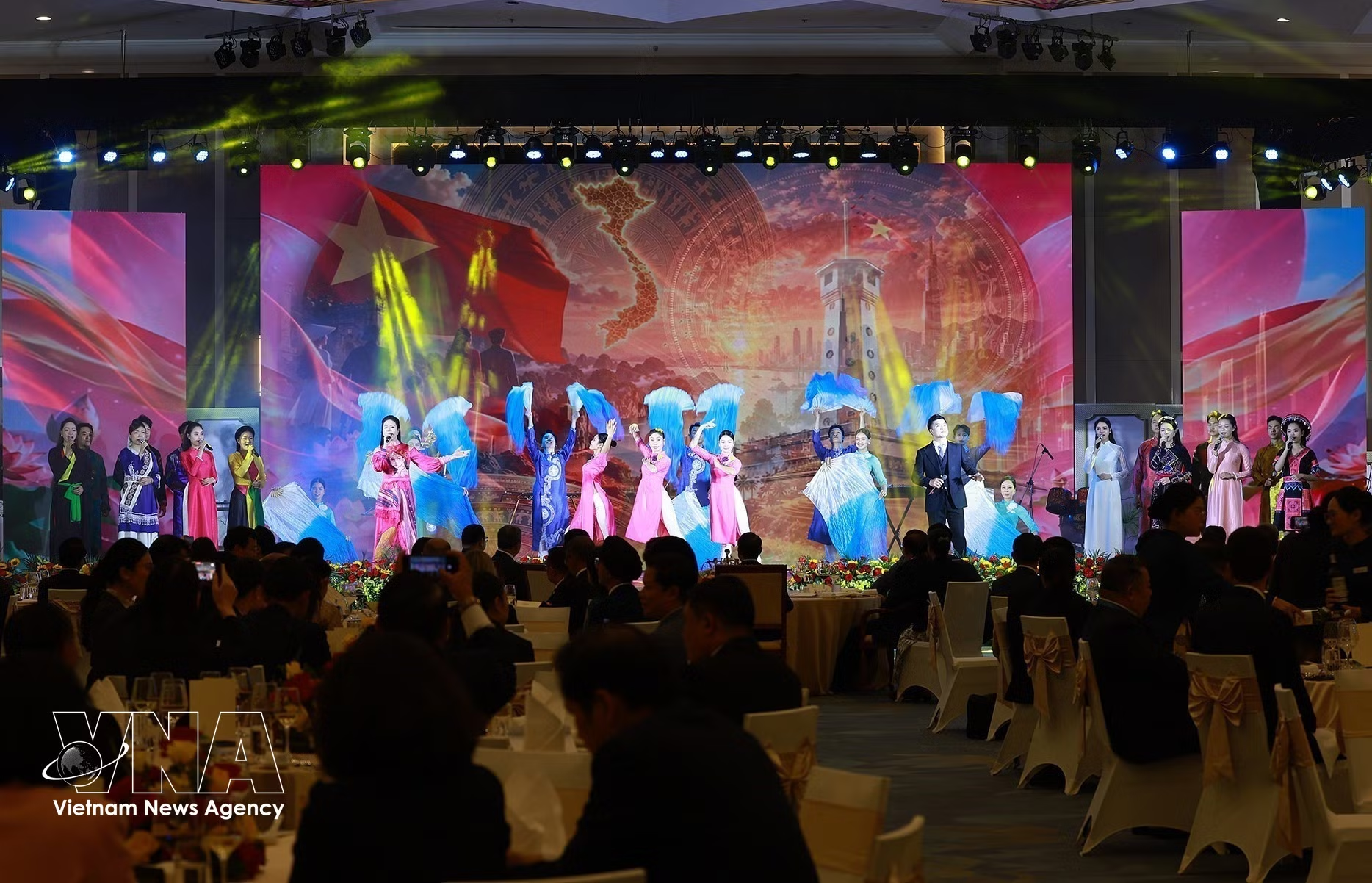
The CLMV-12 and ACMECS-11 summits in Hanoi came at a time when the Mekong countries are seeking new ways to strengthen their resilience and expand their development opportunities. In photo: Prime Minister Le Minh Hung and heads of delegations attend a reception celebrating the success of the 12th Cambodia-Laos-Myanmar-Vietnam (CLMV) Summit and the 11th Ayeyawady-Chao Phraya-Mekong Economic Cooperation Strategy (ACMECS) Summit. (Photo: Duong Giang/VNA)
The 12th CLMV and 11th ACMECS summits have set out an ambitious agenda for the next stage of Mekong cooperation.
The adoption of the CLMV Joint Statement and the Nay Pyi Taw Joint Declaration of the 11th ACMECS Summit, together with new initiatives and implementation arrangements, reflects a shared determination to strengthen connectivity and expand development opportunities across the subregion.
As the five countries look towards the next stage of cooperation, the challenge is to turn their shared vision into sustained action. Stronger institutions, more effective partnerships and a clear focus on practical results will be essential to making the Mekong subregion a more connected, resilient and prosperous part of ASEAN./.
With the CLMV and ACMECS summits taking place in Hanoi, Vietnam's role in fostering closer ties among Mekong countries is in focus. Two international experts have discussed the significance of these cooperation mechanisms, emerging regional priorities and how Vietnam can help translate shared commitments into concrete benefits for the subregion.
All Mekong sub-regional countries attach great importance to and have high expectations for the summits, hoping the events to reach agreement on new cooperation orientations and make an important shift in priorities and delivery, so the two mechanisms produce more tangible benefits for members and for regional peace, stability, friendship, cooperation and development.
Beyond promoting physical fitness, Vietnamese traditional martial arts are increasingly serving as a cultural bridge, connecting Vietnam with the rest of the world.
Vietnam Culture Day on November 24 provides an opportunity to honour and promote the nation’s traditional cultural values. To turn culture into a resource for sustainable tourism, however, celebrations should go beyond commemorative events, creating opportunities for people and visitors to experience and practise cultural traditions, and strengthen their responsibility for preserving and promoting heritage.
From singer Hoa Minzy’s music video (MV) “Bac Bling”, which garnered 100 million views 28 days after its release, to young singer Duc Phuc’s victory at Intervision 2025, and subsequent albums by young Vietnamese artists incorporating Xoan singing, Ca tru (ceremonial singing) and Khmer folk music into contemporary rhythms, all demonstrate that the most effective way to preserve heritage is to make it a living source of inspiration that resonates with young audiences at home and abroad.
Vietnam is taking steps towards realising its ambition of bringing water puppetry, one of the country's distinctive cultural treasures, to the international stage, following the Government's approval in principle of the preparation of a scientific dossier seeking UNESCO recognition for the art form as an outstanding intangible cultural heritage. This marks a strategic move in preserving and promoting Vietnamese cultural identity amid deeper international integration.
The 950th founding anniversary of Quoc Tu Giam (Imperial Academy), Vietnam’s first national university, is an occasion to reaffirm the enduring values of the country's tradition of learning, respect for teachers, and promotion of talent, which have shaped the nation’s intellectual foundations and continue to support its development in a new era.
Phu Quoc special zone in the southern province of An Giang is being positioned as a nationally and internationally recognised centre for eco-tourism and a driving force for the marine economy. It now faces an urgent need to shift towards a green and sustainable growth model.
An open institutional framework and a transparent, stable business environment are essential for encouraging enterprises to make long-term investments. In recent years, the Party, National Assembly and Government have continued to promote administrative reform, address obstacles to investment and business activities, and support new growth drivers.
Vietnam’s growing seaport infrastructure and increasing cargo volumes create opportunities for developing maritime finance and premium shipping services. Strategically located, it is emerging as a key link in the global maritime transport and logistics chains.
Hanoi is facing a growing imperative to shift from development mindset limited by administrative boundaries toward one focused on regional spatial growth. Politburo’s Resolution No. 27-NQ/TW, issued on August 28, 2026, on regional development and the organisation of national development space for the new period, identifies the Hanoi metropolitan area as one of the country’s two major growth poles and urges stronger connections in infrastructure, economy, science and technology, and resources between the capital and localities.
The South Central Coast and Central Highlands hold a strategic position linking domestic and international regions, serving as a driving force for the development of the marine economy, commercial agriculture, and national security and defence.
Under a March 17, 2026 action plan from the municipal Party Committee, which follows the Politburo’s Resolution 80-NQ/TW dated January 7, 2026, on Vietnamese cultural development, the city is moving beyond preservation alone. It is now upholding heritage values while developing cultural products, spaces and markets tied to innovation and global integration.
Amid the rapid development of the Fourth Industrial Revolution, artificial intelligence (AI) is changing the way people learn, work and communicate. For persons with disabilities (PwDs), AI is opening up new opportunities to overcome barriers once considered insurmountable, narrow the digital divide, and promote an inclusive society where no one is left behind.
Fostering a learning society is a steadfast policy of the Party and State, aimed at ensuring equitable access to education, promoting lifelong learning, and enabling holistic personal development.
From a river serving flood prevention and forming a natural boundary between urban areas, the Red River is being repositioned by Hanoi as a strategic axis in the capital’s master plan with a 100-year vision.
When history is told through human stories, using modern cinematic language and backed by adequate investment, films can both nurture patriotism and national pride and become competitive cultural industry products. This is also a way for cinema to help turn the spirit of Politburo Resolution No. 80-NQ/TW into reality by transforming Vietnamese values into an internal resource and a source of national soft power.
Three decades after establishing diplomatic relations, alongside figures on trade, investment, and increasingly broad cooperation frameworks, another quiet but profound change has taken place. People who once stood on opposite sides of the war are now working together to search for the missing, return memorabilia, share records and help Vietnamese families recover traces of loved ones that seemed to have been erased by time.
More than 5,400 craft villages and villages with craft activities provide a rich and distinctive resource for Vietnam’s tourism sector, especially as interests are shifting from sightseeing and shopping to exploring local lifestyles.However, simply attracting visitors or adding destinations to tours is only a first step. Craft village tourism is sustainable only when local artisans and residents benefit from it, and it breathes new life into the places where the crafts originated.
Ho Chi Minh City aims to become one of Asia’s top logistics and international transshipment hubs by 2045, while transforming into a smart and sustainable coastal city.
While there’s plenty of positive content online, misinformation, harmful material, and inappropriate behavior have also become an issue. That’s why the Ministry of Culture, Sports and Tourism introduced the Code of Conduct for Cultural Behaviour in the Digital Environment, aiming to guide how organisations and individuals act on online platforms, boost their sense of responsibility, and encourage positive values in the digital space.
The list of six priority strategic technology products set out in the Prime Minister's Decision No. 2815/QD-TTg demonstrates an important shift in policy-making thinking, with businesses playing the central role in the innovation ecosystem and serving as the core element in the country’s goal of double-digit growth in the new era.