Vientiane (VNA) - The public security forces of Vietnam and Laos have agreed to step up comprehensive cooperation and personnel training as well as in Party and political affairs, with a focus on improving coordination in crime prevention and control and strengthening the professional capacity of their police forces.
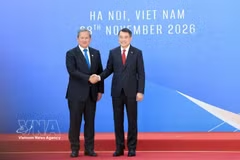
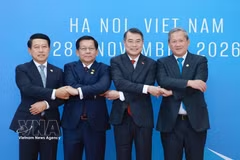
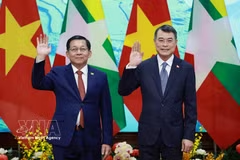
The agreement was reached during a working visit to Laos on November 27-28 by a high-ranking delegation from the Vietnamese Ministry of Public Security, led by Deputy Minister Senior Lieutenant General Le Quoc Hung.
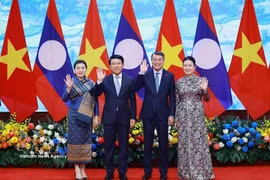
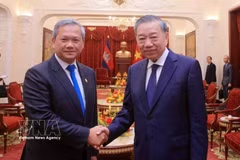
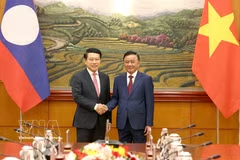
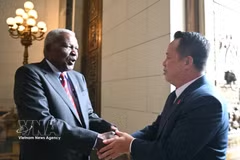
On November 27, Hung paid a courtesy visit to Lao Minister of Public Security Senior Lieutenant General Vanthong Kongmany.
Conveying greetings from Vietnamese Minister of Public Security General Luong Tam Quang, Hung affirmed that Vietnam-Laos relations have continued to develop positively across all fields, with defence and security serving as important pillars of the bilateral ties.
He highlighted the two ministries' effective coordination in combating crime, personnel training and force building, and proposed further facilitating joint operations by security and police task forces. He also called for more targeted training programmes based on Laos's needs, exchanges of delegations, lecturers and experts, and short-term courses on emerging professional fields.
Hung particularly proposed the Lao side send teachers to provide Lao-language training for Vietnamese police officers, especially those working in communes along the shared border.
Vanthong spoke highly of cooperation between the two countries and their public security ministries, particularly Vietnam's practical assistance in implementing projects and providing political training for the Lao People's Public Security Force. He called for closer coordination to make bilateral cooperation deeper and more effective.
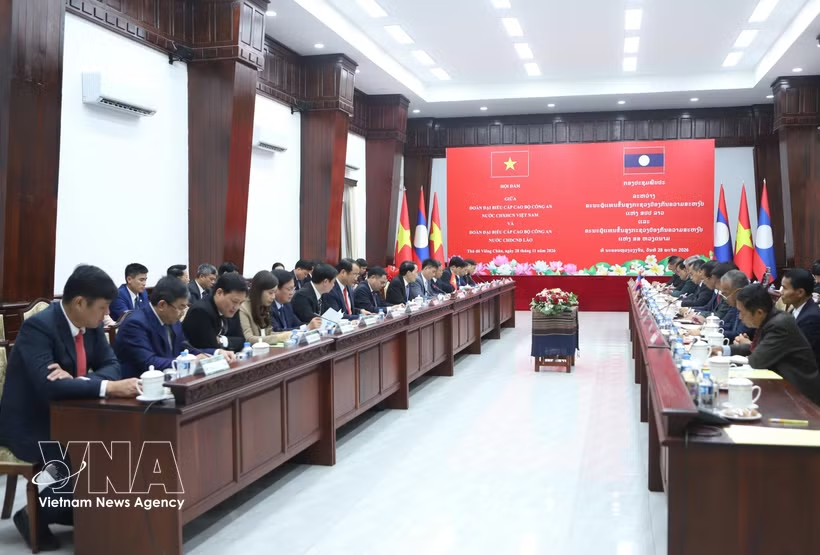
On November 28, the two ministries held talks on personnel training, Party affairs and political work, and agreed on a Lao-language training programme for Vietnamese commune-level police officers stationed in localities bordering Laos.
At the meeting, Lao Deputy Minister of Public Security Lieutenant General Soulina Keopasert said the talks were important for implementing cooperation agreements between the two ministries as both countries are implementing the resolutions of the 12th National Congress of the Lao People's Revolutionary Party and the 14th National Congress of the Communist Party of Vietnam.
From January to November 2026, the two sides coordinated in dismantling 172 cases involving telecommunications fraud and online gambling, detaining 11,056 suspects, including 2,276 women, from 31 countries. They seized numerous exhibits and deported 10,383 offenders to their home countries.
In personnel development, the Vietnamese ministry has helped improve the professional qualifications of 365 Lao police officers, including 116 women. It has also organised political affairs training for senior Lao police officers and joint courses on science and strategic studies.
The Lao side proposed further Vietnamese support through scholarships and training, particularly for commune-level police, as well as assistance in developing information technology curricula and doctoral programmes at two academies under the Lao ministry.
Other proposals included expert exchanges, support for training in Party building and state administration, and continued research into the special cooperation between the two countries' public security forces during 1961-2026.
Addressing the talks, Hung affirmed that the Vietnamese ministry would continue standing alongside and providing practical support to its Lao counterpart within its capacity. On this occasion, the Vietnamese delegation presented 20 laptops to the Lao Ministry of Public Security's General Department of Politics.
Earlier on November 28, the two ministries jointly held an international scientific seminar in Vientiane under the theme of cooperation in leadership and command training, and Party and political affairs to meet new requirements.
Co-chaired by Hung and Soulina, the event brought together nearly 200 delegates, including officials, researchers and lecturers.
Ten in-depth presentations examined the theoretical and practical foundations of bilateral cooperation and proposed measures to improve personnel training and political work./.