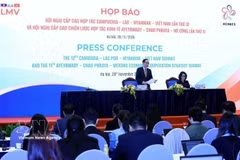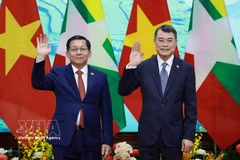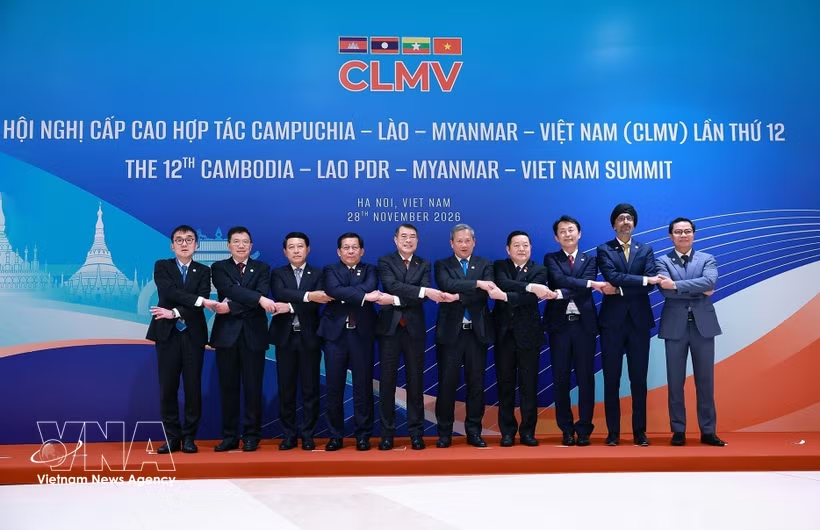
Hanoi (VNA) - Prime Minister Le Minh Hung has proposed five major guiding principles for Cambodia-Laos-Myanmar-Vietnam (CLMV) cooperation in the new phase, emphasising stronger connectivity, closer economic integration and more effective resource mobilisation.
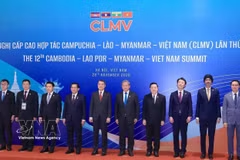
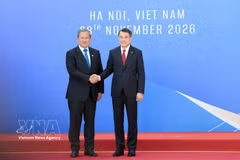
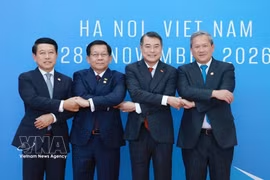
The Vietnamese government leader made the proposal at the opening session of the 12th Cambodia-Laos-Myanmar-Vietnam (CLMV) Summit in Hanoi on November 28 afternoon under the theme “Connecting CLMV Connectivity – Harnessing Potential – Building a Prosperous Future”.
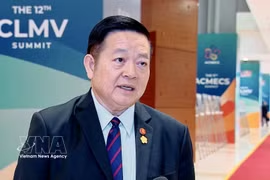
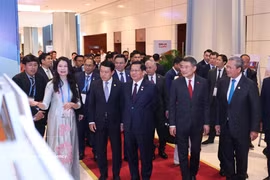
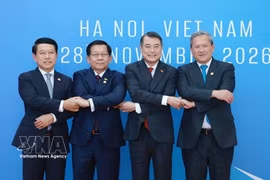
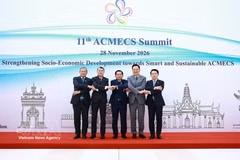
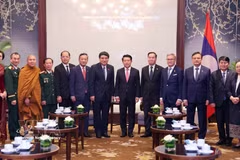
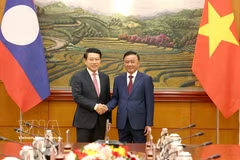
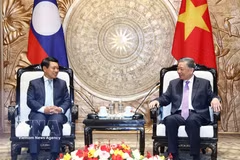
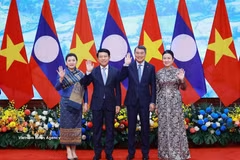
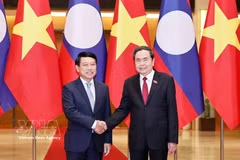
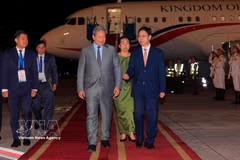
The summit brought together Cambodian Prime Minister Hun Manet, Lao Prime Minister Saleumxay Kommasith, Myanmar President Min Aung Hlaing, ASEAN Secretary-General Kao Kim Hourn, as well as representatives of development partners, international organisations and major regional businesses.
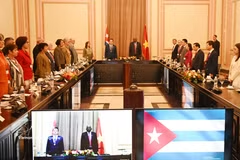
PM Hung chaired the opening session, the meeting of the CLMV leaders and the summit's plenary session.
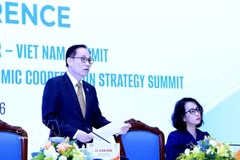
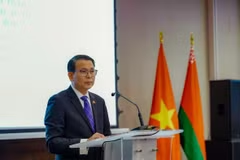
In his opening remarks, the Vietnamese PM highlighted the achievements of more than two decades of CLMV cooperation, which have helped promote economic integration, gradually establish the subregion as a dynamic growth pole, and make positive contributions to the building of the ASEAN Community.
To ensure that CLMV cooperation keeps pace with profound global changes and helps member countries achieve their development goals, he proposed five guiding principles for cooperation in the new period. They include leveraging the four countries’ strengths to build collective strength, making connectivity central to cooperation, pursuing long-term strategic and sustainable development, promoting integration and resource mobilisation, and ensuring tangible results.
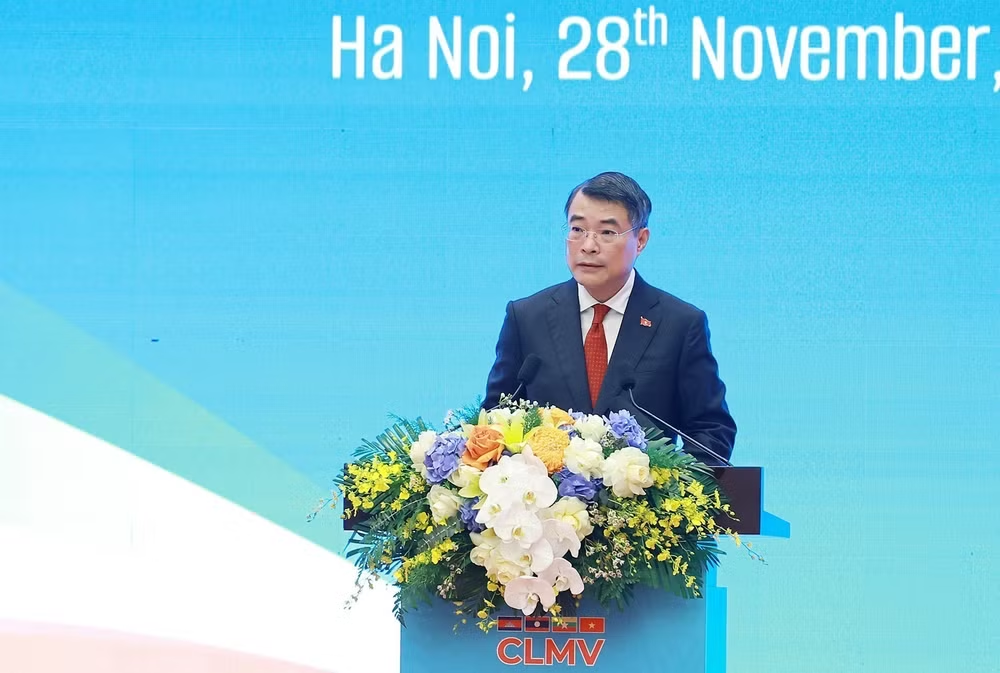
At the meeting of the CLMV leaders, PM Hung stressed that the 2027-2030 period should mark a qualitative leap in CLMV cooperation, with the goal of positioning the four countries as a regional logistics hub and an advanced business hub with global connectivity.
The leaders held open, frank and candid discussions on the role and strategic direction of CLMV cooperation in the new period, as well as measures to remove existing bottlenecks and capitalise on the mechanism's strengths.
They agreed on a range of measures to generate breakthroughs in cooperation, toward building the four countries into a regional logistics hub and an advanced business hub connected to global markets.
The leaders also endorsed the five proposals put forward by the Vietnamese Prime Minister to turn the four countries' individual strengths into collective economic power, develop shared value chains and expand resources for development.
The proposals focus on removing barriers to ensure the smooth flow of goods, capital and labour, developing joint production bases and supply chains, renewing approaches to mobilise resources and maximise the private sector’s role, redefining CLMV’s regional role, and translating political commitments into concrete actions and tangible outcomes.
At the plenary session, leaders, regional partners and business representatives held extensive discussions on ways to unlock the four countries’ potential, strengthen their connectivity and mobilise resources more effectively for development. They underscored the CLMV mechanism’s mission of promoting policy coordination and joint action among Cambodia, Laos, Myanmar and Vietnam to maintain regional peace, stability and prosperity.
They also reaffirmed their determination to realise the vision set out in the CLMV Development Framework, with the aim of helping member countries become sustainable upper-middle-income economies by 2030.
Addressing the event, PM Hung stressed that Vietnam consistently attaches great importance to and gives high priority to cooperation among the four countries. He described them as friendly neighbours and important economic partners with considerable potential to expand their collaboration.
To take CLMV cooperation into a new phase and establish a “common production base”, the Vietnamese leader proposed three strategic connectivity pillars.
First, focus should be placed on infrastructure and logistics connectivity, with the aim at ensuring seamless economic corridors, generating added value and driving economic growth. In this regard, he proposed a four-country smart dry port corridor initiative, under which the countries will study the selection of an initial pilot route linking existing dry ports with border gates, airports and seaports to create seamless transport networks. He also called for accelerated digitalisation of procedures and data connectivity to reduce transport time and costs.
Second, he suggested enhancing economic connectivity, focusing on the formation of common production and supply chains. The four countries should consider establishing industrial cooperation zones and cross-border economic cooperation areas, with a focus on high-value-added processed products. He also proposed developing a four-country agricultural supply chain linking raw material production areas with industrial zones, processing facilities and distribution networks. This will provide businesses with a stable basis for long-term investment, ensure reliable markets for farmers and gradually build a common brand for the subregion’s agricultural products.
Third, he stressed the importance of connectivity among people, cultural cooperation and environmental protection, which will provide a foundation for sustainable development. The Vietnamese PM called on member countries to strengthen cooperation in the management and sustainable use of water resources, ecosystem protection and conservation of the subregion’s natural resources. He also proposed a CLMV Heritage Journey Initiative to link heritage sites into cross-border tourism routes, enabling the four countries to jointly tell the stories of civilisations along the Mekong River. In addition, Vietnam pledged to upgrade its CLMV Scholarship Programme 2.0, expanding it to postgraduate and vocational training, with courses delivered in both Vietnamese and English languages.
PM Hung affirmed that Vietnam stands ready to continue close coordination with member countries, the ASEAN Secretariat and partners to translate these priorities into key programmes for 2027–2028, and promote public-private partnerships and joint projects with other Mekong subregional cooperation mechanisms.
At the summit, leaders agreed to strengthen transport connectivity along the subregion’s economic corridors, maritime transport and seaport links, smart logistics and the development of an efficient logistics ecosystem. They also agreed to promote electricity trade and renewable energy development.
The participants reached consensus on stepping up cross-border trade facilitation, applying smart border-gate models, developing cross-border economic zones and maintaining a favourable environment for foreign direct investment so as to help CLMV businesses participate more deeply in regional value chains.
They tasked sectoral ministers with studying the potential for developing CLMV into an integrated production base, taking into account each country’s level of development and specific conditions, while contributing to the formation of a unified ASEAN market. Ministers were also assigned to explore the development of CLMV agricultural supply chains, focusing on high-value-added processed products.
The summit agreed on specific measures to improve responses to natural disasters and climate change, and promote the sustainable and equitable management of Mekong River water resources. Cooperation in education, culture, tourism and the fight against transnational crime will also be stepped up. Leaders encouraged development partners, international and regional financial institutions, and the private sector to increase their participation and contributions to CLMV cooperation.
Member countries and partners spoke highly of the initiatives and cooperation orientations proposed by Vietnam, pledging closer coordination in implementing priority areas. They also agreed to further promote the CLMV mechanism’s role in strengthening economic connectivity and regional integration, thereby making a greater contribution to ASEAN Community building.
At the conclusion of the summit, leaders adopted the Joint Statement of the 12th CLMV Summit and two initiatives proposed by Vietnam: the four-country smart dry port corridor and the CLMV Heritage Journey.
For the first time, the CLMV Summit Joint Statement placed particular emphasis on strengthening strategic connectivity among the four countries through three pillars, namely infrastructure and logistics; economic cooperation; and people-to-people connectivity and environmental cooperation, especially the sustainable and equitable management of Mekong River water resources.
Following the summit, at the ceremony to transfer the CLMV chairmanship, PM Hung officially handed over the role to the Prime Minister of Cambodia, marking the conclusion of Vietnam’s two-year chairmanship of the cooperation mechanism./.