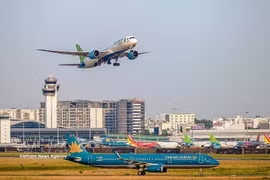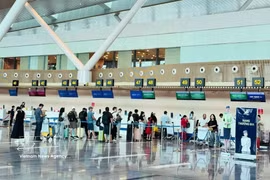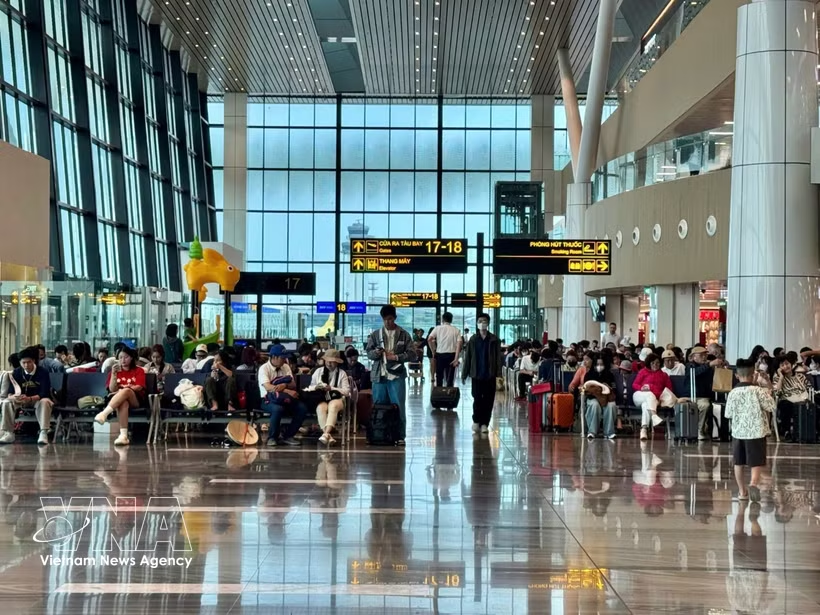
Ho Chi Minh City (VNA) – The appearance of unmanned aerial vehicles (UAVs) near Tan Son Nhat International Airport in Ho Chi Minh City on August 11 directly affected 73 flights, with many forced to circle or divert to alternate airports, according to the Vietnam Air Traffic Management Corporation (VATM).
According to VATM, UAVs were detected twice near the airport over more than two hours, from 6 pm to 8 pm, disrupting flight operations. In response, the corporation simultaneously implemented measures at the airport and coordinated air traffic flows, prioritising safety while minimising disruptions to other flights.
Upon receiving reports from flight crews of UAV sightings near the airport, VATM temporarily restricted takeoffs and landings. Departing flights were held while the situation was being assessed, while arriving aircraft were instructed to enter holding patterns at appropriate locations.
VATM also proactively coordinated air traffic flows to control the number of arriving and departing aircraft while the airport’s operational capacity was restricted. It contacted air traffic flow management centres in Thailand and China to inform them of the situation and requested compliance with assigned Calculated Take-Off Times (CTOTs) for international flights bound for Tan Son Nhat airport.
According to the Air Traffic Flow Management Centre, more than 50 flights were required to enter holding patterns, including 27 that were diverted or landed at alternate airports. The measures were implemented in line with approved air traffic flow management procedures and the airport’s operational capacity at each stage, ensuring aircraft did not approach the airport when safety conditions were not met.
The simultaneous response at two levels - direct operations at the airport and air traffic flow management - enabled VATM to proactively control aircraft traffic, ease pressure on the airport, and limit the risk of disruptions spreading to other areas, flight routes and airports.
VATM said it will continue reviewing and improving UAV response procedures and strengthen practical training for air traffic controllers. It will also enhance UAV detection and early-warning capabilities to proactively address emerging risks to aviation safety./.