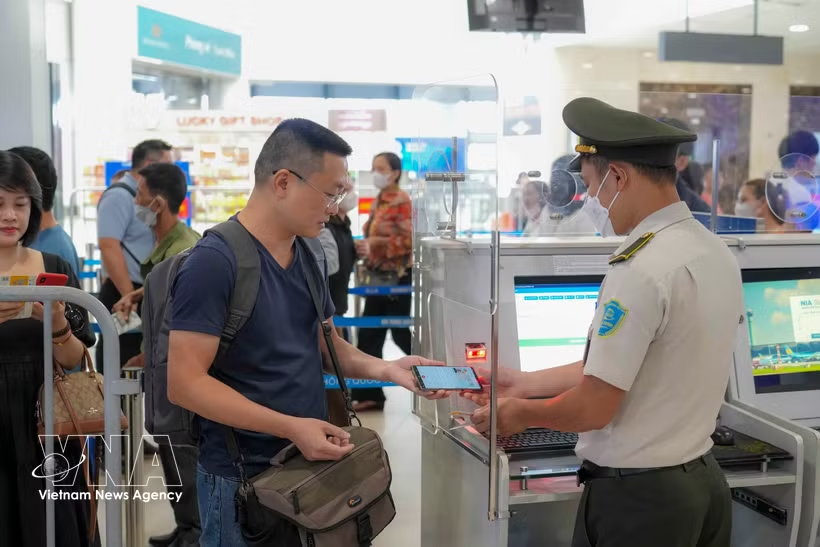
Hanoi (VNA) - From applying for e-visas and registering for digital identification to accessing online public services, foreigners in Vietnam are enjoying increasingly convenient experiences as the country advances its digital transformation.
Beyond streamlining administrative procedures, these changes reflect Vietnam’s efforts to build an integrated, user-centred digital ecosystem, improving service quality while enhancing the country’s appeal as a destination for investment, study, work and tourism.
Digital transformation through foreigners’ experiences
From the perspective of foreigners, Vietnam’s digital transformation is reflected not only in the growing number of online platforms and public services, but also in the simpler and more convenient experience of handling everyday administrative procedures.
Csaba Bundik, former Director of EuroCham Vietnam, who has lived in Vietnam for nearly two decades, described the introduction of Level-2 electronic identification for foreigners as a particularly significant step for foreigners residing in Vietnam long term.
He noted that in the past, even routine administrative procedures required foreigners to carry passports, prepare multiple copies of documents and deal with different agencies.
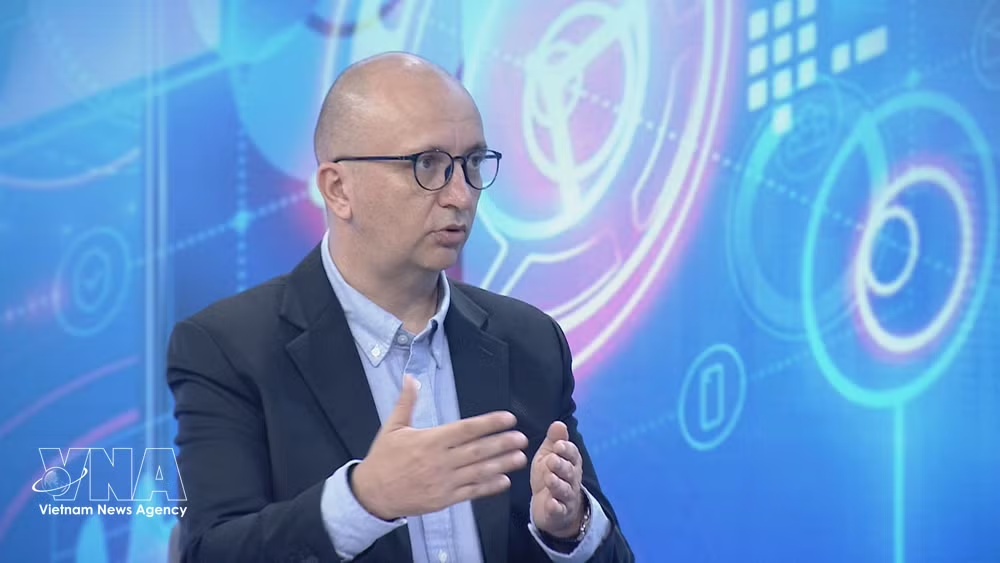
Establishing a unified digital identity for public services, banking transactions, rental arrangements and residence procedures would significantly simplify the process. This can save a considerable amount of time, and in both business and daily life, time is money, he said.
Ollie Arci, a senior editor at an international risk consultancy with an office in Hanoi, also noted significant changes in Vietnam’s digital transformation from a user’s perspective. He said he is really impressed by the speed at which Vietnam is moving from paper-based management systems to digital platforms.
According to Arci, the rollout of VNeID for foreigners has been relatively smooth, while QR-code payments are promoting a cashless society and the eTax system allows users to monitor personal income tax information on a single platform. These changes show that digital transformation is moving beyond simply digitising procedures towards a more convenient, user-centred approach to service delivery.
Connecting platforms, completing digital ecosystem
More than a year after the implementation of Politburo Resolution No. 57 on breakthroughs in science, technology, innovation and national digital transformation, a number of digital transformation models have delivered positive results.
Project 06, together with the national population database and the VNeID application, has seen more than 71 million accounts activated, serving various aspects of daily life. Secure interconnection networks and shared digital platforms have basically completed 98% of their connectivity infrastructure, while a number of innovation models linked to local strengths are being replicated.
The initial results have also received recognition from the international community. Julian Gorman, GSMA’s Asia-Pacific Regional Director, stressed that the strongest differentiating factor for Vietnam is its focus on people. Digital inclusion, he said, is being pursued not as a supplementary social issue but as a core economic strategy.
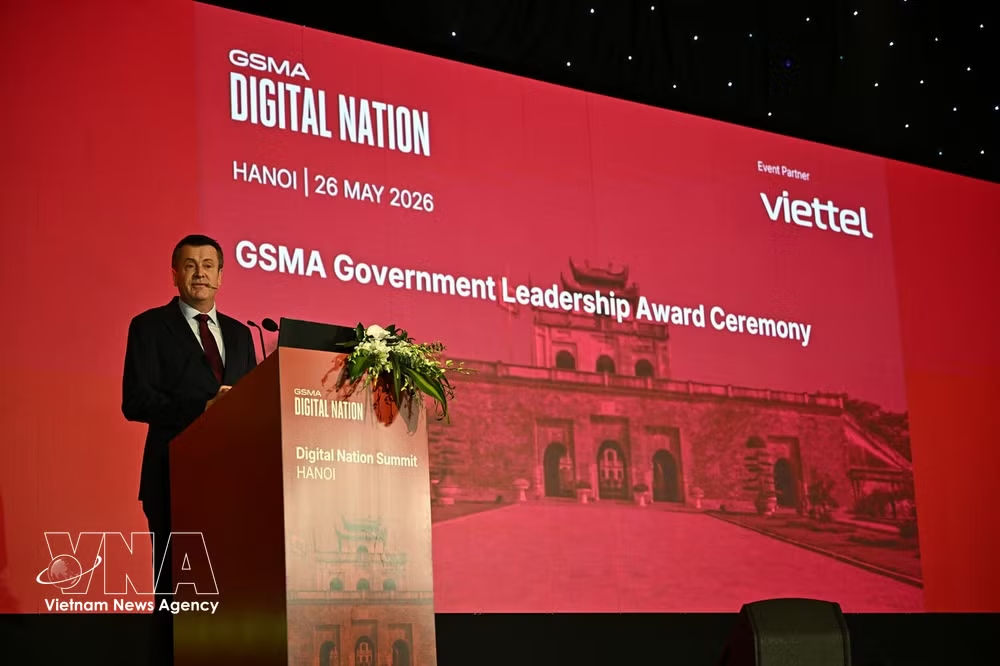
Expanding advanced digital skills and AI capabilities will be the next key step, while existing digital foundations give Vietnam an advantage in achieving a successful transformation. Despite recognising Vietnam’s progress in digital transformation, many foreigners living in the country believe that digitising individual services is only the first step.
What they expect is a seamlessly connected digital ecosystem in which a single electronic identity allows users to access services and conduct transactions conveniently and securely.
For Bundik, the e-visa system is one of the most visible reforms, making it easier for international visitors to plan trips, reducing the need to visit embassies and creating a positive impression of Vietnam. However, he stressed that e-visa can be seen as a very convenient ‘front door’, but the entire system behind it also needs to operate efficiently and predictably.
After entering Vietnam, international investors, experts and workers still have to complete numerous procedures involving residence, work permits, bank accounts, business registration and tax obligations. Therefore, the attractiveness of the investment environment comes not only from the convenience of a single procedure but also from the smooth functioning of the entire service chain.
Arci said the current barrier is not a lack of digital platforms but their limited connectivity. VNeID currently displays only basic information for foreigners and is not yet conveniently integrated with services such as taxation, banking, residence, immigration or driving licences. Meanwhile, although eTax is highly useful, its interface is currently available only in Vietnamese. He said he finds it difficult to find the sections or information I need because the entire system is currently only in Vietnamese.
For foreigners who have directly used digital services in Vietnam, a modern platform must not only provide multiple functions but also ensure seamless data connectivity between agencies.

Bundik noted that if data are not interconnected, or if a single error in a database disrupts multiple services, technology could create new sources of inconvenience. Alongside cybersecurity, he said, Vietnam should continue improving data interoperability, expanding multilingual support and maintaining assistance mechanisms when digital procedures encounter problems.
From a broader perspective, digital transformation not only improves the quality of public services but also creates momentum for new approaches to national governance. Senior Professor Tao Yitao of China’s Shenzhen University, said digital technology can help compensate for the challenges posed by an expanded scope of administration and facilitate the development of “digital government”. Vietnam can use its latecomer advantage to make strong progress in e-government and digital governance.
Arci shared the view that Vietnam should develop a unified digital ecosystem in which electronic identification can be used across a wide range of services. Once platforms are connected and operate seamlessly, foreigners will no longer have to repeatedly provide the same information or maintain paper and electronic records in parallel. This will provide a foundation for improving user experience and making Vietnam more attractive to international experts, investors and visitors.
Bundik said digital government could become a competitive advantage for Vietnam in attracting international investment. For foreign businesses, what matters is not only the speed of processing procedures but also a transparent, easy-to-track and predictable process. When electronic identification, e-visa and public services are seamlessly integrated, administrative costs can be reduced while creating a more favourable, transparent and professional investment environment.
Arci said continued development of Vietnam’s digital ecosystem will make it easier for foreigners to study, work and live in the country. Once services operate seamlessly, users will no longer have to repeatedly provide the same information or maintain paper and electronic records in parallel. That is a factor that can help attract experts, businesses and investors to choose to stay in Vietnam for the long term, he stressed./.