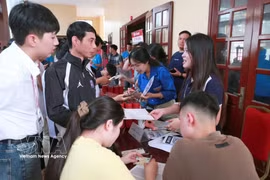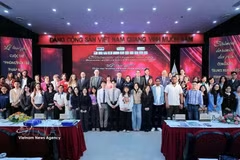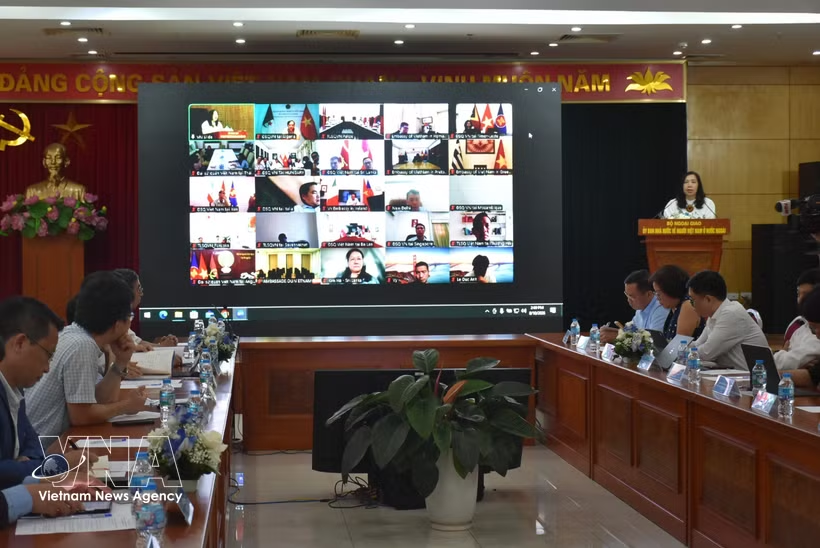
Hanoi (VNA) – The State Committee for Overseas Vietnamese Affairs under the Ministry of Foreign Affairs held a workshop in Hanoi on August 10 to discuss building and developing networks of overseas Vietnamese (OV) experts and intellectuals in strategic technology fields.
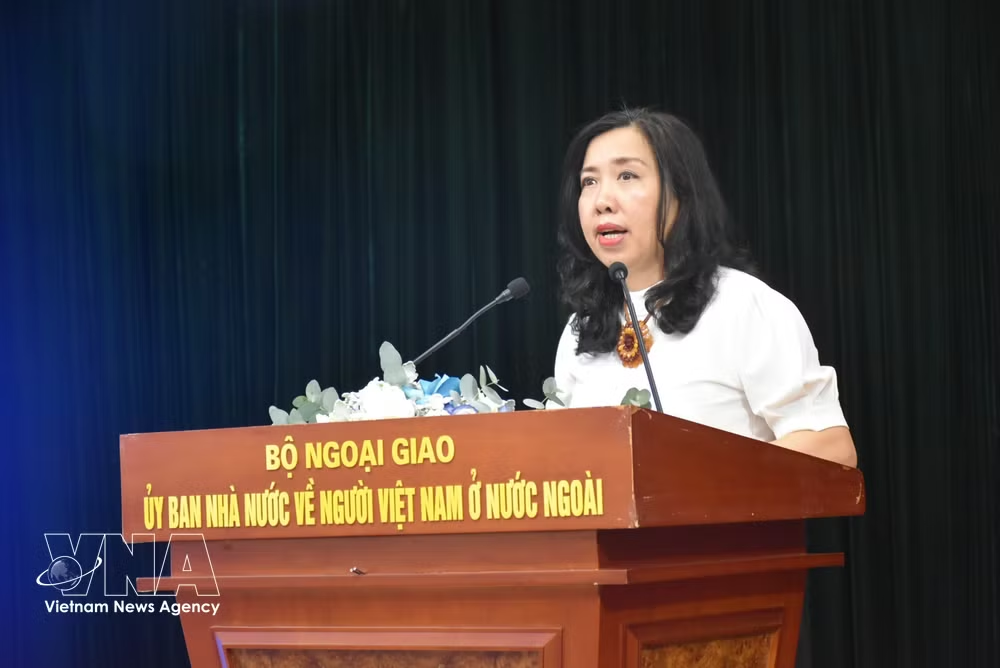
Addressing the event, Deputy Minister of Foreign Affairs Le Thi Thu Hang highlighted two major new points in the Political Bureau’s Resolution No. 23-NQ/TW, dated August 2, 2026, on OV affairs.
The resolution affirms that overseas Vietnamese are not only an inseparable part of the Vietnamese community but also an important strategic resource contributing to national strength, serving as a bridge between Vietnam and the world, and directly joining the cause of national construction, development and defence.
The resolution also represents a shift in thinking from mobilising and gathering OVs to accompanying them and creating mechanisms and conditions for their deeper engagement in national development and international integration from an early stage and from afar.
Hang stressed the need to tap the intellectual, scientific, technological and innovation resources of the Vietnamese community abroad. The community numbers around 6.5 million in more than 130 countries and territories, including approximately 650,000 with university degrees or higher.
In recent years, networks of OV experts and intellectuals have been established, with nearly 2,000 members. Five innovation and expert networks have also been formed in strategic technology areas such as artificial intelligence, semiconductors, quantum technology, cybersecurity, aviation, aerospace and unmanned aerial vehicles, connecting around 50 expert and intellectual associations overseas.
However, the potential of OV experts and intellectuals has yet to be fully tapped, she noted, calling for stronger links between overseas expertise and domestic needs.
Participants proposed shifting from efforts to bring individual experts back to Vietnam toward mobilising “global Vietnamese intelligence” through specific tasks and practical challenges. They suggested establishing a “national challenge bank” and interconnected digital platforms to directly match the needs of businesses and localities with global expert networks.
The “Technology Train” model, featuring five steps – receiving needs, connecting resources, developing projects, implementation, and evaluating and scaling up results – was also highlighted as a promising approach.
Participants further called for an improved institutional framework, including appropriate remuneration for expert contributions involving data security and intellectual property, as well as a fair and transparent working environment to encourage OV intellectuals to contribute to national development./.