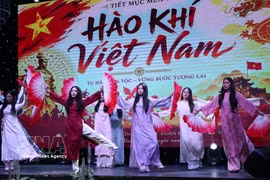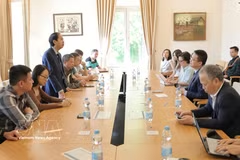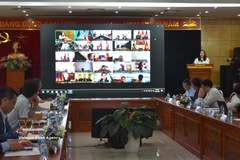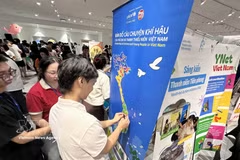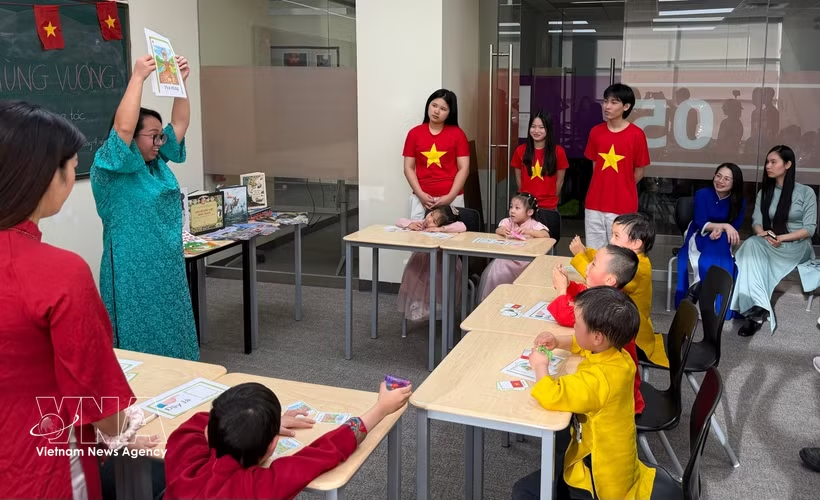
Hanoi (VNA) – The State Committee for Overseas Vietnamese convened a ceremony in Hanoi on August 12 to review the 2026 Day for Honouring the Vietnamese Language among Vietnamese communities abroad.
The hybrid event linked with Vietnamese diplomatic missions abroad, overseas Vietnamese (OV) associations, and authorities of 34 cities and provinces nationwide.
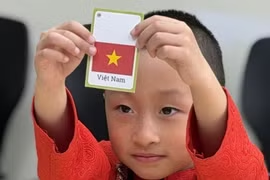
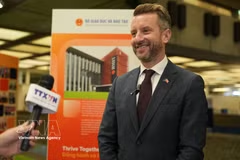
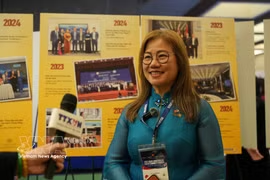
In her speech, Deputy Minister of Foreign Affairs Le Thi Thu Hang the 2023–2030 project to honour the Vietnamese language overseas kicked off at a timely moment, meeting the OVs' expectations for wider language spread.
More than four years since its 2022 launch, the project has produced concrete results, with a growing number of effective initiatives and novel approaches, she said.
Preserving Vietnamese has become an intrinsic need and a source of pride for every family and community, Hang noted. The State provides orientation and enables these efforts, while diplomatic missions, associations, schools and teachers directly drive language education. Families, however, remain where the language is preserved, passed down and nurtured most naturally and sustainably.
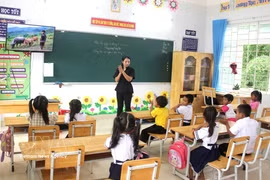
On a 2026 training course for OV teachers, Hang said beyond equipping them with teaching skills, the course exposes participants to Vietnam’s history, culture and landscape, raising their awareness of preserving and spreading the language.
Regarding the Politburo’s Resolution 23-NQ/TW, dated August 2, 2026, on OV affairs, she said the Government will soon issue an action plan for implementation. The Ministry of Foreign Affairs, other ministries, agencies, localities and diplomatic missions abroad will then craft their own action plans.
They will also step up efforts to encourage host countries to include Vietnamese in school curricula at different levels, which is also an aspiration and pressing need of many OV communities.
Alongside material support, the Government will provide professional training for teachers and language centres serving OVs. At the same time, it will also harness the role of OVs as cultural and friendship ambassadors, attract and honour overseas talent, and expand the role of Vietnamese cultural centres abroad, according to Hang.
At the event, officials, experts, lecturers and OVs shared practical experience, innovative models and proposed solutions to boost the project’s impact going forward.
Discussions focused on preserving the language through community cultural activities, standardising curricula, accelerating digital transformation and AI application in language instruction, and building networks for teachers, volunteers and experts to share expertise.
Some OVs proposed creating a shared online repository of language learning resources and a teacher training network, while pooling social resources to sustain and spread Vietnamese among communities abroad./.