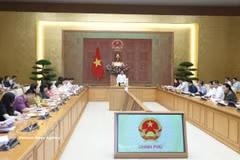
Hanoi (VNA) – The Ministry of Industry and Trade (MoIT), in collaboration with the Vietnam Biofuels Association (VBFA), convened a conference in Hanoi on March 9 to deploy a roadmap for blending biofuels with conventional fuels in a new phase of development.
The move marked a strategic step towards realising the country’s green energy transition agenda, reducing dependence on fossil fuels while bolstering national energy security amid increasingly unpredictable global developments.
An irreversible trend
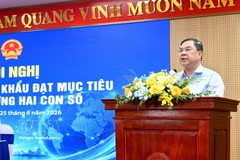
Opening the conference, Deputy Minister of Industry and Trade Nguyen Sinh Nhat Tan underscored that, against the backdrop of intensifying climate change and mounting international commitments to carbon neutrality, the development of biofuels is no longer optional but it is inevitable.
To establish a coherent legal framework, the ministry issued Circular No. 50/2025/TT-BCT on November 7, 2025, setting out biofuel blending ratios and replacing the earlier roadmap introduced in 2012. This was followed by Directive No. 07/CT-TTg, issued by the Prime Minister on February 26, 2026, aimed at accelerating the production, distribution, and consumption of biofuels.
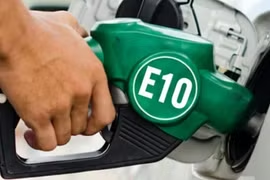
“Promoting the use of E5 and E10 bio-petrol not only reduces greenhouse gas emissions and protects the environment, but also creates stable demand for agricultural products and stimulates socio-economic development,” Tan affirmed.
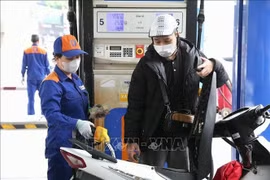
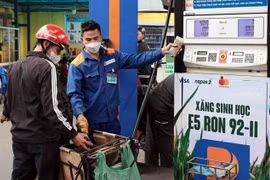
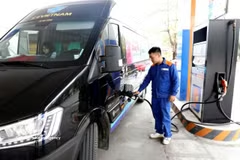
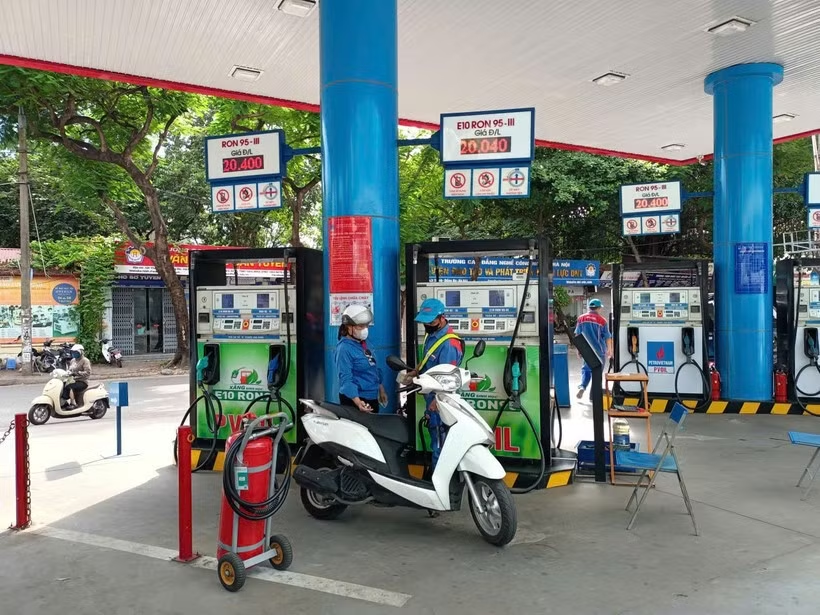
In Vietnam, following the widespread distribution of E5RON92 since 2018 and a pilot programme for E10RON95 launched on August 1, 2025, authorities have recorded no adverse feedback regarding fuel quality or engine performance.
The conference also introduced a fresh perspective on the economic and trade implications of biofuel adoption.
Do Van Tuan, Chairman of the VBFA, noted that the rollout of E10 carries strategic significance for international trade relations, particularly with the US.
“Vietnam currently ranks third in terms of trade surplus with the US. The E10 programme opens up opportunities to import ethanol from the US, which accounts for 60–65% of global output. This not only enhances Vietnam’s energy autonomy and supports agricultural markets, but also helps rebalance trade with this key partner,” Tuan explained.
Echoing this optimism, Clarence Woo, Managing Director of the Global Centre for Green Fuels (GCGF) – a think tank based in Singapore, observed that amid rising global fuel prices, biofuels present a significant opportunity. With its strong agricultural base, Vietnam is making a notably promising start.
The need for coordinated action
Vietnam possesses considerable potential and favourable conditions for the development of a biofuel industry. Abundant agricultural feedstock, existing ethanol production facilities, and an extensive nationwide fuel distribution network all provide a solid foundation for market growth.
However, realising this potential will require coordinated efforts from ministries, local authorities, research institutions, and the business community. This includes developing raw material zones, enhancing production capacity, and improving technical infrastructure and market organisation.
The implementation of the biofuel blending roadmap under Circular No. 50/2025/TT-BCT is a crucial step towards establishing a stable, long-term market. It demands careful preparation of ethanol supply, blending and distribution systems, as well as regulatory and quality control mechanisms to ensure compliance with technical standards.
Deputy Minister of Industry and Trade Nguyen Sinh Nhat Tan called on policymakers, scientists, and businesses to focus discussions on overcoming bottlenecks – from domestic E10 supply development to blending and distribution infrastructure.
“To fully harness these advantages, synchronised coordination between ministries and localities is essential. Alongside infrastructure improvements, communication efforts must be intensified so that consumers properly understand the benefits of biofuels, thereby fostering public support,” he stressed.
The conference also provided a platform for delegates to exchange international experience, address technical challenges, and propose regulatory tools to ensure a transparent and efficient biofuel market in Vietnam in the years ahead./.